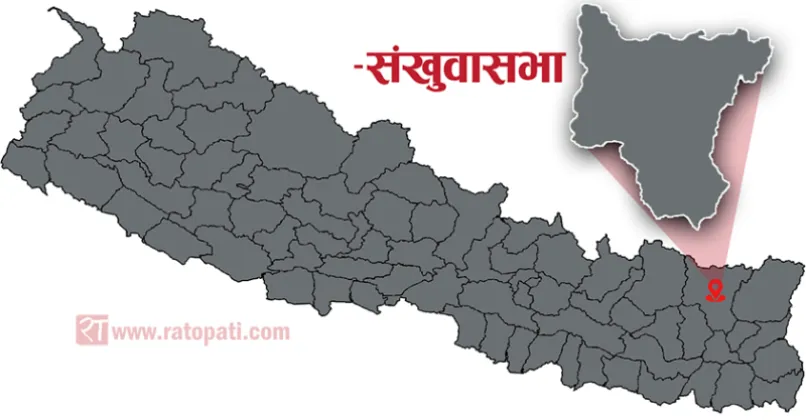
Sankhuwasabha district is preparing to launch a special 10-day tuberculosis (TB) search and identification campaign covering all 10 of its local levels, running from Poush 1 to Poush 10 of the current Nepali calendar year, a period that begins in mid-December. The District Health Office Sankhuwasabha announced the plan at a district-level tuberculosis programme planning, analysis and review meeting held in Khadbari, the district headquarters. The central objective of the campaign is straightforward: to find and identify new tuberculosis patients in communities across the district, where cases may otherwise go undetected until they become severe or spread further.
Announcement Made at District-Level Review Meeting
The decision to roll out the campaign was made public during a tuberculosis programme planning, analysis and review meeting convened in Khadbari. Such gatherings are a regular feature of Nepal's district-level health administration, giving programme officials an opportunity to examine how TB services are performing, identify gaps in detection and treatment, and schedule targeted activities for the period ahead.
By announcing the campaign through this forum, the District Health Office has signalled that active case finding is now a priority activity for the district as the current Nepali year enters the month of Poush. The campaign's duration of ten days, and its coverage of all 10 local levels, makes it one of the more concentrated public health pushes planned in the district in recent months.
What the Campaign Aims to Achieve
The stated purpose of the drive is to search for and identify new tuberculosis patients across Sankhuwasabha. In a search and identification campaign, the emphasis shifts from waiting for sick people to arrive at health facilities to actively looking for them in the community. Health workers screen people for symptoms of tuberculosis and refer those who show warning signs for diagnosis, so that treatment can begin as early as possible.
Key details of the campaign at a glance:
- Location: Sankhuwasabha district, Koshi Province
- Coverage: All 10 local levels of the district
- Duration: 10 days, from Poush 1 to Poush 10
- Announced by: District Health Office Sankhuwasabha
- Venue of announcement: District-level TB programme planning, analysis and review meeting, Khadbari
- Goal: Detection of new tuberculosis patients
The district-wide scope matters because tuberculosis often goes unreported. People may dismiss a lingering cough as a common illness, or live far from a health facility and postpone getting examined. A time-bound campaign that reaches into every local level is designed to close precisely that gap between infection and diagnosis.
Why Early Detection of TB Matters
Tuberculosis is an infectious disease caused by bacteria that most commonly affect the lungs, and it spreads through the air when an infected person coughs, sneezes or speaks. Because the symptoms can develop gradually, a person may carry the disease for months while unknowingly passing it to family members, neighbours and co-workers. Every case found early therefore protects not only the patient but the wider community.
The disease is both preventable and curable. With timely diagnosis and a completed course of treatment, most patients recover fully, and the risk of transmission falls sharply. Diagnosis and treatment services for tuberculosis are available free of cost at government health facilities across Nepal under the national tuberculosis control programme, which makes early reporting of symptoms all the more important.
Symptoms That Warrant a Check-Up
- A cough that persists for two weeks or longer
- Fever, particularly in the evening, and night sweats
- Unexplained weight loss and loss of appetite
- Chest pain or, in some cases, coughing up blood
Anyone experiencing these signs is generally advised to get tested rather than wait for the symptoms to pass on their own.
Reaching Every Corner of a Hill District
Sankhuwasabha is a hill district of Koshi Province whose settlements are scattered across varied and often difficult terrain, ranging from river valleys up toward the high Himalaya, including the area around Mount Makalu, the world's fifth-highest peak. That geography can make routine access to health services a challenge for residents of remote wards, which is why campaigns that cover all local levels, rather than only the areas near the district headquarters, carry real public health significance.
For residents, the campaign period offers a practical opportunity: those with a persistent cough or other symptoms of tuberculosis can approach their nearest health facility or local health workers for screening. The wider hope behind the effort, as stated by the District Health Office, is that the ten days of concentrated searching will bring new patients into care who would otherwise have remained outside the treatment system.
The announcement was reported by Rato Patrika, which covered the review meeting in Khadbari where the plan was unveiled. As Poush 1 approaches, attention in the district will turn to how effectively the campaign converts its ten days of outreach into newly identified and treated tuberculosis patients.