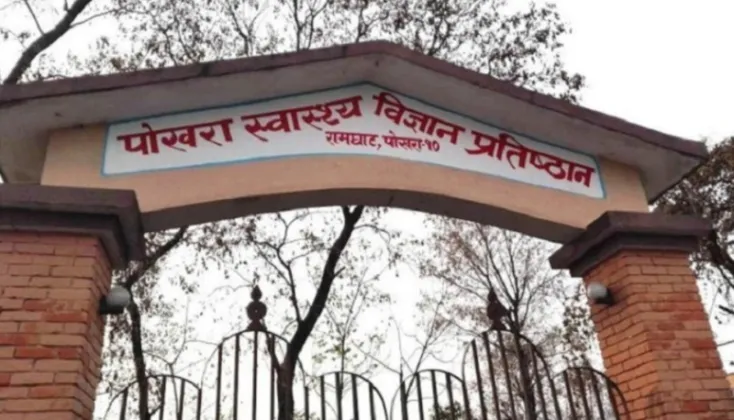
The Western Regional Hospital, operated under the Pokhara Academy of Health Sciences in Pokhara, Kaski, has brought a new 25-bed intensive care facility into operation, expanding the hospital's total ICU capacity to 35 beds. The details were confirmed by academy director Dr. Jhapindra Pokharel, according to reports by Nepali media outlets. The newly added capacity is spread across a 16-bed intensive care unit, an eight-bed coronary care unit and a one-bed isolation ICU, giving one of Gandaki Province's key government hospitals a substantially deeper pool of critical care beds.
How the new 25 beds are organised
The newly opened facility is not a single undifferentiated ward. According to Dr. Pokharel, the 25 added beds have been divided into three specialised streams so that patients can be matched to the type of intensive support their condition requires:
- 16-bed Intensive Care Unit (ICU): The largest share of the new capacity, this unit is intended for patients with life-threatening conditions such as severe infections, organ failure, major trauma or complications after major surgery, all of whom need round-the-clock monitoring and life-support equipment.
- 8-bed Coronary Care Unit (CCU): These beds are reserved for patients suffering serious cardiac problems, including heart attacks and dangerous disturbances of heart rhythm, where continuous cardiac monitoring and rapid intervention can decide the outcome.
- 1-bed Isolation ICU: A single isolation bed allows a critically ill patient with a suspected or confirmed infectious disease to receive intensive treatment without exposing other vulnerable patients in the hospital.
Taken together, the three components account for the full 25 beds added to the hospital in Pokhara.
Why a mixed critical care block matters
Splitting the new capacity between a general ICU, a coronary care unit and an isolation bed has practical advantages. Cardiac emergencies follow a different treatment pathway from other critical illnesses, and a dedicated CCU allows monitoring, medication and staffing to be organised specifically around heart patients. A separate isolation ICU, meanwhile, addresses a gap that became highly visible during the COVID-19 pandemic, when hospitals across Nepal struggled to treat severely ill patients who were also infectious. Even a single isolation bed gives clinicians an option that did not previously exist within the hospital's formal intensive care capacity.
Capacity more than triples at the regional hospital
Before the new unit came into operation, the Western Regional Hospital's total ICU capacity stood at 10 beds. With 25 beds added, critical care capacity at the institution has more than tripled, reaching 35 beds.
Intensive care beds are among the scarcest resources in Nepal's health system. They require costly equipment, trained human resources and a reliable supply of oxygen and power, and public hospitals outside the capital have often found it difficult to keep pace with demand during peaks caused by road accidents, seasonal illness and infectious disease outbreaks.
The Western Regional Hospital carries a regional-level role: as a referral facility serving Gandaki Province and the districts around Kaski, it receives patients whose conditions are too complex to be managed at smaller hospitals. When regional intensive care capacity runs short, critically ill patients frequently have to be referred onwards to facilities in Kathmandu, adding hours of travel, significant cost and real clinical risk for people whose condition is unstable. Additional ICU beds in Pokhara ease exactly that pressure.
What the expansion means for patients in Gandaki
For families in Pokhara and the wider Gandaki region, the practical significance of the expansion lies in proximity. Critical conditions such as severe trauma from road accidents, strokes, sepsis and acute heart problems are time-sensitive, and the interval between the onset of illness and the start of intensive treatment is often decisive. Care delivered close to home also spares relatives the burden of travelling to the capital to remain near a loved one.
The coronary care component is particularly relevant for cardiac emergencies, where every minute of delay reduces the chances of survival and recovery. The isolation ICU, meanwhile, provides a controlled space for patients whose illnesses carry a risk of transmission, helping to protect both other patients and health workers within the hospital.
Announcement and media coverage
The development was reported by RatoPati, Khabarhub and NepalPress, each of which cited the composition of the new facility as provided by Dr. Jhapindra Pokharel, director of the Pokhara Academy of Health Sciences. The reports identified the Western Regional Hospital as the site of the new unit and confirmed the hospital's new total of 35 ICU beds.
With the new block in operation, the hospital's critical care strength now stands at 35 beds: the 10 beds it operated previously, plus the 16 general intensive care beds, 8 coronary care beds and 1 isolation bed added under the new facility. The reports did not include further details on staffing or equipment for the new unit, but the confirmed figures mark a clear and measurable increase in the critical care infrastructure available to patients across Gandaki Province.