Iran announced on Tuesday that its air defence forces shot down two United States military drones flying over the Strait of Hormuz, one of the world's most strategically sensitive waterways. According to the Iranian military, the drones were brought down in two separate areas of the strait, although the United States has so far not confirmed the claim.
The announcement, carried by Nagarik News and other regional outlets, comes at a time of already heightened tension between Tehran and Washington over the American military presence in the region and the economic sanctions imposed on Iran.
What Iran says happened
The Iranian military stated that an American MQ-9 drone, a widely used surveillance and strike aircraft, was downed in the eastern part of the Strait of Hormuz. A second aircraft, described as a Lucas suicide drone, was reportedly shot down in the western area of the waterway.
According to the Iranian account, both drones were brought down by the country's air defence system. Iranian officials framed the action as a response to what they describe as unlawful American activity near Iranian territory and waters. Khabarhub reported that the claim was made directly by the Iranian military on Tuesday.
The US has not confirmed the claim
Despite Iran's public announcement, the United States has not confirmed that either of its drones was shot down. This gap between the Iranian assertion and the American silence leaves several key questions unanswered, including whether the drones were indeed operating over the strait at the time, whether any aircraft or personnel were lost, and how Washington intends to respond.
Washington and Tehran have a long history of disputed claims over aerial incidents. In previous episodes, statements from one side have taken days to be verified, denied or substantiated by the other. Until the United States issues an official response, the full picture of what occurred over the Strait of Hormuz remains unclear.
Why the Strait of Hormuz matters
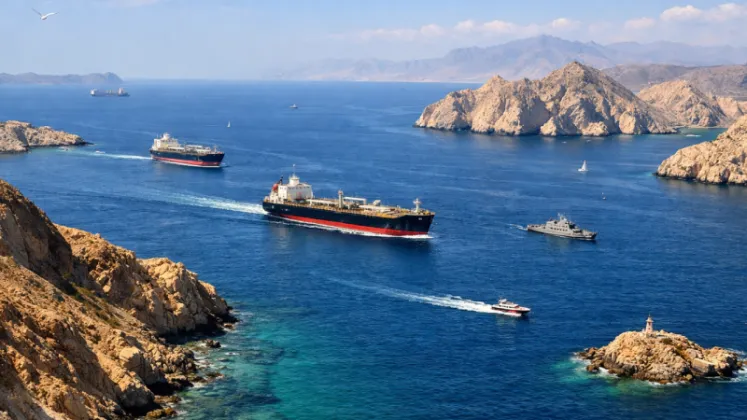
The Strait of Hormuz is one of the most important maritime chokepoints in the world. Lying between Iran and the Arabian Peninsula, it connects the Persian Gulf to the Gulf of Oman and the open ocean. A large share of the world's seaborne oil trade passes through the narrow waterway, making any military activity in the area a matter of international concern.
Incidents involving military aircraft and vessels in the strait have repeatedly raised fears of escalation. The waterway's geography, with Iranian territory directly bordering the shipping lanes on its northern side, means that US drone flights over or near the strait regularly bring American and Iranian military assets into close proximity.
Sanctions and US presence at the core of tensions
Reports on the incident link the downing of the drones to Iran's long-standing opposition to the US military presence in the region and to the economic sanctions imposed on Iran. Tehran has consistently argued that the American military footprint in the Persian Gulf is provocative, while the sanctions, which have restricted Iran's economy for years, remain a central grievance in Iranian policy toward Washington.
As Ratopati noted, the claim that Iranian air defence systems targeted American drones fits into this broader pattern of confrontation, where each side frames the other's actions as aggression.
MQ-9 and Lucas: the aircraft involved
The two aircraft named in Iran's claim are quite different in character. The MQ-9 is an American remotely piloted aircraft known for both intelligence-gathering and precision strike missions, and its presence in international airspace near Iran has been a recurring source of friction.
The second aircraft, identified by Iran as a Lucas suicide drone, belongs to a class of loitering munitions, sometimes called kamikaze drones, which are designed to fly toward a target and destroy it on impact. If US forces were indeed operating such a system in the area of the strait, its downing would suggest a more offensive posture than routine reconnaissance.
What comes next
Attention will now turn to whether the United States acknowledges the loss of any aircraft, and whether it issues any formal response to Iran's announcement. The episode has the potential to further inflame an already tense regional environment, where sanctions, military deployments and maritime incidents continue to feed a cycle of confrontation between the two countries.
For now, the world is watching the Strait of Hormuz, where Iran's claim, if confirmed, would mark a significant escalation, and the absence of American confirmation leaves the incident suspended between assertion and fact.