Two opinion articles published in Nepal on October 23, 2026, have called for a revival of the country's reading culture, and both begin with the same telling moment: a question from a grade 7 student, raised during a reading of a short story of roughly five pages by a well-known Nepali writer. One of the pieces was carried by Pradesh Khabar, where it is credited to writer Premnarayan Bhusal, while the other ran on Global Aawaj. Appearing on the same day in different outlets, the two columns share not only their opening anecdote but also their central concern: that the quiet power of the short story, and the subtlety of human sensibility it carries, deserves a fresh and lasting audience among Nepali readers.
A Grade 7 Student's Question Opens Both Columns
Both articles make an unusual editorial choice. Rather than opening with data, policy critique or sweeping cultural commentary, each begins with the scene of a grade 7 student asking a question as a roughly five-page story by a well-known Nepali writer is being read. The moment is small, but the columnists treat it as weighty. In their hands, the question becomes the doorway through which the reader enters a larger reflection on what stories do to those who hear and read them.
The story at the centre of the scene is, as both columns describe it, brief: about five pages. Yet the writers' shared reflection centres on how much such a compact text can hold, namely the subtlety of human sensibility that such stories convey. The student's question, asked during the reading, stands in the columns as the point where that subtlety meets a young mind, and it is from that encounter that both pieces build their case.
Why the Writers Say Nepal's Reading Culture Needs Reviving
The stated purpose of both pieces is a call to revive reading culture in Nepal. The columnists do not present this as a vague exhortation. By anchoring their appeal in a single question from a grade 7 student, they tie the health of the country's reading habits to a concrete, human-scale encounter: one student, one story, one moment of genuine attention.
The logic the two pieces share runs roughly as follows. Stories like the five-page text at the heart of both columns convey the subtlety of human sensibility. That subtlety can only be received by those who actually read or hear such stories. And if a society stops reading, it stops receiving what its literature has to give. The revival the writers call for is therefore not simply about books as objects, but about keeping open the channel between Nepali writing and Nepali readers.
Where the Opinion Pieces Appeared
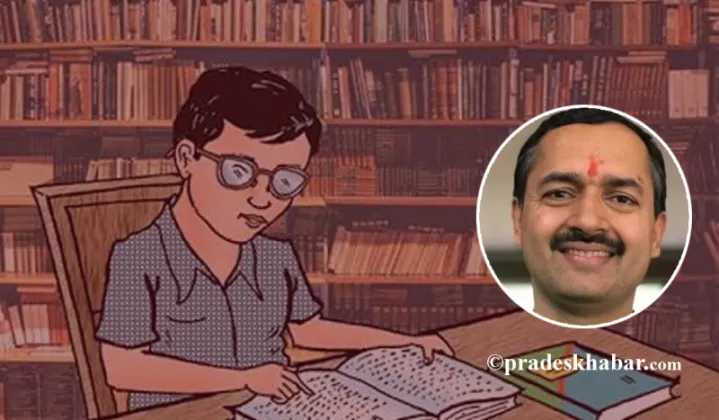
The first of the two articles was published by Pradesh Khabar and is credited to Premnarayan Bhusal; it can be read on the Pradesh Khabar website. The second appeared the same day on Global Aawaj and is available on the Global Aawaj website. Both carry the same opening anecdote and the same underlying argument for reviving Nepal's reading culture.
Key Details at a Glance
- Publication date: October 23, 2026
- Outlets: Pradesh Khabar and Global Aawaj
- Named author: Premnarayan Bhusal (Pradesh Khabar column)
- Shared opening: a question from a grade 7 student during a reading of a roughly five-page story by a well-known Nepali writer
- Shared theme: the subtlety of human sensibility conveyed through such stories
- Central argument: Nepal's reading culture needs to be revived
Stories, Sensibility and the Stakes for Nepali Literature
Perhaps the most distinctive element of the two pieces is their decision to reflect on the subtlety of human sensibility rather than on numbers alone. Where discussions about reading often turn on statistics, sales and screen time, these columns point instead to what literature itself offers: a rendering of human feeling so fine-grained that it requires a reader's full attention to be received. The five-page story read to the grade 7 student becomes, in this framing, a kind of test case. If a text of barely five pages can carry that much, the columnists suggest in effect, then a society that lets such texts go unread stands to lose something no catalogue can measure.
The choice of a well-known Nepali writer for the reading is also telling. The columnists anchor their appeal not in foreign classics or abstract theory but in a story from Nepal's own literary tradition. Their argument for revival is thus also an argument for continuation: that the practice of reading such stories should be handed on to the next generation, and that the questions children ask during a reading are the most natural place for that handing on to begin.
The two columns, published the same day by different outlets, together amount to a small but pointed appeal. Nepal's reading culture, they suggest, will not be rebuilt by exhortation alone, but by moments like the one with which they both begin: a young student, a short story and a question worth answering.