
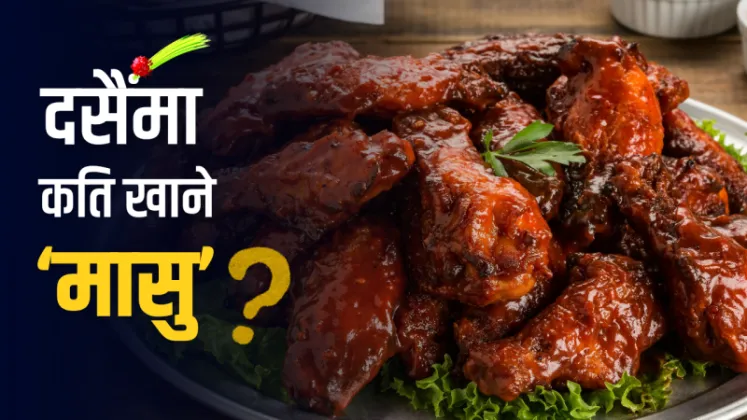
During Dashain, Nepal’s biggest festival, two Nepali news outlets have published explainers on meat consumption, examining how much may be safe to eat and what to consider when choosing, storing, cooking and eating it. The coverage addresses a health question within a familiar festive tradition: meat dishes are part of Dashain meals shared during family gatherings and alongside tika and blessings. One of the explainers was published by Nagarik News.
The articles do not treat meat simply as a dish to be removed from the celebration. Instead, they focus on how people can think about consumption and food handling while taking part in Dashain’s customary meals. Their central concern is the balance between the festival’s food culture and attention to health.
Meat and Dashain’s food traditions
Dashain is marked by family gatherings, tika and blessings, with meat dishes forming an integral part of the festival’s food culture. For many households, food is part of how the occasion is shared, making questions about meat relevant to everyday festive choices rather than separate from the celebration.
That context shapes the focus of the explainers. They ask how much meat is safe to eat while also considering the steps involved before a meal reaches the table. The topics covered include selecting meat, storing it, preparing it through cooking and being mindful while eating. Together, these areas frame safe consumption as a series of considerations, not just a question about the quantity served.
The coverage makes the issue timely because Dashain brings food and family gatherings into close focus. It also treats the subject as a health concern, rather than assuming that a customary place in festival meals makes meat consumption irrelevant to questions of care. The aim is to bring attention to health within the setting of a tradition that remains central to the celebration.
Questions of quantity and safe handling
How much meat is safe to eat is a key question raised by the articles. The wider framing matters: choosing meat, storing it and cooking it are also part of the discussion. A reader considering the amount served is therefore being prompted to look beyond a single meal-time decision and consider the food from selection through preparation and consumption.
The topics identified in the explainers include:
- Amount: how much meat is safe to eat during Dashain.
- Selection: what to keep in mind when choosing meat.
- Storage: how meat should be handled before cooking.
- Cooking and eating: what to consider when preparing and consuming it.
These are connected points in a broader conversation about festive food and health. The coverage does not present Dashain meat dishes as separate from the festival’s cultural importance; rather, it puts practical food-related questions alongside that importance. This allows families to consider health as part of their festival meal planning while continuing to observe the occasion’s traditions.
The articles also direct attention to the stages before and during eating. Selection and storage concern the handling of meat before it is cooked, while cooking and eating focus on what happens closer to the meal. The combined approach makes the coverage relevant to different decisions households face around Dashain food, not only the amount placed on a plate.
Health within festive meals
For readers, the explainers offer a reason to consider meat consumption as part of the larger Dashain meal. The festival’s food traditions and health questions are presented together: meat remains an integral part of the occasion, while the amount eaten and the way it is selected, stored, cooked and consumed merit attention.
That approach avoids reducing the issue to a choice between tradition and health. Instead, it recognizes both the cultural role of meat dishes and the concerns raised by eating them. As families come together for tika, blessings and meals, the coverage encourages attention to how meat is handled and eaten as part of the celebration.
The two outlets’ explainers place a practical question at the heart of Dashain food culture: how to enjoy customary dishes while taking health into account. Their focus on quantity, selection, storage, cooking and eating gives readers several related points to consider during the festival, without separating food from the family and cultural setting that makes it significant.
-original.jpg?utm_source=kchakhabar_api&utm_medium=api&utm_campaign=today_v1)