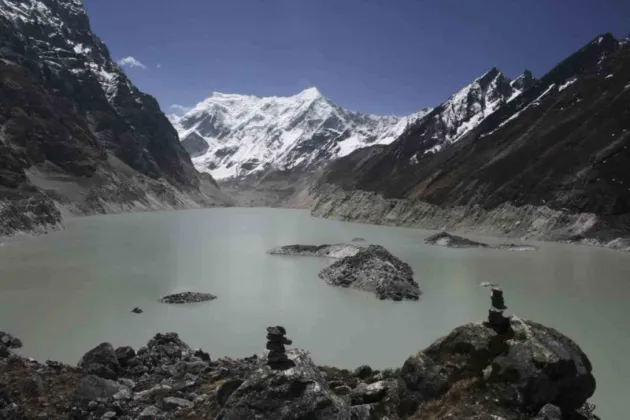
Nepal has launched the 'GLOF Sanjivani Project', a USD 49.94 million (around Rs 7 billion) initiative aimed at reducing the risks of glacial lake outburst floods (GLOFs) for communities living in the Himalayan region. The project, unveiled amid growing concerns that climate change is accelerating glacier melt across the Himalayas, will focus on four high-risk glacial lakes that pose the greatest threat to downstream settlements.
The Government of Nepal is contributing USD 11.32 million of the total budget, with the remaining support coming from the Green Climate Fund (GCF), the United Nations Development Programme (UNDP) and private sector partners. The multi-stakeholder funding structure underscores the scale of the challenge Nepal faces as warming temperatures swell glacial lakes behind unstable natural dams.
A response to a mounting Himalayan threat
Glacial lake outburst floods occur when the natural barriers holding back meltwater lakes collapse or are breached, sending sudden, destructive surges of water, debris and sediment down mountain valleys. For communities in Nepal's high Himalayan districts, these events can destroy homes, bridges, hydropower infrastructure and farmland within minutes, with little or no warning.
Scientists and policymakers have grown increasingly alarmed that rising global temperatures are accelerating glacier melt in the Himalayas, causing glacial lakes to expand in size and number. Nepal's mountainous terrain, combined with its dense network of glaciers, makes it one of the countries most exposed to this hazard. The launch of the Sanjivani project reflects the government's recognition that proactive risk reduction, rather than reactive disaster response, is essential to protecting vulnerable mountain populations.
Funding and partners
The project's total budget of USD 49.94 million, equivalent to roughly Rs 7 billion, makes it one of the more significant climate adaptation investments Nepal has undertaken. The government's own contribution of USD 11.32 million demonstrates national ownership of the initiative, while international climate finance plays a central role in bridging the funding gap.
The Green Climate Fund, the largest dedicated multilateral climate fund supporting developing countries, is a key backer of the project. The UNDP is also on board as an implementing partner, bringing technical expertise in disaster risk reduction and climate resilience. In addition, private sector partners are contributing to the effort, a feature that highlights the growing recognition in Nepal that businesses, particularly those dependent on Himalayan water resources such as hydropower, have a stake in GLOF risk management.
Focus on four high-risk lakes
The project will concentrate its interventions on four glacial lakes identified as posing high risks to downstream communities. Targeting a small number of the most dangerous lakes is a strategy many experts consider the most cost-effective approach, as lowering the water level or reinforcing the moraine dams of even one critical lake can dramatically reduce the threat to thousands of people living downstream.
While the detailed activities are to be implemented over the project period, the initiative comes as part of Nepal's broader efforts to strengthen early warning systems, reduce structural vulnerabilities and build the adaptive capacity of mountain communities. The Sanjivani project is expected to complement Nepal's ongoing work on climate adaptation, including national adaptation planning and disaster preparedness programmes.
Why it matters for downstream Nepal
The stakes extend well beyond the high mountain valleys themselves. Rivers originating from Nepal's glaciers feed major downstream systems, and sudden outburst floods can devastate hydropower plants, suspension bridges, trails and market centres located far from the source lake. Past GLOF events in Nepal and the wider Hindu Kush Himalayan region have caused significant loss of life and property, serving as a stark reminder of what is at risk.
By focusing on risk reduction before disaster strikes, the GLOF Sanjivani Project represents a shift in approach for a country that has traditionally been forced to respond to mountain hazards after they occur. The involvement of international climate finance also signals an important precedent: that vulnerable mountain nations like Nepal can access global adaptation funds to address climate-driven risks they contributed little to creating.
As glacier melt continues to accelerate across the Himalayas, the success of the Sanjivani project will be closely watched, both within Nepal and by other mountain countries facing similar threats. For the communities living beneath the four targeted lakes, the initiative offers a measure of protection against one of the most sudden and devastating consequences of a warming climate.