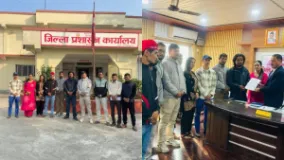
Kathmandu, Nepal, [Date] - A Cell Broadcast system developed within Nepal has been successfully tested, marking a significant step forward in the country's ability to deliver rapid disaster alerts to the public. The technical test was carried out on Monday evening at Nepal Telecom's technical test building in Balambu, Kathmandu, in the presence of two senior government ministers, underscoring the importance the government has attached to the project.
The system, which has been developed domestically, is designed to send disaster alerts to mobile phone users within just 5 to 10 seconds. This speed is a critical feature for emergency communications, where even a short delay in warning people about an approaching natural disaster can make a substantial difference to public safety.
High-Level Presence at the Test
The successful test was witnessed in person by Home Minister Sudhan Gurung and Information and Communication Minister Bikram Timilsina. The attendance of both ministers, whose portfolios cover the country's disaster response mechanisms and its telecommunications sector respectively, highlighted the joint institutional effort behind the initiative. Their presence also signaled the government's commitment to moving the system from the testing phase toward operational deployment.
The test took place at Nepal Telecom's technical test building in Balambu, a location that serves as the state-owned telecom operator's facility for evaluating new technical infrastructure. Conducting the trial at the premises of Nepal Telecom, the country's largest telecom service provider, indicates the system's integration with the national telecommunications network.
What the Cell Broadcast System Is Designed to Do
Cell Broadcast technology is a method of delivering messages simultaneously to all mobile devices within a designated geographic area. Unlike regular SMS, which requires individual delivery to each phone number, a cell broadcast message can be pushed to every handset connected to a particular mobile tower's coverage zone, allowing authorities to reach potentially millions of people at once during an emergency.
The key capability highlighted during the Kathmandu test is the system's speed. According to the developers and officials involved, the system can deliver a disaster alert within 5 to 10 seconds of it being triggered. In the context of sudden-onset disasters, this rapid delivery window is intended to give people enough time to take immediate protective action.
Significance for Nepal's Disaster Preparedness
Nepal is a country that faces a wide range of natural hazards, from earthquakes and landslides to floods, and the government has been working to strengthen its early warning and disaster communication infrastructure. A functioning Cell Broadcast system is regarded internationally as one of the most effective tools for alerting populations during such emergencies, because it does not depend on recipients subscribing to a service or having their phone numbers registered with authorities.
The successful domestic development of the system is also notable because it demonstrates Nepal's growing technical capacity in the telecommunications and disaster management sectors. A system built in Nepal, rather than imported, can potentially be maintained, adapted and scaled according to the country's own specific requirements.
Next Steps and Deployment
With the technical test in Balambu having been successful, attention will now turn to the wider rollout of the system. The presence of the Home Minister and the Communication Minister at the trial suggests the government intends to evaluate the results of the test and consider how quickly the system can be brought into regular use across the country.
No timeline for nationwide deployment was announced at the time of the test. However, the demonstration of the system's ability to deliver alerts within 5 to 10 seconds in a live technical environment provides a concrete proof of concept for the technology that the government hopes will eventually serve as a key pillar of Nepal's disaster early warning framework.
Conclusion
The successful testing of the Nepal-developed Cell Broadcast system in Kathmandu on Monday evening represents a milestone in the country's disaster preparedness efforts. Witnessed by Home Minister Sudhan Gurung and Information and Communication Minister Bikram Timilsina at Nepal Telecom's Balambu facility, the test confirmed that the domestically built system can perform its core function: delivering disaster alerts to mobile users within seconds. As the government reviews the test results, the system now stands as a promising foundation for protecting lives across Nepal when disasters strike.