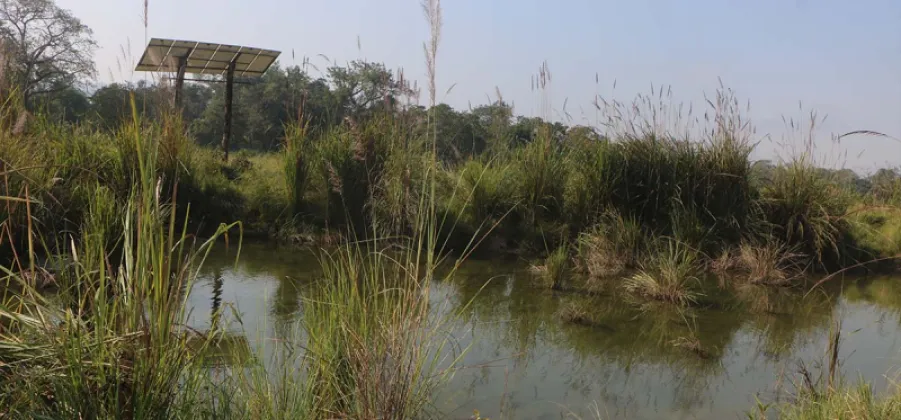
Chitwan National Park (CNP) has launched a major grassland and wetland management programme for the current fiscal year, targeting 1,650 hectares of protected areas across the park. The initiative is aimed at strengthening wildlife food availability, improving habitats and supporting overall biodiversity conservation inside Nepal's oldest national park.
According to Ganesh Prasad Tiwari, information officer and conservation officer at the park, 125 hectares of grassland will be managed as per the target set for the year. The work has been prioritised to enhance wildlife habitat and maintain biological diversity, which are central objectives of the park's conservation strategy.
Why grassland management matters
Grasslands are among the most important ecosystems within Chitwan National Park, providing critical grazing areas and food sources for a wide range of wildlife. Species such as the one-horned rhinoceros, deer and wild elephants depend heavily on healthy grasslands, while these open habitats also support prey bases for predators including tigers and leopards.
Without regular management, grasslands in the park are prone to being overtaken by invasive species and woody vegetation, which reduces their value as wildlife habitat. Managed interventions such as controlled burning, removal of invasive plants and maintaining open patches help rejuvenate grass growth, directly benefiting grazing animals and, in turn, the entire food chain within the protected area.
Scale and priority of the work
The 1,650-hectare target for this fiscal year covers both grassland and wetland areas within the park. Park officials have said the management work has been given high priority this year because of its direct link to wildlife habitat improvement and the conservation of biological diversity.
Of the total targeted area, 125 hectares of grassland is to be managed according to the annual target described by the park's information office. The remaining areas fall under the broader grassland and wetland management plan being carried out during the fiscal year.
Background and context
Chitwan National Park, located in the Terai region of Nepal, is home to a rich array of wildlife, including the one-horned rhinoceros, Royal Bengal tiger, gharial and hundreds of bird species. Grasslands and wetlands form an integral part of the park's ecosystem, and their periodic management has long been a routine conservation activity undertaken by the park authorities.
The park has consistently carried out grassland management as part of its annual conservation calendar. Such activities are considered essential in a protected area where natural ecological processes have been altered by the landscape's contained boundaries and changing land use in surrounding areas. By maintaining open grassland patches and healthy wetlands, the park aims to sustain the carrying capacity of the habitat for its resident wildlife populations.
The current fiscal year's programme continues this tradition, with park officials emphasizing that the management of grasslands is not merely a maintenance exercise but a deliberate conservation tool designed to secure food resources and habitats for wildlife in the long term.
Outlook
With 1,650 hectares of grassland and wetland slated for management in the current fiscal year, Chitwan National Park has reaffirmed its commitment to habitat-based conservation. The completion of the 125-hectare grassland target and the wider management programme is expected to contribute to the continued recovery and stability of wildlife populations in one of Nepal's most celebrated protected areas.
Park authorities have indicated that the prioritisation of these activities reflects an ongoing focus on biological diversity, ensuring that the park's grasslands and wetlands continue to sustain the species that depend on them for food, shelter and breeding grounds.