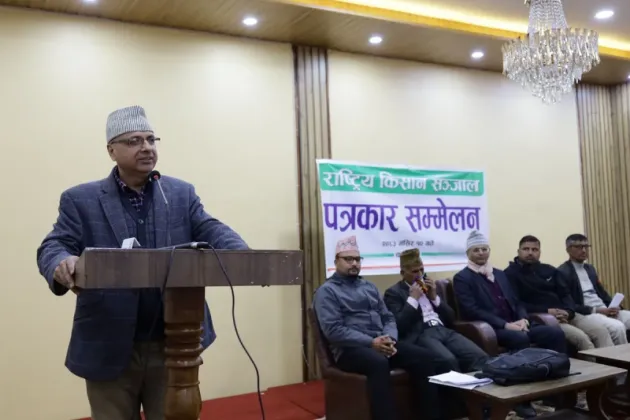
The National Farmers' Network (Rastriya Kisan Sanjal) has put forward an 11-point demand to the government, warning that it will launch a nationwide movement if its concerns are not addressed. The demands were announced at a press conference held in Kathmandu on Thursday, November 26, 2026.
The network, which represents farmers across the country, said the demands focus on the growing hardships faced by those engaged in agriculture, including rising costs of production, lack of guaranteed markets for their produce and mounting debts. It urged the government to respond without delay.
Key Demands Raised by the Farmers
The 11-point demand includes a call to control the rising prices of agricultural inputs, which the network says has made farming increasingly expensive and unprofitable. It also calls for ensuring minimum support prices for farm produce and the guaranteed procurement of what farmers grow, so that they can sell their harvests at fair rates.
Another major demand is the rehabilitation of farmers affected by floods, an issue that has left many farming families in distress. The network further pressed for clearing payments owed to dairy farmers, stating that delays in settling dues have hurt those in the dairy sector. In addition, it demanded the easy availability of chemical fertiliser, which remains a persistent problem for Nepali farmers during planting seasons.
Warning of a Nationwide Movement
At the press conference, the National Farmers' Network made clear that it would not accept silence from the government. It warned that if the 11-point demands are not heard, it will launch a nationwide protest movement, escalating pressure on authorities to take farmers' issues seriously.
The announcement signals growing frustration among farming communities, who say the problems raised at the Kathmandu event have long persisted without effective government action. The network has given the government the choice of addressing the demands or facing organised nationwide resistance from the agricultural sector.
Larger Context of Farmers' Struggles
The demands presented in Kathmandu reflect structural challenges in Nepali agriculture: volatile prices for seeds, fertiliser and other inputs, the absence of reliable procurement systems, and weak state support when disasters such as floods strike farming regions. Dairy farmers, in particular, have struggled with payments owed to them, while shortages of chemical fertiliser continue to disrupt cultivation across the country.
By bringing these issues together in a single 11-point charter, the National Farmers' Network has sought to present a united front and make farmers' welfare a matter of national policy attention. The coming days will show whether the government responds to the demands or confronts a nationwide movement led by the country's farmers.
Sources: Ratopati, Nepal Press