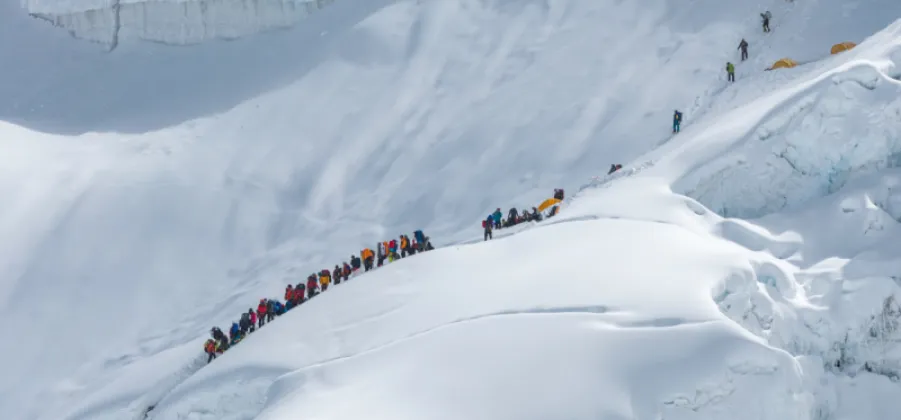
Nepal's Department of Tourism announced on November 26, 2026, that it has issued climbing permits to 1,633 climbers from 77 countries for the 2026 autumn Himalayan climbing season. The permits, covering expeditions on between 47 and 50 peaks according to reports, have generated more than NPR 330 million in revenue for the government. Of the permit holders, 1,237 are men and 376 are women, underscoring the growing presence of female climbers on Nepal's mountains.
A Strong Autumn Season for Nepal's Mountaineering Industry
The autumn season is one of two principal climbing windows in Nepal, alongside the more heavily trafficked spring season. While Everest expeditions dominate headlines in spring, the autumn season typically attracts climbers targeting a range of lower and mid-altitude peaks across the Himalayan range.
According to the Department of Tourism, permits were issued for expeditions on dozens of mountains during the season, with reports citing between 47 and 50 peaks receiving climbing activity. The department's announcement on November 26, 2026, confirmed the scale of international interest, with climbers from 77 countries securing permission to climb.
The gender breakdown of the permit holders offers a snapshot of who is climbing in Nepal this season: 1,237 men and 376 women received permits. Women thus make up roughly 23 percent of the total permitted climbers, a figure that reflects the gradual diversification of the mountaineering community.
Revenue Collection Exceeds NPR 330 Million
The department said the permits generated more than NPR 330 million in revenue. Climbing permit fees are a significant source of income for Nepal's government, with fees varying by the height and classification of each mountain. Peaks are graded across categories, with royalty rates rising for higher and more prestigious summits.
- 1,633 climbers received permits for the autumn 2026 season
- Climbers hail from 77 different countries
- Permits cover expeditions on 47 to 50 peaks, according to reports
- Revenue collection surpassed NPR 330 million
- Permit holders include 1,237 men and 376 women
Mountain tourism, alongside trekking, forms a cornerstone of Nepal's tourism economy, which contributes substantially to national income and employment. Permit fees, along with spending by expedition teams on guides, porters, logistics, and accommodation, ripple through the economy of mountain regions and the tourism sector more broadly.
Global Interest in Nepal's Peaks
The participation of climbers from 77 countries highlights Nepal's status as the premier mountaineering destination in the world. The country is home to eight of the world's fourteen peaks above 8,000 meters, including Mount Everest, the highest point on earth, as well as hundreds of smaller peaks that remain open for climbing expeditions.
The Department of Tourism, under the Ministry of Culture, Tourism and Civil Aviation, is the government body responsible for regulating climbing expeditions, issuing permits, and collecting royalties. Its seasonal announcements provide the most authoritative account of climbing activity in the Nepali Himalayas.
Reports on the announcement were carried by Nepali media outlets including Nagarik News, Ratopati, and Global Aawaj, which cited the department's figures on climber numbers, country representation, and revenue.
Context: Nepal's Climbing Calendar
Nepal operates a two-season permit system for most mountaineering activity. The spring season, roughly March to May, is the busiest, with Everest summits concentrated in a short weather window in May. The autumn season, roughly September to November, sees fewer high-altitude expeditions but substantial activity on trekking peaks and lower Himalayan mountains, along with trekking traffic on routes such as the Everest Base Camp trail and the Annapurna Circuit.
The 2026 autumn figures released by the department suggest healthy demand for Nepal's mountains outside the flagship Everest climbing season. With 1,633 climbers permitted across dozens of mountains and revenue exceeding NPR 330 million, the season's numbers point to continued international confidence in Nepal's mountaineering sector.
The department's announcement did not include details on which specific peaks attracted the most climbers, or how many summits were successfully completed during the season. Such figures are typically compiled and published after the season concludes, offering a fuller picture of autumn climbing activity in the Himalayas.