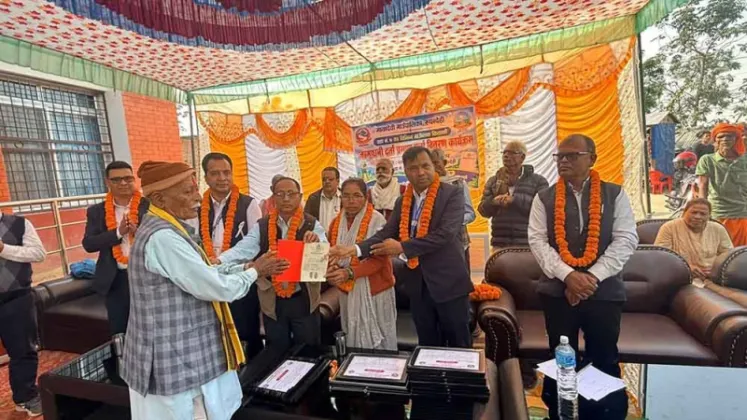
148 landless (swawasi) families in Mayadevi Rural Municipality-7 of Rupandehi district have finally received land ownership certificates (lalpurja), bringing a decades-long wait to an end. The distribution of the certificates comes roughly 13 years after the land survey was completed in the area, which was formerly known as Hattibagai Ward No. 6.
For these families, who had been living on the land without formal legal recognition, the certificates now serve as official proof of ownership. The long delay between the survey and the distribution of ownership documents had left the settlers in a state of uncertainty over the legal status of the plots they occupied.
A 13-Year Wait Ends
The land survey in the area that is now Mayadevi Rural Municipality-7 had been completed about 13 years ago. Despite the completion of the survey, the families did not receive their ownership certificates until now, leaving them without the legal documentation that would confirm their rights over the land.
The area, earlier identified as Hattibagai Ward No. 6, has since fallen under the jurisdiction of Mayadevi Rural Municipality-7 following the restructuring of local administrative units. The families living there were classified as landless (swawasi) settlers, a status that kept them from holding formal ownership of the plots they lived on.
Legal Ownership for Long-Time Settlers
With the distribution of the lalpurja, the 148 families have gained legal recognition as the owners of the land they occupy. This formally converts their long-standing occupation into lawful ownership, ending the insecurity that comes with holding land without documentation.
Land ownership certificates are a crucial legal safeguard for families in Nepal, particularly for those in settlements that emerged without formal land registration. For the residents of Mayadevi Rural Municipality-7, the certificates now open the door to using their land as a documented asset.
What Lies Ahead
The distribution of ownership certificates marks the formal conclusion of a process that began over a decade ago with the land survey. For the 148 families of the former Hattibagai Ward No. 6, the documents represent the end of their status as landless settlers.
While the certificates resolve the long-pending question of ownership, the case also highlights the significant gaps that can persist between the completion of a land survey and the actual delivery of ownership documents to settlers. The 13-year gap in this instance underscores the slow pace of such procedures, though for the families concerned, the immediate outcome is clear: they now hold legal proof of the land they call their own.
Further details on the certificate distribution ceremony, the officials involved, and the specific terms of the ownership grants were not immediately available. The story will be updated as more information emerges.