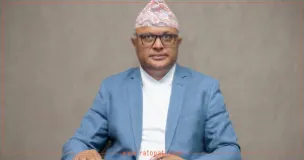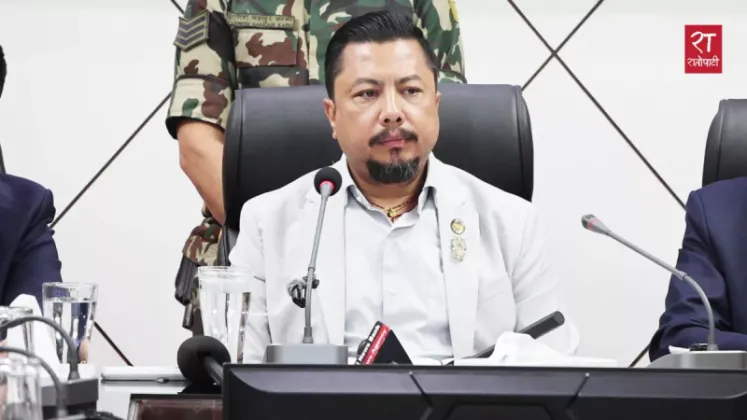
Energy, Water Resources and Irrigation Minister Biraj Bhakta Shrestha has urged citizens to remain vigilant about the quality of development projects, saying that sustained public oversight is essential if the country's construction works are to be quality-driven and sustainable. He made the remarks while addressing an interaction programme organised by the Syangja chapter of the Rastriya Swatantra Party (RASWPA) in Bhirkot on Sunday. His comments were widely reported by Nepali news outlets on November 29, 2026.
Quality Projects Begin With an Alert Public
Speaking at the Bhirkot gathering, Minister Shrestha argued that responsibility for development outcomes does not rest with the government and implementing agencies alone. Citizens, he said, have a direct stake in how projects in their areas are planned and built, and it is their vigilance that pushes such projects toward quality and long-term sustainability. According to reports of his address, he placed particular weight on the idea that the public should keep a close and continuous watch on construction work rather than treating it as a matter for officials alone.
The thrust of the minister's message, as carried by Nepali media, can be distilled into three connected points:
- Citizen vigilance as a driving force: Shrestha said that vigilance from ordinary citizens is what makes development projects quality-driven and sustainable.
- Public oversight of construction work: He stressed that people should actively oversee construction being carried out in their vicinity, viewing it as a shared responsibility.
- Quality and sustainability as twin goals: The minister linked these two outcomes directly to the level of public attention that projects receive on the ground.
Why the Emphasis on Oversight Matters
The minister's focus on citizen oversight speaks to a long-standing concern in Nepal's development discourse: that infrastructure gains meaning only when it is built well and endures. By calling on the public to remain engaged, Shrestha framed vigilance not as distrust of the system but as a civic contribution to it. When residents follow the progress of works in their own communities, the quality of construction becomes a matter of collective interest rather than an abstract administrative question. His remarks in Bhirkot presented this engagement as a precondition for projects that are both quality-driven and sustainable, echoing the central message of his address.
An Interaction Programme in Bhirkot
The interaction programme was organised by the Syangja wing of the Rastriya Swatantra Party, taking the discussion to Bhirkot and bringing the minister face to face with local participants. The event gave Shrestha a platform to speak directly about development quality outside the formal settings of government, and his message was picked up the same day by multiple outlets.
The coverage appeared across national and local media alike, including RatoPati, Gorkhapatra Online and Pradesh Khabar, all of which reported the story on November 29, 2026. That breadth of reporting reflects the resonance of the theme: questions about the quality and durability of development works remain close to the concerns of citizens across the country, and remarks on the subject by a sitting minister draw attention well beyond the venue itself.
A Portfolio Where Construction Quality Is Central
As the minister in charge, Shrestha leads the Ministry of Energy, Water Resources and Irrigation, the body responsible for developing Nepal's energy sector, managing the country's water resources and building irrigation infrastructure. These are areas in which projects tend to be large, technical and long-lived, and in which the standard of construction has a direct bearing on whether intended benefits actually reach the communities they are meant to serve. Hydropower and energy works, irrigation schemes and water resource infrastructure all demand durable materials, sound workmanship and careful supervision over extended periods.
Against that backdrop, the minister's insistence on citizen vigilance carries particular weight. Oversight from the public complements the formal monitoring role of the state, adding a layer of local scrutiny to works that people will ultimately live with for years. Shrestha's remarks in Syangja connected that practical reality with a broader principle: sustainable development is not delivered by government effort alone, but is reinforced when the people who depend on it stay alert to how it is built.
Vigilance as a Shared Responsibility
The Bhirkot address positioned development as a participatory process rather than a one-way delivery of benefits. In Shrestha's telling, the quality of projects is not something citizens simply await; it is something they help secure through attention, engagement and oversight of the construction taking place around them.
For residents of districts such as Syangja, the message amounts to a practical invitation to observe and follow the works in their own neighbourhoods. As reported on November 29, 2026, the minister's bottom line was straightforward: development projects become quality-driven and sustainable when the citizens they serve choose to remain vigilant.