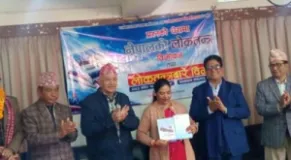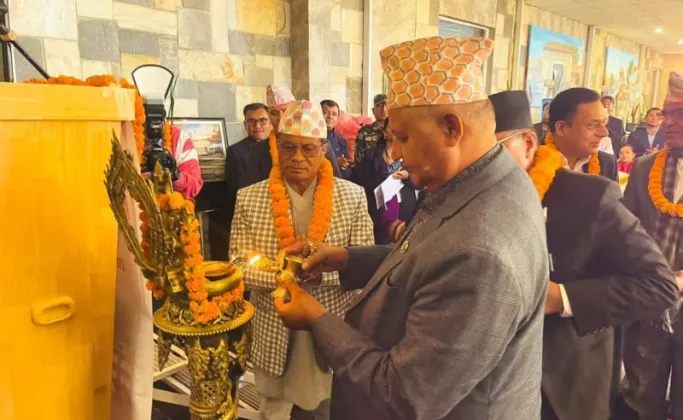
Lumbini Province Chief Minister Chetnarayan Acharya has called for stronger coordination among federal, provincial and local governments, saying cooperation across the three tiers is essential to provide quality services to citizens. He made the remarks at an inter-municipality learning and exchange programme that began on Saturday in Tansen, Palpa, organised by Tansen Municipality with support from the Asia Foundation. Acharya also urged local governments to share successful practices and useful experiences, arguing that public services can become more effective when local units learn from one another’s work.
Coordination central to service delivery
Acharya’s message placed cooperation between the three levels of government at the centre of efforts to improve services. The federal, provincial and local governments each form part of Nepal’s system of governance, and the chief minister said effective coordination among them is necessary if citizens are to receive quality services. His remarks underscored the importance of cooperation not only between levels of government but also among local governments working in different areas.
The chief minister’s call links coordination to the practical experience of residents who rely on public services. In his view, improving the quality of those services requires governments to work together rather than treating their responsibilities in isolation. The programme in Tansen provided a setting for local governments to discuss how learning and cooperation can support that goal. The central point of his address was that effective service delivery depends on collaboration across the tiers and on local units being willing to learn from one another.
Sharing practices between municipalities
Acharya encouraged local governments to exchange successful practices and good experiences. The emphasis was on sharing work that has proved useful, so that other local units can learn from it and apply relevant lessons in their own settings. He noted that services become more effective when municipalities learn from one another’s work, making peer learning an important part of the programme’s purpose.
The inter-municipality format is intended to create an opportunity for local governments to learn through exchange, rather than relying only on their own experience. By sharing approaches and discussing what has worked, municipalities can build on knowledge developed elsewhere. Acharya’s remarks presented this exchange as a practical route to stronger public services: local governments can benefit from the experiences of other units, while cooperation can help good practices reach beyond the place where they were first used.
The programme was organised by Tansen Municipality with support from the Asia Foundation and began on Saturday in Tansen. Its focus on learning and exchange aligns with Acharya’s appeal for local units to communicate and share their experiences. The chief minister did not, in the information provided about his remarks, identify particular municipalities or individual practices. Instead, he stressed the broader value of local governments learning from one another and cooperating to make services more effective. Reports on the event were published by Ratopati and Khabarhub.
A shared responsibility across levels
Acharya’s appeal brings together two related priorities: coordination among the federal, provincial and local governments, and the exchange of experience between municipalities. Both, he said, are essential to delivering quality services. Cooperation between the three tiers supports a joined-up approach to governance, while learning among local units allows municipalities to benefit from one another’s work.
The chief minister’s message to participants was therefore focused on practical collaboration. Local governments were urged to recognise the value of successful experiences elsewhere and to share their own useful practices in return. The aim, as conveyed in his remarks, is for cooperation and learning to contribute to more effective services for citizens. The programme in Tansen brought that message into focus by placing inter-municipality exchange at the centre of its agenda.