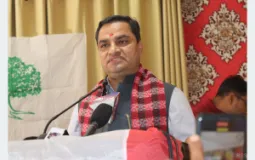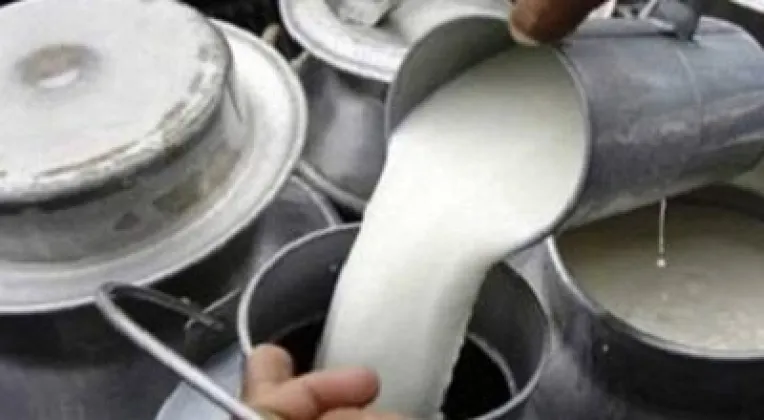
Dairy farmers in Kaski district have demanded that the minimum price of milk be fixed at Rs 80 per litre, up from the Rs 65 they currently receive, saying that the rising cost of animal feed, fodder, medicines, labour and transportation has made milk production increasingly hard to sustain. The demand was formally announced at a press conference organised by the Saptagandaki Dairy Producers Cooperative Union on Wednesday, where Union President Navaraj Baral warned that farmers will be forced to take to the streets if their demand is not met. The union argues that the price farmers receive at the farm gate has remained frozen even as the cost of everything that goes into producing a litre of milk has climbed steadily.
The proposed increase amounts to Rs 15 per litre, a jump of roughly 23 percent over the existing rate. According to the union, that increase is not being sought to generate fresh profit for farmers, but simply to keep milk production viable in the face of input costs that have outpaced the price they are paid. As reported by Khabarhub, farmers say stagnant farm-gate prices have steadily squeezed their earnings, leaving dairy households across the district with shrinking margins.
Rising costs, flat returns
At the heart of the farmers' case is a straightforward arithmetic problem. The price a Kaski dairy farmer receives for a litre of milk currently stands at Rs 65, while the expenses required to produce that litre continue to rise. The union listed five cost heads that have weighed heaviest on producers:
- Animal feed, which farmers must buy regularly and which has become a growing share of daily expenditure
- Fodder, needed year-round to keep milking animals productive
- Medicines, including the veterinary care required to keep herds healthy
- Labour, whether family labour that must be compensated through income or hired hands whose wages have gone up
- Transportation, the cost of moving milk from sheds to buyers, which rises with fuel prices
Farmers who addressed the press conference argued that the Rs 65 they are paid today simply does not reflect what it costs to keep a dairy operation running. When the price of milk stays flat while feed, fodder, medicines, wages and transport all become more expensive, the difference comes directly out of the household budget of the farming family. For many, the margin between the cost of producing a litre of milk and the price they are paid for it has narrowed to the point where dairying barely pays for itself.
Union takes its case public
The Saptagandaki Dairy Producers Cooperative Union, an umbrella body of dairy producer cooperatives in the district, chose to escalate its campaign by taking the demand to the public. Wednesday's press conference served to place the union's position formally on record and to signal that the farmers' patience is wearing thin.
Union President Navaraj Baral was categorical in his message. He warned of protests if the demand for an Rs 80 per litre minimum price is not met, making clear that the press conference was not merely an appeal but a warning. By framing the issue publicly, the union has put the burden of response on those who fix or honour the milk price, and has signalled that inaction will push farmers from the podium to the streets.
What the farmers are asking for
The demands laid out at the press conference can be summarised as follows:
- The minimum price of milk should be fixed at Rs 80 per litre, replacing the current Rs 65
- The revised price should reflect the documented rise in the cost of feed, fodder, medicines, labour and transportation
- The demand should be addressed without delay, failing which farmers will launch protests
The squeeze on farm-gate earnings
The farm-gate price, the amount a farmer is paid when milk leaves the farm, is the figure that determines whether a dairy household ends the month in surplus or deficit. It is distinct from the prices further along the chain, and it is this figure that Kaski's farmers say has failed to move even as their costs have multiplied. The union's argument is that a price fixed at Rs 65 no longer matches the economic reality of milk production in the district.
The consequences of that gap, according to farmers, are visible in their earnings. Stagnant farm-gate prices have squeezed incomes across the district's dairy sector, and producers warn that if the trend continues, families who have kept Kaski's dairy cooperatives running will find the trade impossible to continue. The union's demand for Rs 80 per litre is presented as the minimum correction needed to restore a workable balance between what it costs to produce milk and what farmers are paid for it.
What happens next
Attention will now turn to how the farmers' demand is received following Wednesday's press conference. The union has made the Rs 80 per litre price its central and stated position, and Baral's protest warning establishes a clear timeline pressure: the longer the demand goes unanswered, the greater the likelihood that Kaski's dairy farmers move to street action. For the district's dairy households, the calculation is straightforward. Every litre sold at Rs 65 against rising costs deepens the squeeze on their earnings, and they have now made it publicly known that they expect a revision to Rs 80 per litre, backed by the threat of protest if their call is ignored.