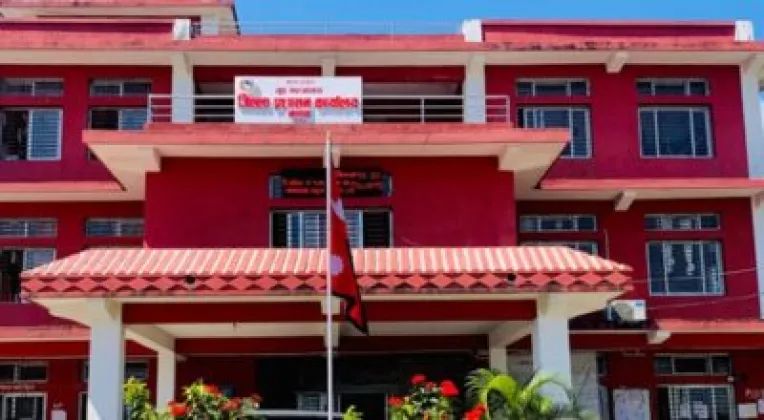
Residents of Jhapa seeking national identity cards or passports can now have their photographs and biometric details captured on the very day they arrive at the district administration office, ending a system under which service seekers once had to wait up to 35 days just to secure an appointment. The Jhapa administration announced the shift to same-day service as part of a parallel drive to clear long-pending files and bring the office's backlog of applications down to zero. The change, which covers photo and biometric services for both national identity cards and passports, was reported on November 28, 2026.
From Weeks of Waiting to Same-Day Service
Under the previous arrangement, anyone in Jhapa who needed to enroll for a national identity card, update their details, or complete the biometric stage of a passport application first had to book an appointment. Those appointments were not quickly available, and service seekers could wait as long as 35 days before their turn came. In practical terms, that meant a resident could spend more than a month waiting simply to have a photograph taken and fingerprints recorded, before the actual processing of the document had even begun.
That waiting period has now been done away with. According to reports by Khabarhub, RatoPati and Prades Khabar, the administration has begun taking photographs and biometric data on the same day service seekers arrive, removing the burden of scheduling around a distant appointment date.
The changes at a glance
- Photo and biometric services for national identity cards are now provided on the same day.
- Biometric services related to passports are likewise completed the day the applicant arrives.
- The earlier system involved appointment waits of up to 35 days.
- Long-pending files are being cleared, with the backlog being pushed toward zero.
Clearing the Backlog
Alongside the move to same-day service, the Jhapa administration is turning its attention to the files that accumulated during the period of long waits. Applications left pending, some of them for extended periods, are being cleared one by one under an explicit push to bring pending files down to zero.
Reducing the backlog matters as much as speeding up new enrollments. Pending files represent service seekers who did their part, submitting applications and waiting, but who were held up by the system itself. By targeting a zero-backlog position, the administration aims to ensure that no applicant is left in limbo and that the queue moves in step with new demand rather than growing steadily behind it.
The Front Line of Service Delivery
District administration offices in Nepal are the primary points of contact between citizens and the state for a range of personal documents, and services tied to identity and travel are among the most sensitive to delay. When appointments stretch from days into weeks, the effects ripple outward: applications stall at their very first step, and applicants must organize their work and family schedules around a single fixed date at the government counter.
It is precisely this first step that the Jhapa administration has moved to fix. By guaranteeing that photo and biometric capture happens the same day a service seeker appears, the office has removed the longest and least predictable segment of the old process. The remaining steps of verification and issuance still follow, but applicants no longer begin their wait before their documents have even entered the system.
Why the Documents Matter
National identity cards and passports are among the most commonly sought documents at district administration offices, and delays at the enrollment stage hold up everything that follows. A national identity card serves as a core personal identifier, while a passport is essential for anyone planning to travel abroad, whether for employment, study, medical treatment or family visits. For households dependent on remittances or with members working overseas, a stalled passport application can carry real consequences.
For residents of Jhapa, the practical effect of the reform is that the most time-consuming uncertainty has been taken out of the process. A person can now complete the capture of their photo and biometric details in a single visit, rather than planning around an appointment weeks in advance and making repeated trips to follow up.
A Test of Consistency
Administrative reforms of this kind are often measured less by their announcement than by their durability. With same-day photo and biometric services now in place and pending files being pushed steadily toward zero, the Jhapa administration has set a visible standard for service delivery at the district level. The weeks ahead will show whether the office can hold that standard as daily walk-in demand continues.
For now, however, the direction of change is unambiguous. Service seekers in Jhapa who once measured their wait in weeks are being served within a single day, and files that lingered in the pending pile are on their way to being cleared altogether. As reported on November 28, 2026, the district administration has framed the effort in simple terms: same-day service for those who arrive, and zero pending files for those who have already waited.