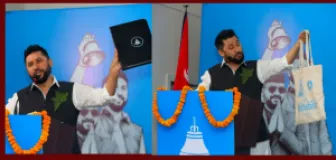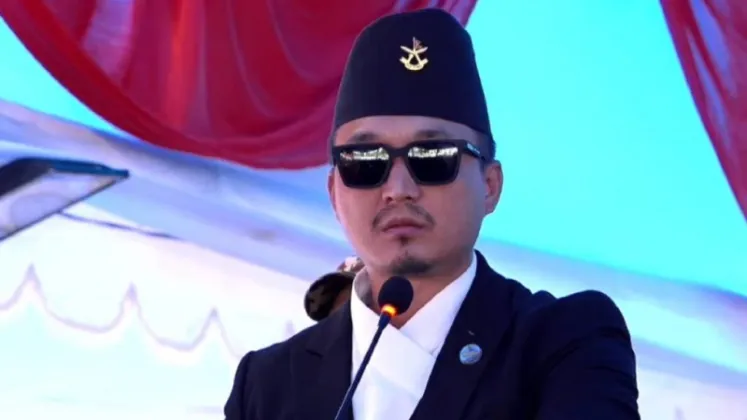
Home Minister Sudhan Gurung has announced that he will get married in Gorkha on the 17th of Mangsir, in keeping with traditional Gurung culture, and has pledged that the ceremony will be a simple, no-frills affair. Gurung shared the news while addressing the 15th central council meeting of the Tamu Hyul Chhoinj Dhi Gurung National Council in Itahari, Sunsari, telling community members that although he occupies one of the most senior positions in the government, his wedding would be celebrated the way an ordinary citizen would celebrate it.
Simple Promises from a Powerful Office
The defining theme of the Home Minister's announcement was restraint. As reported by Nepal Press, Gurung said he would keep the wedding free of extravagance and unnecessary expense, and made clear he did not want the occasion to turn into a display of status or wealth.
He emphasised that his position, which places him in charge of the country's home administration, would not change the character of the celebration. In his telling, the marriage should look and feel like the wedding of any ordinary household, without the grandeur that often accompanies the private functions of senior public figures. The phrase "no frills" captured the spirit of his message: a modest ceremony, conducted among family and community, rather than a costly spectacle befitting a minister.
The key details of the announcement are:
- Date: Mangsir 17 of the current Nepali year, which falls in early December
- Venue: Gorkha district
- Customs: Traditional Gurung culture
- Scale: Simple and inexpensive, like the wedding of an ordinary citizen
Announced Before His Own Community in Itahari
Gurung chose a significant stage for the news. The 15th central council meeting of the Tamu Hyul Chhoinj Dhi Gurung National Council brought together members of the Gurung community's national organisation in Itahari, one of the busiest trade towns in Sunsari district in Koshi Province. It was before this gathering, among members of his own community, that the Home Minister spoke about his forthcoming marriage.
The setting underlined the cultural character of the announcement. The Gurung people, who refer to themselves as Tamu, have their own language, customs and social institutions, and community councils such as the Tamu Hyul Chhoinj Dhi Gurung National Council play an active role in preserving and promoting that heritage. By sharing his wedding plans at the council meeting, Gurung placed a deeply personal milestone before the very community whose traditions he said would shape the ceremony, according to Khabarhub.
Gorkha and Mangsir: Place and Timing of the Wedding
The choice of Gorkha as the wedding venue carries cultural resonance. The district in Gandaki Province is one of the historic homelands of the Gurung people, whose settlements spread across the hills of the region alongside districts such as Lamjung, Kaski, Syangja and Tanahun. Holding the ceremony there, and conducting it according to Gurung custom, ties the wedding directly to the heritage of the community he addressed in Itahari.
The timing is equally telling. Mangsir is widely regarded in Nepal as one of the most auspicious months for marriages, and its weeks form the heart of the country's traditional wedding season, when families fix dates, arrange rituals and host feasts. Scheduling the wedding for Mangsir 17 places it squarely within that customary window, a period when celebrations across the country reach their peak.
Traditional Gurung weddings are known for their emphasis on community participation, blessings from elders and customary rituals performed in the presence of relatives and neighbours rather than on material display. That ethos matches the tone Gurung himself struck in Itahari, where he framed the ceremony not as an official event but as a family occasion rooted in the customs of his community.
A Personal Milestone in the Public Eye
For a sitting Home Minister, the announcement of a wedding is an unusual public moment, and Gurung used it to send a message about modesty in public life. By stating in advance that the ceremony would be neither extravagant nor costly, he set expectations for the day well before it arrives and made simplicity the yardstick by which the wedding will be judged, as Ratopati reported.
The reports did not specify the exact location within Gorkha, the guest arrangements or other details of the ceremony, but the essentials were unambiguous. The country's top home affairs official will marry in Gorkha on Mangsir 17, following the traditions of the Gurung community, and intends to do so the way an ordinary citizen would: simply, without extravagance and without the trappings of high office. For the council members gathered in Itahari, the announcement carried both personal and cultural weight, marking a milestone that will now be watched as the wedding date approaches.