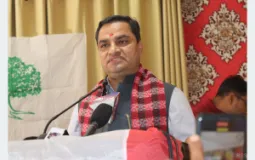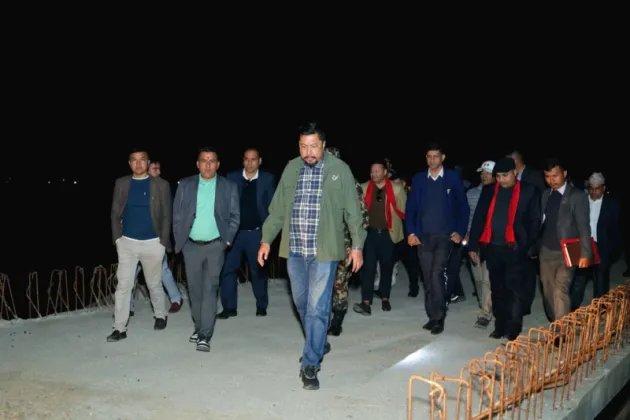
Energy, Water Resources and Irrigation Minister Birajbhakta Shrestha has directed that the Rupa Lake Conservation and Integrated Development Project in Kaski district be completed within the current fiscal year, issuing the instruction during an on-site monitoring visit to the project. The directive, reported by Nepali news outlets on November 28, 2026, was addressed to both the project staff and the construction entrepreneurs working on the ground, whom the minister asked to speed up ongoing work so that the remaining activities can be finished without further delay.
Minister Reviews Progress on the Ground in Kaski
The minister travelled to the project site as part of a monitoring visit, a form of oversight that allows the head of a ministry to see physical progress first hand rather than relying solely on written reports from the implementing agency. During the inspection, Birajbhakta Shrestha instructed the personnel deployed at the project and the construction entrepreneurs responsible for execution to accelerate the pace of work, according to reports published by Nepal Views and Pradesh Khabar.
The message from the ministry was direct: the project should not be allowed to slip beyond the current fiscal year. By addressing government staff and contractors in the same breath, the minister effectively placed responsibility for timely delivery on every link of the implementation chain, from planning and administration to the construction work being carried out at the lake site. Construction entrepreneurs, the term commonly used in Nepal for contracted builders, are often the decisive factor in whether publicly funded works finish on schedule.
Key Points of the Directive
- The Rupa Lake Conservation and Integrated Development Project must be completed within the current fiscal year.
- Project staff were instructed to intensify their efforts and keep the works on schedule.
- Construction entrepreneurs were directed to speed up execution so that conservation and development activities are not left incomplete when the fiscal year ends.
A Deadline Tied to the Fiscal Year
Nepal's fiscal year runs from mid-July to mid-July, which means a project ordered to finish within the current fiscal year has a fixed and publicly understood endpoint. From the monitoring visit reported in late November, that leaves roughly seven and a half months for the remaining works to be executed and closed out. Any slippage would push completion into the next fiscal cycle, a scenario that public projects in Nepal generally seek to avoid because budget allocations and administrative approvals are tied to the yearly cycle.
Deadlines of this kind carry practical weight. Ministries review progress against the annual budget and programmes announced at the start of the fiscal year, and incomplete projects can attract audit observations and difficulties in securing follow-up funding. For the implementing side in Kaski, the minister's instruction therefore functions as both a push to move faster and a clear administrative signal that time is short.
The reports carrying the directive did not include a detailed breakdown of the project's budget, physical progress or technical milestones. What they did make clear is the priority now attached to finishing the job: the minister responsible for water resources has personally put a completion deadline on record during a visit to the site itself.
The Project and Its Setting
The Rupa Lake Conservation and Integrated Development Project takes its name from Rupa Lake, a freshwater lake in Kaski district of Gandaki Province. Kaski, whose headquarters is Pokhara, is home to several prominent lakes, and Rupa is generally counted among the district's major water bodies alongside Phewa and Begnas. The word integrated in the project's title indicates that the initiative combines conservation of the lake with broader development works in the surrounding area.
Projects of this nature typically bring together protection of the water body with improvements that benefit the communities living around it. In this instance, the minister's focus during the visit was on pace rather than design: his instruction was that whatever remains of the approved scope should be completed within the current fiscal year.
Follow-Up and Accountability
Ministerial monitoring visits are often followed by further reviews, and the directive to complete the project this year sets a clear benchmark against which progress can now be measured. Attention will turn to whether the project staff and construction entrepreneurs can convert the minister's instruction into visible progress on the ground, and whether the ministry carries out additional inspections before the fiscal year closes in mid-July.
For readers in Kaski and across the country, the significance of the announcement lies in its clarity. A federal minister has publicly tied his ministry's expectations to a specific deadline for a specific conservation project, and the instruction entered the national news cycle on November 28, 2026. Whether the Rupa Lake Conservation and Integrated Development Project meets that deadline will depend on execution in the months ahead, but the expectation from the top of the ministry could hardly be stated more plainly.