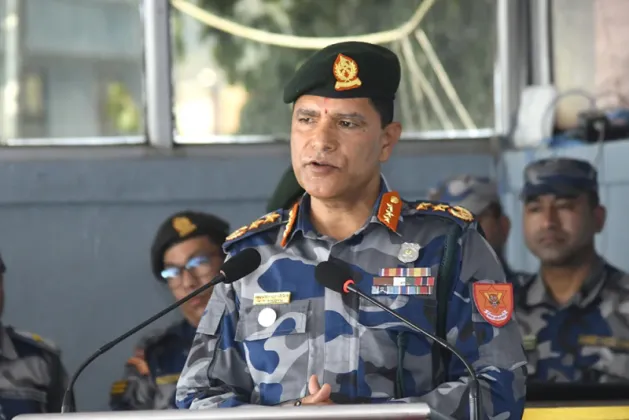
Inspector General of the Armed Police Force (APF) Nepal, Narayan Datt Paudel, has directed that the force's annual unit inspections should not be reduced to mere formalities but must instead genuinely evaluate professionalism, actual performance results, effectiveness in border security and the level of public trust earned by each unit.
He issued the instruction on Thursday, Mangsir 10, while addressing the closing ceremony of a training programme organised for members of teams deployed for central inspections at the Armed Police Force Nepal headquarters in Kathmandu.
Inspections as a Tool for Real Improvement
According to the directive, the inspections are intended to support the performance, discipline and capacity building of units across the force. Inspector General Paudel emphasised that inspection teams should look beyond paperwork and procedural checklists to gauge how units are actually performing on the ground.
He stressed that the exercise should measure concrete outcomes rather than simply confirming that records and files are in order. In particular, he highlighted the importance of assessing how effectively units are carrying out their responsibilities related to border security, a core mandate of the force, and whether their work has translated into public confidence.
Training for Inspection Teams
The instruction came at the conclusion of a training programme held for personnel who will form the teams conducting central inspections. The event took place at the APF headquarters in Kathmandu, where senior leadership outlined expectations for those preparing to visit units across the country.
By orienting inspection team members before deployment, the force aims to ensure that the annual process is carried out with a clear and substantive focus. The training is designed to prepare the teams to evaluate professionalism, performance results and discipline in a manner that contributes to strengthening the institution as a whole.
Broader Mandate of the Armed Police Force
The Armed Police Force Nepal plays a significant role in border security alongside its other internal security responsibilities. Ensuring that units deployed along the border are effective is therefore a key concern for the force's leadership, and the IG's remarks reflect an emphasis on making sure this function is rigorously assessed during inspections.
Public trust was another dimension the Inspector General underlined. He indicated that inspections should consider how units are perceived by the communities they serve, positioning the annual exercise as a means of reinforcing accountability and credibility across the organisation.
Focus on Performance and Discipline
The central inspection process serves as an important mechanism within the APF for evaluating units on their performance, discipline and capacity building. The IG's directive signals that leadership intends this year's cycle to move beyond routine verification and instead generate meaningful assessments that can guide improvements within individual units and the force overall.
With the training programme now concluded, the inspection teams are expected to carry out their assignments in line with the direction given by the Inspector General, applying the substantive criteria he outlined: professionalism, tangible performance results, border security effectiveness and public trust.
For more details, see the original reports from Ratopati and Gorkhapatra Online.