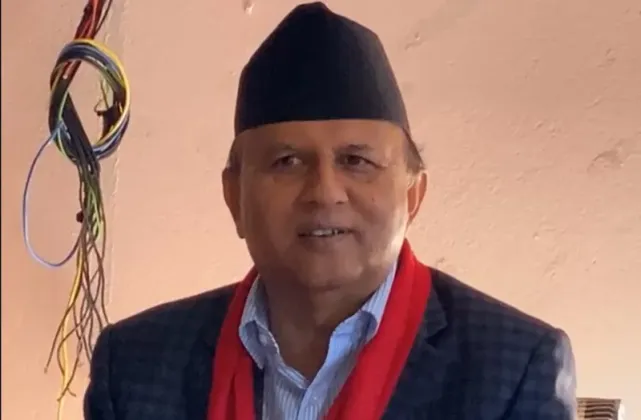
CPN (UML) General Secretary Shankar Pokharel has said that important issues tied to Nepal's national interest did not receive priority during the Prime Minister's recent visit to India. Pokharel made the remarks at a press meet organised by Press Chautari Nepal, Dang chapter, on Tuesday, where he offered a critical assessment of the outcomes of the high-level visit.
According to Pokharel, while one agreement signed during the trip was a positive step, the visit fell short on several long-standing matters that directly affect Nepal's relationship with its southern neighbour. His comments come as debates continue within the country over how effectively Nepal's diplomacy is advancing its core interests with India.
Air Route Agreement a Bright Spot
Pokharel acknowledged that the agreement reached on air routes during the Prime Minister's visit was a positive development. He described it as one of the few encouraging outcomes of the trip, suggesting that progress on aviation matters was at least one area where the visit delivered tangible results.
However, he was quick to point out that the positive note on air routes was outweighed by the absence of discussion on other pressing issues. In his view, a visit of such significance should have addressed the full range of matters that define Nepal-India relations, particularly those that have remained unresolved for decades.
Key National Interest Issues Left Unaddressed
The UML General Secretary listed several critical issues that, according to him, were not discussed during the visit. Among them were the border problems between Nepal and India, the review of the 1950 Treaty of Peace and Friendship, and the need for easier access for Nepali products to the Indian market.
- Border problems between the two countries were not taken up for discussion
- The review of the 1950 treaty, a long-pending demand from the Nepali side, was not raised
- Easier access for Nepali products to the Indian market did not receive attention
These issues have long featured in Nepal's diplomatic conversations with India. The 1950 treaty, in particular, has been repeatedly cited by Nepali leaders across parties as a document that requires updating to reflect current realities between the two neighbours. Similarly, trade barriers affecting Nepali goods entering India have been a persistent concern for exporters and policymakers alike.
Pokharel's argument was that by leaving these matters off the agenda, the visit missed an opportunity to advance Nepal's national interest at the highest level of engagement with India.
Comment on the RSP's Position on Foreign Loans
Beyond his remarks on the India visit, Pokharel also touched on domestic political discourse. He said that the Rastriya Swatantra Party's misconception that foreign loans should not be taken had been dispelled. According to him, the party's earlier position against foreign borrowing no longer holds.
His comments were directed at a party that has positioned itself as a critic of established political practices since its entry into national politics. Pokharel's statement suggested that the practical realities of governing and financing development had forced a rethink of the party's earlier stance on foreign loans.
The remarks came at a press meet organised by Press Chautari Nepal's Dang chapter, a platform that local journalists use to bring political leaders before the media in the district. Pokharel used the occasion to speak on both foreign policy matters and domestic political debates, reflecting the dual concerns that currently shape public discussion in Nepal.
Broader Context of the Criticism
The Prime Minister's visit to India has been a subject of considerable attention within Nepal, with different parties weighing in on its outcomes. Pokharel's assessment represents a critical view from one of the country's major political forces, arguing that symbolic and technical achievements, such as the air routes agreement, are not a substitute for engagement on the substantive issues that define the bilateral relationship.
For the UML, questions surrounding the border with India and the review of the 1950 treaty have featured prominently in its foreign policy positions over the years. Pokharel's statement at the Dang press meet reinforced the party's emphasis on these matters, framing their absence from the visit's agenda as a failure to prioritize national interest.
At the same time, his comment on the Rastriya Swatantra Party and foreign loans highlighted the internal political dynamics at play, as parties continue to spar over economic policy questions alongside foreign policy ones.
As reactions to the Prime Minister's India visit continue to emerge from various quarters, Pokharel's remarks add to the ongoing debate over whether Nepal's diplomatic engagements with India are delivering on the issues that matter most to the country's national interest.