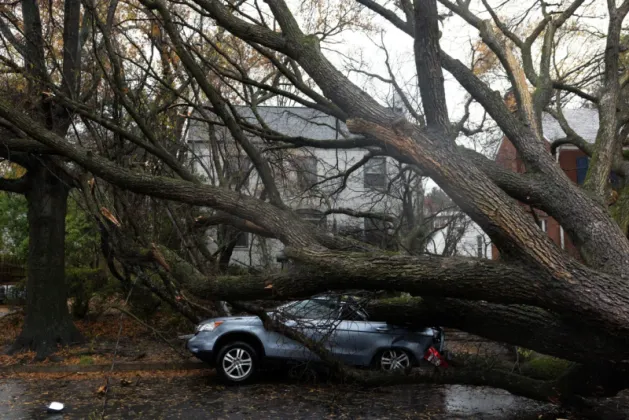
A powerful storm packing heavy rain and strong winds swept across the United States Midwest and East Coast during the Thanksgiving holiday, leaving more than 900,000 homes and businesses without electricity and forcing the cancellation of hundreds of flights. The late-season storm struck at the height of one of the busiest travel periods of the American year, turning what is normally a time of family gatherings into a day of darkened homes and delayed journeys for hundreds of thousands of people.
Widespread Power Outages Across the Region
The storm's wind and rain brought down power lines and damaged electrical infrastructure across a broad swath of the eastern half of the country. Utility crews worked through the holiday to restore service, but with more than 900,000 customers affected, many households spent Thanksgiving without electricity, raising concerns about food spoilage and the ability to cook the traditional holiday meal.
The scale of the outages reflected the strength of the system, which combined gusty winds with torrential downpours as it tracked through the Midwest and along the East Coast. Outages were reported across multiple states in the region, and the sheer number of affected customers meant that restoration efforts stretched on well into the holiday.
Travel Chaos on One of the Busiest Days of the Year
The timing of the storm compounded its impact. Thanksgiving week is among the heaviest travel periods in the United States, with millions of Americans on the roads and in the air heading to family gatherings. Hundreds of flights were cancelled as airlines struggled with the weather, snarling airport operations and leaving passengers scrambling to rebook.
Road and bridge travel was also disrupted. Heavy rain, flooding and snowfall affected roadways across the region, and strong winds added hazards for drivers, particularly on bridges and exposed stretches of highway. Travelers who had planned to drive for the holiday faced dangerous conditions, delays and, in some cases, impassable routes.
Flooding and Snow Add to the Disruption
The storm was not a single-type weather event. In addition to heavy rain and damaging winds, it delivered flooding in some areas and snowfall in others, creating a mix of hazards across the affected states. Wet, snow-covered and flooded roads raised the risk of accidents, and bridges in the region were among the infrastructure affected by the severe conditions.
A Storm-Tested Holiday
For many Americans, the storm transformed Thanksgiving from a celebration into a test of endurance. Families without power faced holiday dinners without heat, light or working kitchens. Those stranded by cancelled flights spent the holiday in airports waiting for seats on oversold rebooked planes. Communities accustomed to staging large holiday parades and gatherings were forced to contend with waterlogged streets and dangerous winds.
The disruption underscored how vulnerable large-scale infrastructure remains to severe weather, even in well-prepared regions. Power utilities, airlines and transportation authorities all faced simultaneous strain as the storm moved through, and the outages and cancellations rippled through the holiday plans of families across multiple states.
As cleanup and restoration efforts continued, the storm served as a reminder of the volatility of late-November weather in the United States, where powerful systems can bring rain, wind, flooding and snow all at once, and where a single Thanksgiving storm can leave nearly a million customers in the dark.