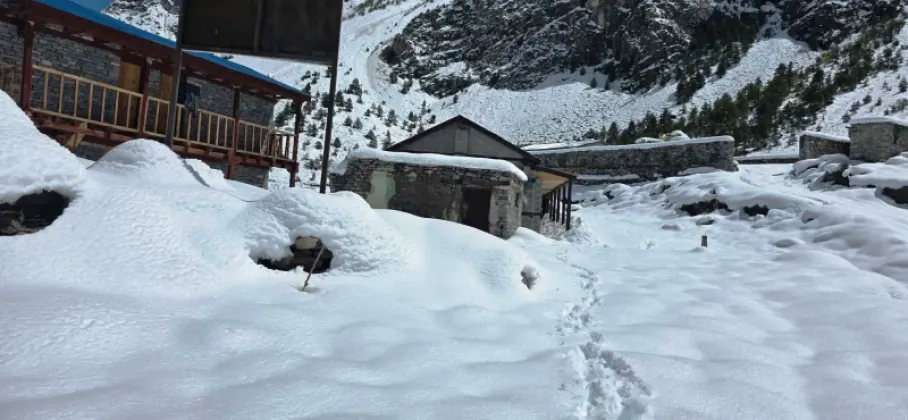
The Simikot-Hilsa road in Nepal's Humla district, which has remained blocked after a natural disaster struck the route, is expected to reopen for traffic within two days, according to authorities. The update, carried by Nepali media outlets Nepal Samaya and Nepal Views, brings relief to residents and travelers who depend on the route as a key transport link between Simikot, the headquarters of Humla district, and Hilsa, a border settlement in Karnali Province.
The blockage has cut off the road connection linking Simikot and Hilsa, disrupting the movement of people and goods along one of the most important transport corridors in the district. According to the available reports, no casualties were reported in connection with the incident, and authorities have indicated that clearance work will restore traffic on the road within two days.
A Key Corridor in Remote Humla
The Simikot-Hilsa road holds outsized importance for the communities it serves. Humla, located in Karnali Province, is among Nepal's most remote and geographically challenging districts, and the road link between its district headquarters and the northern border area plays a central role in keeping people and supplies moving.
Key points about the route include:
- Simikot serves as the administrative headquarters of Humla district and functions as the main hub of the region.
- Hilsa lies along the Nepal-China border in upper Humla and is a recognized border point used for trade.
- The road linking the two points carries passengers and goods across terrain where travel alternatives are limited, meaning any disruption is felt across a wide area.
When the road is blocked, movement between the district headquarters and the northern parts of the district becomes difficult, affecting households, traders, and travelers alike. That is why the announcement that the route will reopen within two days carries significance well beyond the immediate stretch of road affected by the disaster.
Clearance Work Expected to Restore Traffic Within Two Days
According to the reports published by Nepal Samaya and Nepal Views, authorities have assessed the situation and indicated that clearance work will allow traffic to resume within two days. The available reports described the disruption as the result of a natural disaster but did not specify the exact nature or precise location of the event that severed the link between Simikot and Hilsa.
Clearance operations on mountain roads typically involve removing debris from the affected section, checking the stability of the slopes above the roadway, and confirming that the route is safe for vehicles before traffic is allowed to resume. The authorities' assessment that the road can be restored within two days suggests that the damage, while disruptive, is expected to be manageable through ongoing work.
For now, travelers and transport operators who rely on the corridor have been given a clear timeline: the road is expected to be open again within two days, subject to the progress of the clearance effort.
No Casualties Reported
One of the few firm details confirmed in the available reporting is that no casualties were reported in connection with the blockage. In a region where natural disasters can pose serious risks to people traveling on narrow mountain roads, the absence of reported loss of life or injury will come as a measure of reassurance for local residents.
Disruptions of this kind still carry real costs even when no one is hurt. Blocked roads delay supplies, complicate travel plans, and can leave communities on either side of the affected section cut off from one another until clearance work is complete. The two-day reopening timeline therefore matters not only for restoring traffic but also for limiting the wider disruption caused by the blockage.
A Recurring Challenge for Nepal's Mountain Roads
The incident underscores a challenge familiar across Nepal's hilly and mountainous districts, where roads carved through steep terrain remain vulnerable to natural disasters. In the Karnali region in particular, transport links are periodically disrupted by natural events, forcing authorities to mobilize clearance work before routes can be reopened.
For Humla, where the Simikot-Hilsa road forms a central part of the local transport network, such disruptions highlight the importance of timely clearance and maintenance. The district's remoteness means that when a key road like this one goes out of service, the effects ripple quickly through local travel and trade.
With authorities projecting a reopening within two days, attention now turns to the completion of the clearance work on the blocked section. If the timeline holds, traffic between Simikot and Hilsa will resume by the end of the two-day window, restoring one of Humla district's most important road connections. Residents, traders, and travelers along the corridor will be watching the progress closely, as the swift reopening of the Simikot-Hilsa road marks a return to normal movement along a route that communities in upper Humla depend on.