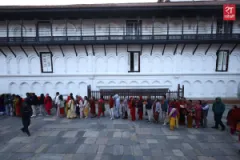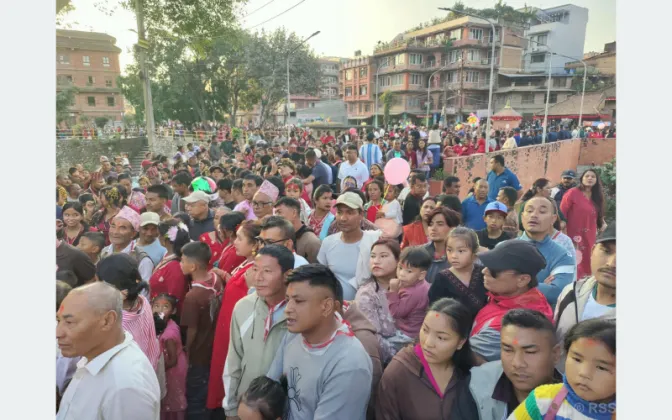
Crowds of devotees have been streaming into the Brahmayani Temple in Bhaktapur since midnight, keeping the shrine and its surroundings alive through the night as the city observed the annual Brahmayani Jatra. The festival is held every year on Vijaya Dashami, the day regarded as the most important of the Dashain festival celebrated across Nepal. Devotees began gathering at the temple from midnight itself, and the flow of worshippers continued as the night progressed, according to reports by RatoPati and Khabarhub. Residents of Bhaktapur left their homes in groups to the accompaniment of dhimay music, while those observing a fast made their way to the temple by crawling, rolling, and carrying five, seven, or eighteen lit lamps on their bodies.
A Night-Long Gathering at the Temple
The Brahmayani Jatra begins the moment Vijaya Dashami arrives. Devotees regard the opening hours of the day as the proper time to reach the shrine, and so the gathering starts at midnight, with worshippers arriving in the dark and continuing to come long after. The temple premises and the lanes leading to it filled with people as the night went on, turning the area around the shrine into the busiest point of Bhaktapur on a day when the entire country is otherwise engaged in Dashain observances.
The devotees who throng the temple are drawn by the belief attached to the site. For the people of Bhaktapur, the jatra is a fixture of the Dashain calendar, an annual appointment with a shrine that holds a distinct place in the city's religious life. The crowds reported since midnight indicate that this year's observance has followed the pattern the festival is known for: a steady build-up of worshippers from the very first hours of Vijaya Dashami.
A Shakti Peeth of the Navadurga
The Brahmayani Temple is revered as a Shakti Peeth of Navadurga, the nine goddesses at the centre of Dashain worship. This standing gives the shrine a significance that goes beyond the local: it is regarded as a seat of divine power among the shrines of the goddesses, and the jatra held there on Vijaya Dashami is anchored in that identity.
Central to the festival is the belief that Tripura Sundari appears at the temple on this day. It is this conviction that devotees act upon when they set out for Brahmayani in the middle of the night. To reach the temple while the goddess is believed to be present is the purpose of the entire observance, and it explains why worshippers accept the discomfort of a night-long journey and, for many, the far greater physical demands of the fast.
Lamps, Crawling and Rolling: Devotion Through the Fast
The most striking expressions of devotion at the jatra come from those observing a fast. For these devotees, the journey to the temple is itself an offering, and it is made in ways that set them apart from the general flow of visitors. Rather than walking to the shrine, fasting devotees covered the route by crawling and by rolling their bodies along the ground. Many also carried lit lamps on their bodies as they moved toward the temple. The practices reported at this year's jatra include:
- crawling on the ground along the route to the temple
- rolling their bodies as they make their way forward
- carrying five, seven, or eighteen lit lamps on their bodies for the duration of the journey
The combination of fasting, physical hardship and the carrying of lamps marks the devotee's approach to the shrine as an act of discipline. Each element of the observance, from the number of lamps to the choice of crawling or rolling, forms part of the vow the devotee has undertaken for the day. The journey concludes at the temple, where the fasting devotees offer worship to the goddess.
Dhimay Music and a City on the Move
The festival is not only a matter of individual devotion. Bhaktapur residents flocked from their homes playing dhimay music, and the sound accompanied the devotees on their way to the temple. The music gave the night-time gathering its rhythm, with groups of worshippers moving through the streets together rather than as solitary visitors.
On Vijaya Dashami, when households across Nepal are gathered around Dashain rituals, Bhaktapur's celebration takes this public, communal form. The movement of residents from their homes, the dhimay beats in the lanes and the steady stream of worshippers toward the Shakti Peeth together make the Brahmayani Jatra a distinctive observance of the day in the city.
An Annual Rite at the Heart of Dashain
Because the jatra is tied to Vijaya Dashami, its date never changes: it falls on the same day the rest of the country marks as the principal day of Dashain. That timing places the festival at a point of great religious attention in the Nepali calendar, and it ensures that the temple's congregation gathers precisely on the day the goddess is believed to appear at the shrine.
This year, the observance began at midnight and continued with devotees arriving at the temple through the night. With crowds thronging the shrine since night, the Brahmayani Jatra has once again filled Bhaktapur's Vijaya Dashami with the sound of dhimay, the glow of lamps carried on devotees' bodies, and the movement of a city walking, crawling and rolling toward its goddess.