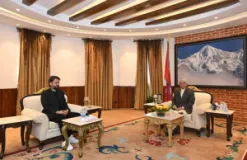
The National Human Rights Commission will inspect the place where Inam Sapkota is currently being held, after his wife, Kavita Pandey, filed a complaint with the Commission alleging human rights violations connected to his detention. Pandey lodged her complaint on Friday, stating among other things that she has not been allowed to meet her husband. The Commission confirmed that the complaint was received and registered the same day.
Following the registration of the complaint, a team from the National Human Rights Commission is set to visit the location where Sapkota is being held. The purpose of the visit, according to information shared after the complaint was filed, is to inspect Sapkota's condition first-hand and to gather information relevant to the allegations raised by his wife.
Complaint Filed by the Wife
Kavita Pandey approached the National Human Rights Commission on Friday, raising concerns over the treatment of her husband while he remains in custody. In her complaint, she alleged that human rights violations had taken place in connection with his detention. A central element of her complaint was that she has been denied the opportunity to meet her husband, a situation she raised directly with the country's top rights watchdog.
The Commission moved quickly on the complaint, confirming that it had been received and formally registered on Friday itself. The registration of the complaint sets in motion the Commission's process of examining the allegations, which in this case has already led to the decision to send a team for an on-site inspection.
On-Site Inspection Planned
The inspection visit is the immediate next step taken by the National Human Rights Commission in response to Pandey's complaint. A team from the Commission will travel to the place where Sapkota is being held. During the visit, the team will carry out two key tasks: inspecting his condition and gathering information related to the complaint.
Such inspections allow the Commission to assess a detention situation directly rather than relying solely on written submissions or second-hand accounts. By observing the conditions in which a detainee is being held and collecting information on the ground, the Commission can build a clearer picture of whether the allegations brought before it are substantiated.
The Commission's Role in Complaints of This Nature
The National Human Rights Commission is the constitutional body mandated to protect and promote human rights in Nepal. Complaints alleging violations by authorities, including in matters relating to detention, fall squarely within the scope of its work. When a complaint is registered, the Commission can pursue a range of measures, and sending an inspection team to the site of a detention is among the tools available to it.
In this case, the sequence of events has moved rapidly: the complaint was filed and registered on Friday, and the Commission has already decided to inspect the place where Sapkota is being held. The inspection is intended to establish the facts of his condition and to collect information that will inform the Commission's consideration of the complaint.
What Happens Next
Attention will now turn to the findings of the inspection team. The visit is expected to yield first-hand information about Sapkota's condition and the circumstances of his detention, which Pandey flagged in her complaint to the Commission. The results of the inspection and the information gathered will form part of the Commission's handling of the registered complaint.
For Pandey, the filing of the complaint marks a formal step in raising her concerns through an official channel. Her central allegations, namely that human rights violations have occurred and that she has been unable to meet her husband, are now before the Commission, which has taken the preliminary step of planning a site visit in response.
The National Human Rights Commission's confirmation that the complaint was received and registered on Friday provides the official timeline for the matter: complaint filed Friday, registered the same day, and an inspection of Sapkota's place of detention to follow as the Commission gathers information on the case.