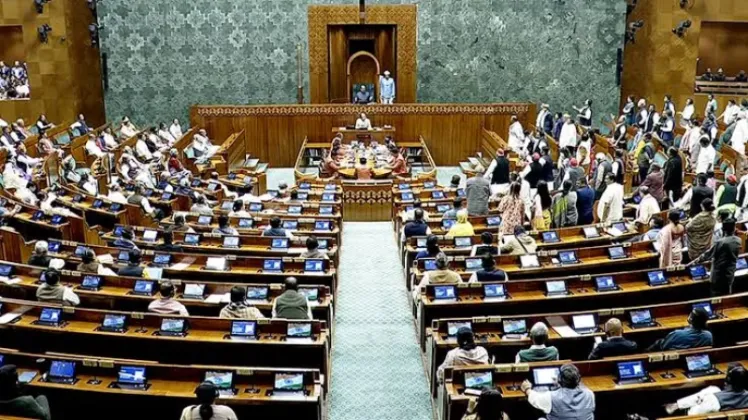
India's central Cabinet has approved a proposal to increase the number of seats in the Lok Sabha, the lower house of the country's Parliament, by 50 percent. The proposal, cleared at the Cabinet level, would expand the strength of the house from the current 543 seats to 815, effectively adding 272 new seats to India's largest democratic institution.
The development was reported by Nepali news outlets citing reports from India, and it marks one of the most significant proposed changes to the composition of the Indian Parliament in decades. According to the reports, all of the additional seats created under the proposal will be reserved for women.
The Proposal and Its Scale
The Lok Sabha, directly elected by the people of India, currently comprises 543 members, each representing a parliamentary constituency. Under the proposal approved by the Cabinet, that number would rise to 815 seats, an increase of 272 seats. This represents an expansion of exactly 50 percent of the house's existing size.
What makes the proposal particularly notable is its gender dimension. Rather than distributing the new seats among general categories or other reservation schemes, the Cabinet has endorsed a plan under which every one of the 272 additional seats would be reserved for women. If implemented, this would substantially alter the gender balance of the lower house, where women have historically been underrepresented.
The approval by the central Cabinet is a key step in India's policy-making process, as Cabinet clearance is typically required before major constitutional or legislative proposals move forward. The reports did not indicate the timeline for implementation, but the approval signals the government's intent to pursue the expansion.
What It Means for Women's Representation
The decision to reserve all new seats for women places women's political representation at the center of the proposed expansion. Women remain underrepresented in India's Parliament relative to their share of the population, and the addition of 272 women-reserved seats would, if the proposal goes through, significantly increase the number of women who can sit in the Lok Sabha.
By tying the expansion of the house directly to women's reservation, the proposal links two major issues: adjusting the size of Parliament and addressing gender inequality in political representation. According to the reports, this linkage is a defining feature of the Cabinet-approved plan.
The reservation of the additional seats means that candidates for those 272 constituencies would be restricted to women, reshaping electoral competition in those areas once the new seats come into existence. For political parties across India, the proposal would require adjustments to candidate selection strategies in constituencies affected by the reservation.
Next Steps and Wider Implications
While the Cabinet's approval is a significant procedural milestone, the implementation of such an expansion would involve further legislative steps before the size of the Lok Sabha can actually change. The reports available did not detail those subsequent steps or provide a timeline for when the new seats would be created.
An increase of this magnitude would have wide-ranging consequences for India's parliamentary system. With 815 members instead of 543, the Lok Sabha would represent a substantially larger deliberative body, affecting everything from seating arrangements in the house to the way constituencies are organized across states.
For voters, the expansion would mean the creation of 272 new parliamentary constituencies, giving additional parts of the country dedicated representation in the lower house. For candidates and political parties, it would open a large number of new contests, with all of the newly added ones reserved for women.
A Major Change to Indian Democracy
The Lok Sabha is the centerpiece of India's federal parliamentary democracy, and changes to its size and composition are matters of national significance. The current house of 543 seats has been the framework under which Indian general elections have been conducted, with hundreds of millions of voters participating in polls held at regular intervals.
The Cabinet's approval of the proposal to raise the house's strength by 50 percent, with the addition reserved entirely for women, therefore stands out as an ambitious and consequential move. If the proposal is ultimately implemented, the Lok Sabha would grow to 815 seats, marking the largest expansion of the house in India's parliamentary history as described in the reports.
For now, the approval by the central Cabinet represents the formal beginning of that process. Further details on the legislative path, implementation timeline, and the distribution of the new seats across states are expected to emerge as the proposal advances. The reports, as carried by Nepali news outlets, confirm only the headline figures: an increase from 543 to 815 seats, with 272 additional seats, all of them reserved for women.