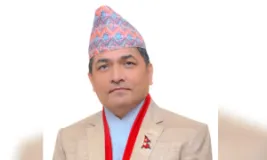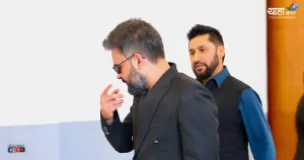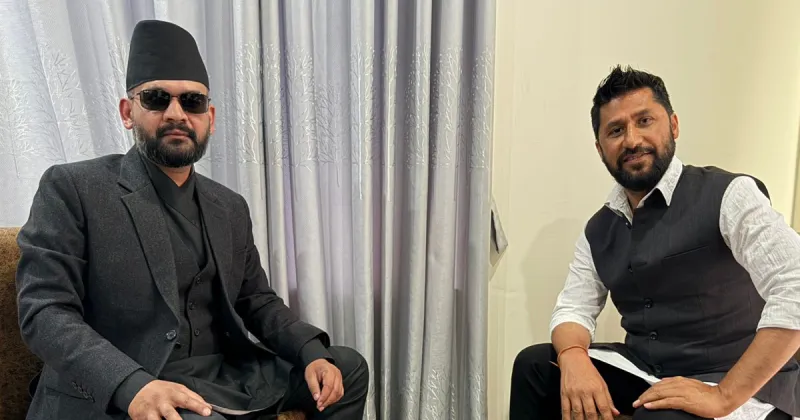
Rastriya Swatantra Party (RSP) Chairman Rabi Lamichhane and Prime Minister Balendra Shah held a meeting lasting about five hours on Thursday at Lamichhane's residence in Budhanilkantha, Kathmandu. The extended discussion, confirmed by Lamichhane's secretariat and the RSP and reported by multiple Nepali news outlets on the same day, comes at a politically sensitive time for the government, with key national decisions on the horizon.
Wide-Ranging Agenda
According to Lamichhane's secretariat and the RSP, the talks covered a broad set of national and political issues. The two leaders discussed the Prime Minister's recent India visit and its outcomes, which has been a subject of considerable public attention in Kathmandu's political circles.
The meeting also focused on the upcoming elections, a matter of central importance to the government and political parties alike. Lamichhane, whose party has positioned itself as a major force in Nepali politics, and PM Shah also took up the RSP's training campaign, government functioning, and the forthcoming parliamentary session.
Long Discussion Signals Sustained Engagement
A meeting of roughly five hours between a sitting Prime Minister and the chairman of a major opposition-aligned party is unusual in Nepali political practice, and the length of the discussion was noted by the sources reporting it. The venue itself, Lamichhane's private residence in Budhanilkantha, rather than a government office, also attracted attention.
Neither the Prime Minister's office nor the RSP has indicated that formal agreements or announcements resulted from the meeting. The confirmation of the talks came from Lamichhane's secretariat and the party, with details of the agenda reported on the same day by Nepali news outlets including Nagarik News, Khabarhub and Nepal Press.
Context: Elections and Parliament Ahead
While the meeting summary made public by the party and the secretariat did not disclose specific conclusions, the subjects raised point to the issues likely to dominate the country's political agenda in the coming months: the conduct and timing of upcoming elections, the government's day-to-day functioning, and legislative business in the parliamentary session.
The Prime Minister's recent India visit and its outcomes were also reviewed during the discussion. Foreign policy toward India remains one of the most consequential dossiers for any government in Kathmandu, and the exchange between the two leaders on this subject will be read closely by observers.
Further details of what was agreed, if anything, between the Prime Minister and the RSP chairman have not yet been made public. Both sides confirmed only the meeting, its duration, and the topics discussed.
What Was and Was Not Said
The confirmed points of the meeting, as stated by Lamichhane's secretariat and the RSP, were:
- The Prime Minister's recent India visit and its outcomes
- The upcoming elections
- The RSP's training campaign
- The functioning of the government
- The upcoming parliamentary session
What the sources did not report were any joint statements, resolutions or follow-up commitments emerging from the five-hour conversation. As the parliamentary session and election preparations move forward, the substance behind this long meeting will become clearer in the days ahead.