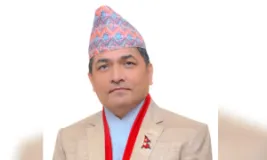
Kathmandu - President Ram Chandra Paudel has reshuffled the seniority order of the Council of Ministers on the recommendation of Prime Minister Balendra Shah, the Office of the President confirmed through a press release issued on Thursday, November 26. The revision changes the hierarchy within the current government, adjusting the order in which ministers rank relative to one another.
What the Seniority Order Means
The seniority order of the Council of Ministers determines the ranking of ministers within the cabinet. This ranking matters in the functioning of the government: it establishes precedence among ministers, influences protocol arrangements, and guides who acts in the absence of the Prime Minister when such responsibilities are formally assigned. While such a reshuffle does not necessarily change who holds office, it reorders the standing of those who do.
Under Nepal's constitutional framework, changes to the structure and ordering of the Council of Ministers are made on the recommendation of the Prime Minister. The President, acting on that recommendation, formalises the revision. That is the procedure followed in this instance, with President Paudel issuing the confirmation through the Office of the President.
The Cabinet's Constitutional Basis
The current Council of Ministers was originally formed on March 27, 2026, under Article 76 (9) of the Constitution of Nepal. This provision of the Constitution comes into play in specific circumstances relating to the formation of a government, and it has provided the legal foundation for the cabinet since its establishment earlier this year.
The government under Prime Minister Balendra Shah has been in operation since that formation. Thursday's announcement marks a revision to the internal ordering of that government rather than its creation. The press release from the Office of the President confirms that the changes were made at the recommendation of the Prime Minister, consistent with the constitutional process for managing the Council of Ministers.
Official Confirmation
The Office of the President made the announcement public through a formal press release issued on Thursday, November 26. Press releases from the Office of the President serve as the authoritative record of presidential actions, including the appointment and reordering of ministers, and are typically circulated to media houses for publication.
The release confirmed that the President had acted on the Prime Minister's recommendation in approving the reshuffle. No further details were provided in the available announcement regarding the specific ministers affected or the exact new ranking of portfolios.
Context of the Government
The Council of Ministers led by Prime Minister Balendra Shah was constituted under Article 76 (9) of the Constitution, the mechanism through which the present government came into being on March 27, 2026. Since its formation, the cabinet's composition and seniority have been subject to the standard processes of governmental management, with the Prime Minister holding the authority to recommend changes to the President.
The revision announced on Thursday alters both the hierarchy and the ministerial portfolios of the current government, according to the information accompanying the announcement. Portfolio adjustments of this kind can affect which minister holds responsibility for which ministry, while changes to the seniority order affect internal ranking within the cabinet.
Institutional Roles
Under Nepal's constitutional structure, the Office of the President carries out the formal acts of state connected to government formation and modification. Recommendations from the Prime Minister regarding the Council of Ministers are processed through this office, which then issues the official confirmation, as happened with Thursday's press release.
The President's action in approving the reshuffle follows this established division of roles: the Prime Minister recommends, the President formalises. The press release of November 26 represents the completion of that process for the latest revision to the cabinet's seniority order.
What Comes Next
With the seniority order now formally revised, the Council of Ministers will operate under the updated hierarchy going forward. The announcement provides no indication of further changes, and the government continues on the constitutional foundation laid at its formation in March 2026.
Further official communications from the Office of the President or the Office of the Prime Minister and Council of Ministers may provide additional details on the specific changes to ministerial portfolios. Until such details are made public, the confirmed facts remain that the President has approved the reshuffle at the Prime Minister's recommendation, and that the formal notification was issued on Thursday, November 26.
The reshuffle underscores the ongoing management of the government's internal structure nearly nine months after the cabinet's formation. As with previous adjustments to the Council of Ministers, the changes take effect through the formal instrument issued by the Office of the President, which serves as the definitive record of the updated seniority order and portfolio arrangements within the government of Prime Minister Balendra Shah.