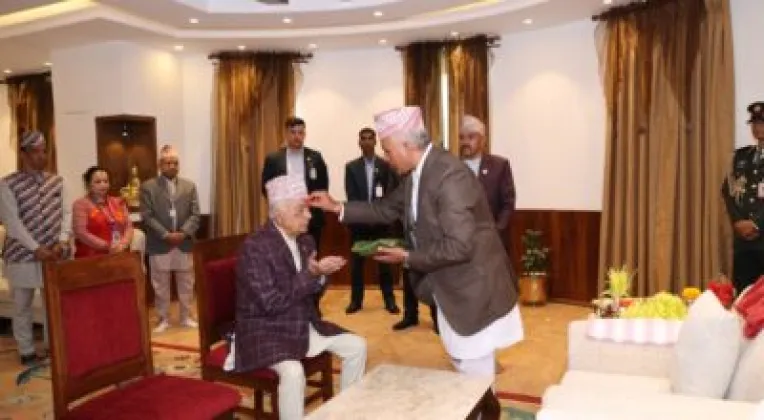
President Ram Chandra Paudel received this year's Bada Dashain tika, jamara and prasad at the auspicious time of 10:26 am on Wednesday at Sheetal Niwas, the presidential residence in Kathmandu, as the country marked Vijaya Dashami, the most significant day of the Dashain festival. The brief ceremony at the nation's highest office was carried out in keeping with the customs of the festival, which Nepali households across the country observe on the tenth day of the fortnight-long celebration.
Priest's Blessings at the Presidential Palace
According to the President's Personal Secretariat, President Paudel received the tika and blessings from the priest at the presidential residence. The ritual was performed exactly at the designated auspicious hour, a timing tradition in Dashain celebrations that families throughout Nepal follow when applying tika on the day of Vijaya Dashami.
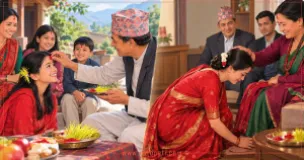
Along with the tika, the President also received jamara, the tender yellow-green barley shoots considered an essential part of the Dashain ritual, as well as prasad, the blessed offering distributed during the festival. The ceremony at Sheetal Niwas mirrors the practice observed in millions of Nepali homes, where elders apply tika on the foreheads of younger family members and bless them for the year ahead.
Tika for the First Lady and Family
After receiving the blessings himself, President Paudel took on the role of the elder, offering tika and jamara to First Lady Sabita Paudel and other family members, according to his Personal Secretariat. This exchange of tika within the family reflects the core spirit of the festival, in which blessings flow from the older generation to the younger.
At the presidential palace, as in ordinary households, the ritual underscores the place Dashain holds in Nepali social life. The observance by the head of state at the official residence each year is watched with wide public interest, as the festival remains the single most unifying cultural occasion in the country.
The Meaning Behind Tika and Jamara
Dashain is regarded as the greatest festival of Nepal, observed by Hindus across the country and by Nepali communities around the world. Vijaya Dashami, its most important day, commemorates the victory of good over evil, symbolised by the triumph of the goddess Durga over the demon Mahishasura.
The items central to the ritual carry their own significance:
- Tika: A mixture of rice, red vermilion and yogurt applied to the forehead by elders, representing blessings for good health, prosperity and long life.
- Jamara: Barley shoots sown on Ghatasthapana, the first day of Dashain, and nurtured in darkness for several days until they grow pale gold. They are placed on the head or tucked behind the ears along with the tika.
- Prasad: Blessed offerings shared among family members as a mark of devotion and goodwill.
Elders traditionally accompany the tika with blessings such as wishes for longevity, success and happiness, while younger relatives present gifts and dakshina in return. The exchange binds generations together and reaffirms family ties that are otherwise stretched by migration, work and distance.
A Festival That Brings the Nation Together
Dashain is also the time when Nepal experiences its largest annual movement of people, as citizens travel back to their hometowns and villages to celebrate with parents and elders. Markets fill with shoppers buying new clothes, festival foods and items for worship, while government offices and schools remain closed for the holidays.
The application of tika at the presidential residence on Wednesday marked the symbolic high point of the festival at the level of the state, just as countless similar moments unfolded in homes across the country. For many Nepalis, the image of the head of state receiving and then giving tika encapsulates what the festival is about: blessings passed down, bonds renewed and the shared cultural identity of the nation reaffirmed.
The details of the ceremony were confirmed by the President's Personal Secretariat and reported by Khabarhub.