Foreign tourists visiting Nepal embraced the country's biggest festival this year, celebrating Bada Dashain by receiving tika and jamara in the traditional Nepali manner. At hotels in Sauraha, Chitwan, and at a popular guesthouse in Kathmandu's Thamel area, visitors lined up before hotel staff who applied the red tika to their foreheads and offered them yellow jamara along with blessings, replicating the ritual that Nepali families exchange during the festival. The celebrations gave international guests a firsthand experience of one of Nepal's most cherished cultural traditions, with hoteliers describing the gesture as a way of connecting travellers with the culture of the country they have come to explore.
A Festive Welcome in Sauraha
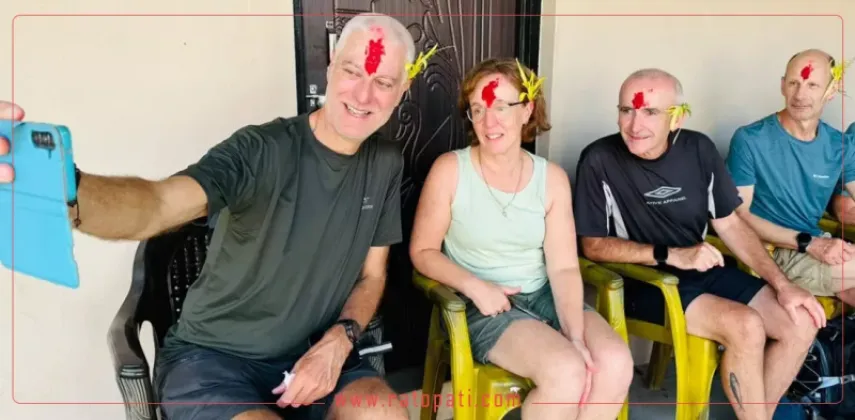
The celebrations in Sauraha, the well-known tourist town on the edge of Chitwan, took place across several of the area's leading hotels. Tourists staying in the town joined the festival at their respective hotels, where staff members applied tika and jamara to the visitors in the traditional style.
The hotels that took part in the festivities included:
- Hotel Green Park
- Hotel Park Side
- Rhino Lodge and Hotel
- Hotel Royal Tulip
Hotel managers Radha Shrestha and Savitra Pariyar, together with operator Ram Kumar Aryal, were among the hosts associated with the celebrations, which were organised to introduce guests to the customs of Bada Dashain. As reported by Rato Pati, hotel staff applied the tika and jamara specifically to connect the foreign tourists with Nepali culture, turning the festival into a shared experience between hosts and visitors.
Sauraha is one of Nepal's most visited destinations, drawing travellers from around the world for its proximity to Chitwan National Park and its wildlife experiences. For the hotels of the town, the Dashain celebration offered an opportunity to bring that international audience into the heart of a festival that Nepalis celebrate at home with their families.
The Ritual Behind the Blessing
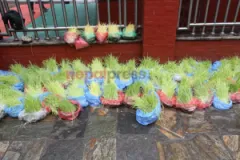
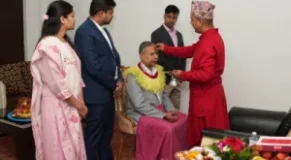
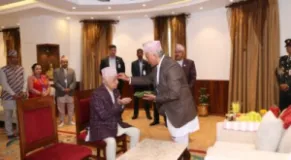
At the centre of the celebration lies one of the most recognisable rituals of Dashain. On the main day of the festival, elders apply tika, a mixture of rice, vermilion and yogurt, on the foreheads of their younger relatives, and place jamara, the pale yellow shoots grown from barley seeds sown earlier in the festival period, over their heads and ears. The tika and jamara are accompanied by blessings for long life, happiness and prosperity.
By receiving tika and jamara from their hosts, the tourists in Sauraha and Kathmandu were drawn into the same tradition of blessings and goodwill that binds generations of Nepali families during the festival. The act is deeply symbolic: for many Nepalis, receiving Dashain tika from elders is the emotional high point of the year, and the practice marks the visitors as welcomed members of the household, even if only for a day.
For travellers whose itineraries are usually built around trekking, wildlife safaris and sightseeing, the ritual offered something different, a moment of personal connection with a living tradition rather than a monument or a landscape. The images of foreign guests with bright red tika on their foreheads and jamara tucked behind their ears captured the spirit of the occasion.
Dashain Greetings in Thamel
The festive spirit was not confined to Chitwan. Tourists also marked Bada Dashain at Kathmandu Eco Hotel in Thamel, the capital's bustling tourist quarter, where visitors received tika and jamara and exchanged Dashain greetings with their hosts. Thamel, which serves as the base for thousands of international visitors passing through Kathmandu, provided the setting for tourists to participate in the celebration even while far from the family homes where most Nepalis gather for the festival.
According to Khabarhub, the tourists shared Dashain greetings during the celebration, echoing the exchange of warm wishes that characterises the festival across the country.
Festivals as a Bridge Between Cultures
Bada Dashain is the largest and most widely celebrated festival in Nepal, observed over an extended period in the autumn with family reunions, blessings from elders, feasts and the purchase of new clothes. During the festival, people across the country return to their ancestral homes to receive tika and jamara from parents, grandparents and other elders, making it as much about family bonds as about religious observance.
For the tourism industry, the participation of foreign guests in such traditions highlights the role that festivals play in Nepal's appeal as a destination. The celebrations in Sauraha and Thamel demonstrated how hotels can act as cultural ambassadors, giving travellers an experience that goes beyond accommodation and recreation. By applying tika and jamara to their guests, the hotel staff of Chitwan and Kathmandu offered visitors a memory rooted in Nepali identity, one that many of the tourists are likely to carry home and share.
The scenes of foreign tourists wearing Dashain tika and jamara, celebrating alongside their Nepali hosts, offered a warm illustration of hospitality at the heart of the festival season, showing that the traditions of Bada Dashain can extend their blessings well beyond the family courtyard.