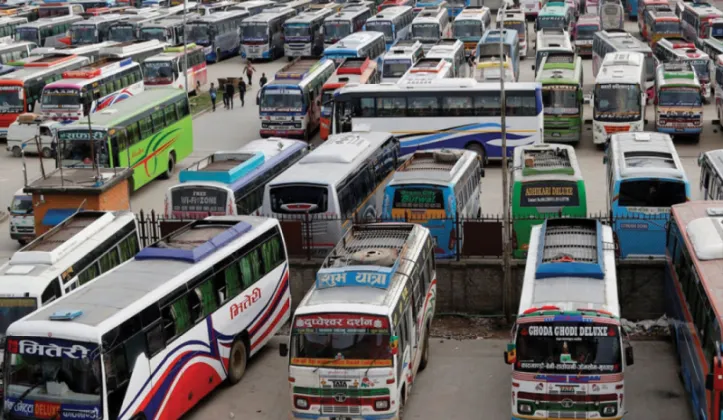
Kathmandu Valley police have arrested 121 people, including one woman, on charges of stealing passengers' cash, mobile phones, jewellery and personal belongings, pickpocketing, looting and harassing women on public transport. The arrests were made during a special 'Safe Travel' campaign launched at 5 am on Friday by teams from the Kathmandu Valley Crime Investigation Office in Teku and its subordinate offices, with the operation made public through an announcement from the Central Police News Room.
A dawn crackdown under the 'Safe Travel' banner
The special campaign got underway in the early hours of Friday, with police teams mobilised from 5 am under the banner 'Safe Travel'. The drive was led by the Kathmandu Valley Crime Investigation Office, based in Teku, Kathmandu, and carried out together with its subordinate offices. According to the announcement from the Central Police News Room, the operation focused on crime against passengers on public transport across the Kathmandu Valley.
News of the crackdown was reported by Gorkhapatra Online, Nepal Press and Khabarhub, each carrying the same core figures released by police: 121 people taken into custody, one of them a woman, and a shared list of alleged offences ranging from theft of passenger belongings to misbehaviour with women on public vehicles.
The name given to the campaign, 'Safe Travel', points to its stated purpose: making journeys on the Valley's public vehicles safer for the commuters who depend on them every day. Rather than a single raid, the fixed launch time of 5 am and the involvement of multiple teams indicate a synchronised, Valley-wide sweep carried out under a single command structure.
The charges: theft, pickpocketing, looting and harassment
Police have listed a broad set of allegations against those detained during the campaign. According to the reports, the suspects are accused of:
- Stealing passengers' property, including cash, mobile phones, jewellery and other personal belongings
- Pickpocketing on public transport
- Looting passengers on public vehicles
- Harassing women and misbehaving with them while travelling
The range of the charges reflects the different forms that crime on crowded public vehicles can take. Pickpocketing typically involves stealthily lifting wallets, phones or other items from pockets and bags, while the theft allegations listed by police extend to the direct taking of passengers' cash, jewellery and personal belongings. The inclusion of looting points to more overt taking of property, and the list also covers the harassment of women, which the campaign treats as part of the same spectrum of offences against passengers.
The decision to group all of these offences within a single campaign announcement shows how the Valley Crime Investigation Office has framed the problem: not as isolated incidents, but as a pattern of offences against passengers that warranted a coordinated response.
A coordinated operation from Teku
The Kathmandu Valley Crime Investigation Office in Teku serves as the hub for crime-focused policing in the Valley, and Friday's campaign relied on that structure. Headquarters teams worked alongside subordinate offices, allowing the operation to cover public transport across the Valley rather than being confined to a single route or area.
The Central Police News Room's announcement played a central role in making the scale of the operation public. As the channel through which Nepal Police communicates major developments, it enabled media outlets to report the arrest figures and the list of charges consistently.
The scale of the action, with 121 people taken into custody and announced together, marks the 'Safe Travel' campaign out as a substantial deployment of the Valley's crime investigation resources against offences on public transport. It is also notable that the detainees include one woman, alongside the male suspects named in the same police announcement.
What it means for commuters
Public transport is a daily necessity for commuters moving across Kathmandu, Lalitpur and Bhaktapur, and offences such as pickpocketing and the harassment of women on vehicles are precisely the kinds of crime the 'Safe Travel' campaign is designed to confront. For regular passengers, the operation represents a visible police presence directed at the spaces where these offences occur.
The campaign's very name conveys its intended message to the public: that travel on the Valley's public vehicles should be safe from theft, looting and harassment. By launching the drive at 5 am, police also signalled that the operation covered the early-morning hours when commuters begin boarding vehicles across the Valley.
The figures released so far, 121 arrests including one woman on charges spanning theft, pickpocketing, looting and the harassment of women, stand as the campaign's early tally as announced by the Central Police News Room. Those detained now face the allegations listed by police, and the operation itself represents the most concrete step announced so far under the 'Safe Travel' banner against crime on the Kathmandu Valley's public transport system.