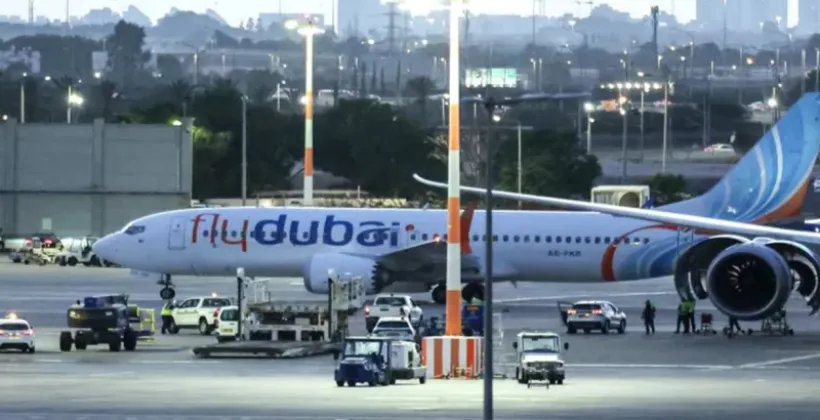
Regular flights connecting Pokhara and Dubai have completed their first month of operation, carrying more than 6,000 passengers on the direct international route. According to reports published by Thaha Khabar and Baahrakhari, over six thousand travellers arrived and departed on the route during the month since the regular service began, offering an early measure of demand for a direct air link between Nepal's tourism capital and one of the world's busiest aviation hubs.
The reported passenger total captures movement in both directions. Outbound travellers have used the service to fly from Pokhara to Dubai, a city that is home to a large share of the Nepali diaspora and serves as a global transit point for onward journeys. Inbound traffic, meanwhile, includes Nepalis returning home and passengers flying directly into Pokhara, sparing them the trip through Kathmandu that most international journeys from the city once required.
Pokhara-Dubai flights complete one month with over 6,000 passengers
The headline figures from the first month of operation can be summarised as follows:
- The regular Pokhara-Dubai service has completed one full month of operation.
- More than 6,000 passengers travelled on the route during the period.
- The count covers travellers both arriving in Pokhara and departing for Dubai.
- The route links Pokhara directly with Dubai, a major centre for employment, trade and international connections.
For a route in its first month, a two-way flow of more than 6,000 passengers points to steady utilisation on both legs of the journey. That balance matters. Air routes serving corridors with heavy labour migration can tilt heavily toward outbound travel, leaving return legs underused. The reported arrivals into Pokhara suggest the service is also bringing people into the city, whether members of the Nepali community in the United Arab Emirates visiting family or other passengers choosing to enter Nepal through Pokhara itself.
The performance also provides an early benchmark for a service whose significance extends well beyond the raw passenger count. Direct international connectivity from Pokhara reduces the city's reliance on Kathmandu as the country's main gateway for long-haul travel, a shift with implications for travellers, tourism operators and businesses across Gandaki Province and the wider western region.
A direct link for the Nepali diaspora
Dubai holds particular importance in Nepal's migration story. The United Arab Emirates has long been among the leading destinations for Nepali migrant workers, and the earnings they send home form a key pillar of household income across many districts. For workers and their families, the availability of a regular direct flight from Pokhara shortens and simplifies journeys that previously required a transit through the Kathmandu Valley, with all the time, cost and inconvenience that involved.
The route also plugs Pokhara into Dubai's role as one of the world's major connecting hubs. From Dubai, passengers can reach destinations across Europe, Africa, the wider Gulf and beyond, meaning a traveller beginning in Pokhara can now access a vast international network with a single stop. For the diaspora, the connection works in both directions. Nepalis abroad gain a straightforward path home that lands them closer to their home districts in western Nepal, while relatives, students and business travellers from Pokhara gain similarly direct access outward.
What the route means for tourism and the economy
The economic stakes of the route are closely tied to Pokhara's identity as Nepal's tourism capital. The city serves as the gateway to the Annapurna region and draws large numbers of domestic and foreign visitors each year. A direct link to Dubai places the city before an international audience that includes both the substantial Nepali community in the Gulf and the enormous transit passenger base that moves through Dubai's airport, a potential channel for inbound visitors to fly straight into Pokhara rather than routing through Kathmandu.
The reports on the first month's operations link the route not only to diaspora travel but to broader economic activity. Direct air connections of this kind support commerce, ease movement for business travellers and traders, and channel spending into the hospitality sector on the Pokhara side of the route. Each arriving and departing flight also carries symbolic weight for a city that has worked to translate international air connectivity into tangible gains for its tourism-driven economy.
With the first month now complete, the more than 6,000 passengers recorded by Thaha Khabar and Baahrakhari stand as the earliest substantive measure of the route's pull. Whether that early demand holds and grows through the coming seasons will help determine the route's long-term contribution to diaspora travel, tourism and commerce linking Pokhara and Dubai.