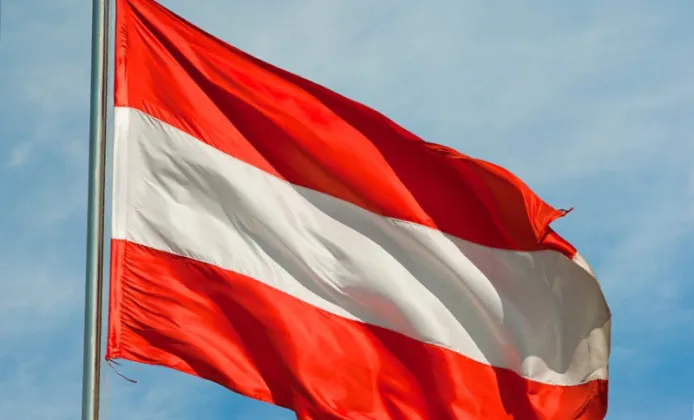
Austria has ordered four Russian diplomats to leave the country, accusing them of engaging in activities incompatible with their diplomatic status. The Austrian foreign ministry announced the decision on Friday, and the move was carried out on the basis of information provided by the country's security officials. The four diplomats, all based in Vienna, now face expulsion from Austria, and Moscow has already warned that it will give an "appropriate response" to the decision.
What Austria Announced
The announcement, made public by Austria's foreign ministry, confirmed that four Russian diplomats had been instructed to leave the country. According to the ministry, the decision was grounded in information supplied by Austrian security officials, indicating that the case originated within the country's own security apparatus rather than from a request by a foreign partner. The ministry did not release the names of the four diplomats, nor did it specify which sections of the Russian mission they served in.
The phrase used to justify the expulsions, "activities incompatible with diplomatic status", is one of the most recognizable formulations in international diplomacy. It signals that the host state believes the individuals concerned were behaving in a manner that does not correspond to the duties of an accredited diplomat, while stopping short of a formal public accusation of espionage.
Key Points at a Glance
- Four Russian diplomats have been ordered to leave Austria
- They are accused of activities incompatible with their diplomatic status
- Austria's foreign ministry announced the decision on Friday
- The action was based on information provided by Austrian security officials
- The diplomats were based in Vienna
- Russia has warned it will give an appropriate response
Why the Wording Matters
Under the 1961 Vienna Convention on Diplomatic Relations, a treaty concluded in the Austrian capital itself, a receiving state may declare any member of a foreign mission persona non grata at any time and require that person's departure, without being obliged to explain its reasons. In practice, most governments pair such declarations with the standard phrase about "activities incompatible with diplomatic status," which is widely understood to point to suspected intelligence activity.
Austria, like other host states, is not required to present evidence publicly, and no detailed allegations were released alongside Friday's announcement. What is clear from the foreign ministry's statement is that the assessment came from Austrian security officials, indicating that the decision followed a domestic review of the individuals concerned. The expulsion mechanism has been used with growing frequency across Europe in recent years, making Austria's latest action part of a broader pattern that host governments describe as a defense of the integrity of their diplomatic system.
Vienna: A Diplomatic Capital Under Scrutiny
Vienna is one of the world's most important diplomatic postings. The city hosts the United Nations office in Vienna, the International Atomic Energy Agency, the Organization for Security and Co-operation in Europe and the Organization of the Petroleum Exporting Countries, giving it an unusually large corps of accredited foreign diplomats, including a substantial Russian presence. That concentration of international organizations also makes the Austrian capital a place where security services on all sides remain highly active, a reality long acknowledged by officials and analysts alike.
Austria occupies a distinctive position in this landscape. The country is a member of the European Union but not of NATO, and its long tradition of neutrality has historically made it a preferred location for diplomacy, negotiations and international institutions. At the same time, relations between Austria and Russia have come under strain in recent years as tensions between Russia and Western states have deepened, placing successive Austrian governments in a delicate position between dialogue and firmness.
Moscow Promises an "Appropriate Response"
Russia has responded to the expulsions with a warning that it will give an "appropriate response" to the decision. In diplomatic disputes of this kind, such language is typically read as a signal that Moscow may consider retaliatory measures of its own, although the Russian side has not specified what form its response would take.
Expulsion disputes between states often follow a tit-for-tat pattern, in which each side orders out a matching number of the other's diplomats in response to the original action. Whether that happens here remains to be seen. For now, the immediate consequence is that four fewer Russian diplomats will be present in Vienna, and attention will turn to how Moscow chooses to translate its warning into action.
What Happens Next
For Austria, the decision underscores a hardened posture toward activities it considers unacceptable on its territory, and it places the burden of the next move on Moscow. For the diplomats concerned, the expulsion means their accreditation in Austria has effectively ended and that they are expected to leave the country.
The foreign ministry's announcement did not include further detail on the timeline for departure or on the specific conduct alleged, and greater clarity may depend on whether either government chooses to speak more openly in the days ahead. The decision was reported by Ratopati.