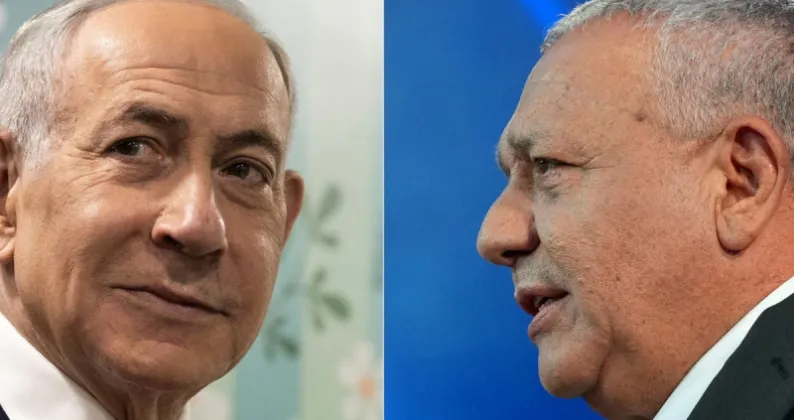
Israeli Prime Minister Benjamin Netanyahu has proposed forming a coalition government and is reportedly willing to let Gadi Eisenkot hold the post of prime minister first, according to reports carried by Nepali news outlets on November 28-29, 2026. Under the proposed rotational arrangement, Eisenkot would serve as prime minister before Netanyahu takes over the role in a subsequent phase.
The offer marks a notable political gambit by Netanyahu, who has long been known for resisting power-sharing arrangements during his decades at the top of Israeli politics. The willingness to allow a rival figure to occupy the premiership first suggests the extent to which coalition mathematics is shaping the current negotiation landscape.
A Rotation Offer at the Center of Coalition Talks
The proposal centers on a rotational premiership, a mechanism that has been used in Israeli politics before. In such arrangements, two parties agree to divide the term of a single Knesset, with each leader taking turns at the head of the government. The reports indicate that Netanyahu is prepared to have Eisenkot go first, with Netanyahu assuming the role afterward.
Gadi Eisenkot, a former chief of staff of the Israel Defense Forces, entered electoral politics in recent years and has positioned himself as a figure of centrist and national-responsibility politics. His military background and reputation for independence have made him a significant player in coalition bargaining, and Netanyahu's reported outreach to him underscores his perceived leverage.
Details Remain Sparse
Despite the significance of the reported offer, the available reporting provides limited information on the finer points of the arrangement. The reports do not specify which parties would be included in the coalition, what ministerial portfolios would be distributed, or what guarantees would underpin the rotation agreement. Nor do they indicate how long each leader would serve in the first phase of the rotation.
Equally unclear is Eisenkot's response. The reports available do not state whether he has accepted, rejected, or is still considering the proposal. In past Israeli coalition negotiations, rotation agreements have often stumbled over questions of trust and sequencing, with the second-in-line partner frequently worried that the first premier would find ways to extend their tenure or collapse the government before the handover occurs.
Context: Coalition Politics in Israel
Israel's political system, built on proportional representation, rarely produces a single-party majority. Governments are formed through coalitions negotiated among multiple parties, and the post of prime minister is often the decisive prize in those talks. Rotation deals, while rare, have occurred, most prominently in the 2020-2021 arrangement between Netanyahu and Benny Gantz, which ultimately collapsed without the rotation being completed.
Netanyahu's reported openness to Eisenkot serving first can be read against that history. By offering the first turn to his prospective partner, Netanyahu may be attempting to address the trust deficit that has doomed similar deals in the past. Whether the offer includes binding mechanisms to enforce the rotation was not detailed in the reports.
What Happens Next
As of the reports published on November 28-29, 2026, there was no confirmation of a finalized agreement between Netanyahu and Eisenkot, and no announcement of a formal coalition. The proposal remains, in the available reporting, an offer on the table rather than a done deal.
Observers of Israeli politics will be watching closely for a response from Eisenkot and his political camp, as any acceptance would represent a dramatic realignment with wide implications for the direction of the Israeli government. Until further details emerge, the reported offer stands as one of the most striking coalition proposals in the current round of Israeli political negotiations: a sitting prime minister willing to step back and let a rival take the top job first, in exchange for a partnership in power.
For readers following developments, the key questions to watch are whether Eisenkot publicly responds to the offer, whether the coalition's composition is announced, and whether any rotation agreement includes enforceable guarantees. Those elements, not addressed in the current reports, will likely determine whether this proposal becomes a governing arrangement or another footnote in Israel's long history of coalition bargaining.