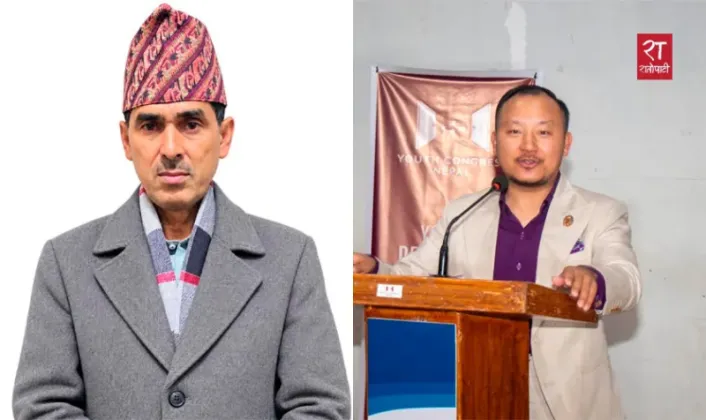
Nepali Congress lawmakers have moved to force a parliamentary investigation into the cancellation of the Sun Koshi-Marin Diversion Multipurpose Project contract, submitting a formal petition to the Public Accounts Committee that demands an immediate meeting on a decision they describe as illegal. Members of Parliament Janakraj Giri and Yogesh Gauchan Thakali handed the petition to committee chair Bharat Bahadur Khadka, asking that the panel be convened without delay to discuss the contract cancellation and to investigate allegations that senior government employees were subjected to pressure in connection with the project.
The petition, reported by Rato Pati and Rajdhani Daily, places two distinct demands before one of parliament's most influential oversight bodies. The first concerns the termination of the project contract itself, which the lawmakers argue was carried out unlawfully at the final moment. The second concerns the conduct surrounding that decision, specifically the claim that senior government servants were pressed in ways that require independent examination.
Lawmakers Invoke Committee Rules to Force a Meeting
At the heart of the petition is a procedural lever designed to prevent the issue from being deferred indefinitely. Under parliamentary rules, if one-fourth of the lawmakers in a committee demand a meeting, the panel is obliged to call one within five days. By formally registering their demand with Chair Khadka, Giri and Thakali have effectively started that clock, raising the prospect of a full discussion of the contract controversy within the coming days.
The two MPs asked the committee to meet immediately to take up the Sun Koshi-Marin matter, rather than waiting for the issue to reach the committee through its regular agenda. Their petition frames the cancellation as a decision of considerable public importance, tied to a multipurpose water resources undertaking, and argues that it warrants urgent scrutiny by the body responsible for keeping tabs on government decisions and expenditure.
As set out in the petition, the demands before the committee are:
- An immediate meeting of the Public Accounts Committee to take up the matter
- Discussion and investigation of the cancellation of the Sun Koshi-Marin Diversion Multipurpose Project contract, which the MPs contend was done illegally
- A probe into the alleged pressure exerted on senior government employees in connection with the project
Concerns Over an "Illegal" Last-Moment Cancellation
The core of the lawmakers' complaint is the claim that the contract was cancelled illegally, and at the last moment. By characterising the termination in those terms, the petition places the burden on the authorities to explain the legal basis for the decision and the process that preceded it. The MPs' position, as stated in the petition, is that a decision of this scale should not stand without a thorough accounting of how and why it was taken.
The demand for an investigation through the Public Accounts Committee reflects the panel's standing role as parliament's watchdog over public money. The committee routinely examines government decisions with financial implications, and a contract cancellation on a multipurpose project of this nature falls squarely within the kind of subject matter the committee is mandated to review. The petitioners' decision to approach the committee chair directly signals their intent to have the matter handled through formal parliamentary channels rather than left to internal government review alone.
A last-moment cancellation of a major contract is precisely the sort of decision that the petitioners appear to believe requires explanation before the consequences settle into place. Their submission does not ask the committee merely to note the cancellation but to investigate it, indicating that the lawmakers expect findings rather than a procedural acknowledgement.
Alleged Pressure on Senior Government Employees
The second strand of the petition broadens the scrutiny beyond the contract itself. The MPs have asked the committee to investigate the alleged pressure exerted on senior government employees, a demand that touches on the independence of the civil service in matters of project administration.
By coupling the two demands in a single petition, Giri and Thakali have framed the contract cancellation and the treatment of senior officials as linked questions. The implication of their submission is that the circumstances in which the decision was made, including the conditions faced by the government employees involved, are as much a matter of public accountability as the decision on the contract. The petition does not ask the committee to treat the alleged pressure as a secondary issue but to place it under investigation alongside the cancellation.
What Happens Next
Attention now turns to how the committee and its chair respond within the framework the petitioners have invoked. The five-day rule gives the demand a defined timeline, and the committee's obligations come into effect if the required number of lawmakers backs the call for a meeting.
The Public Accounts Committee, once convened on the matter, holds the authority to examine the decision, call for explanations and review the conduct of those involved in the project's administration. Whether the meeting is called within the five-day window, and what the committee chooses to examine once it meets, will determine whether the MPs' petition translates into a formal parliamentary probe.
For now, the petition stands as a direct challenge from within the ruling party's own ranks to the handling of a significant national project, and as a test of the committee's readiness to exercise its oversight mandate when its own members demand it.