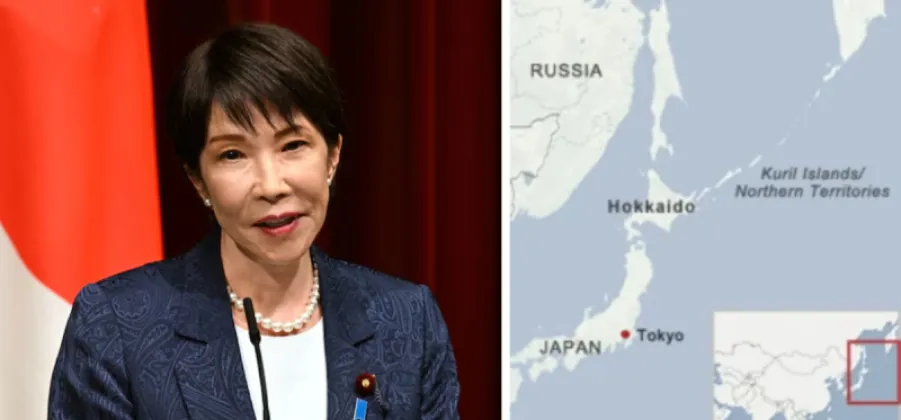
Japan has demanded the immediate return of assets after Russia took control of four subsidiaries of Japan Tobacco, acting on an order from President Vladimir Putin that handed operational control of the companies to a Russian firm named Industrial Property. Tokyo has protested the decision and called on Moscow to return the assets, turning the fate of the Japanese company's Russian holdings into a direct diplomatic dispute between the two governments. Because the move was carried out at the top of the Russian state rather than through any commercial process, one of Japan's corporate groups now finds itself running businesses it no longer controls.
A presidential order, four subsidiaries, one Russian firm
At the center of the dispute is the order issued by President Vladimir Putin transferring operational control of four Japan Tobacco subsidiaries to Industrial Property, a Russian company. The order does not merely place the subsidiaries under supervision; it changes who runs them. Operational control determines who directs day-to-day management, who signs off on decisions and who commands the workforce and output of a business. With the transfer in effect, those powers now rest with the Russian firm rather than with the Japanese parent company.
The significance of that mechanism is what has drawn Japan's protest. The transfer was carried out by state directive, without the consent of the company whose assets were affected. Japan Tobacco, as a result, has lost command of four of its own operations through a decision issued in Moscow, and the businesses now answer to a controller named in a presidential order rather than to their original owner.
According to reports in Nagarik News and Online Khabar, the case is being treated in Tokyo as a seizure of Japanese property by Russia. In brief, the dispute amounts to this:
- Russia has taken control of four subsidiaries of Japan Tobacco, a Japanese company.
- The transfer was carried out through an order by President Putin, placing operational control with the Russian firm Industrial Property.
- Japan has protested the decision and demanded the immediate return of the assets.
Tokyo demands the assets back
Japan's response has been direct: protest the decision, and demand that Russia return the seized assets immediately. The demand for an immediate return leaves little ambiguity about Tokyo's position. Japan regards the property as belonging to a Japanese company, views the transfer as improper, and holds the Russian state responsible for undoing it.
The protest also elevates the matter beyond a corporate quarrel. Because the order came from President Putin himself, the company at the center of the dispute has no ordinary counterparty to negotiate with. There is no commercial mechanism by which a Japanese company can overturn a Russian presidential order, which means Japan's avenue for recovering the assets runs through its government, and through diplomacy with Moscow.
For Japan Tobacco, the consequences are already real. Four subsidiaries that were until recently directed from within the company's own structure are now run by a Russian firm. Until the order is reversed, the businesses sit in a form of limbo: Japanese in ownership, Russian in control, and contested at the level of the two governments.
The framing of the dispute matters as well. Whether one calls the arrangement a transfer, as the order does, or a seizure, as Japan's demand implies, the practical effect is the same: a Japanese company has lost control of its own operations to a Russian firm by state decree, and Japan is insisting that the outcome cannot stand.
What comes next
The dispute adds a fresh point of friction between Tokyo and Moscow, and the language Japan has used signals that it does not intend to simply absorb the loss. Demands of this kind are rarely resolved quickly, and Russia has so far acted rather than retreated: the order transferring control has been issued, and it is Japan that is now demanding a reversal.
The case is also a measure of how exposed foreign corporate assets in Russia are to decisions taken by the Russian state. A single presidential order was enough to move operational control of four foreign-owned subsidiaries to a Russian firm, without the owner's consent and without a commercial process. For Japanese companies with a presence in Russia, and for Tokyo, the lesson of the episode is that such holdings can be redirected by decree.
What Japan is seeking is specific and limited: the return of the assets. What that would require is the undoing of a decision issued at the highest level of the Russian government. Until Moscow responds, the four Japan Tobacco subsidiaries remain under the control of the Russian firm named in the order, and Japan's demand stands unanswered.