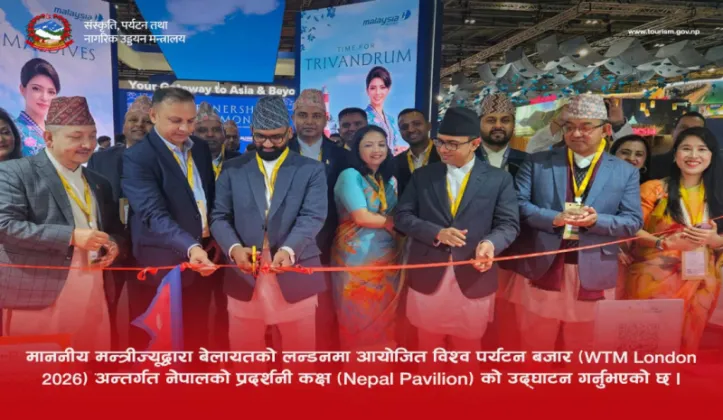
Nepal has put its tourism credentials before the world's travel industry, presenting the country's tourism potential at the World Travel Market (WTM) London 2026, held in London, the United Kingdom, from November 3 to 5. Across the three-day global travel trade fair, the Nepali delegation highlighted the country's prospects in wellness, adventure, cultural and sustainable tourism, showcasing Nepal's tourist destinations and tourism possibilities to the international community gathered at one of the industry's most important annual meeting points.
Nepal's Pitch at the Global Travel Trade Fair
WTM London functions as a marketplace where the international travel industry comes together: destinations, tour operators, travel agents, hoteliers and media converge to meet, negotiate and plan the seasons ahead. For participating countries, the fair offers an opportunity to place their destinations directly in front of the people who design, sell and report on global travel.
Nepal used that platform to present a broad and varied case, according to reports published by Gorkhapatra Online and Nagarik News. As Nepal Lead also reported, the delegation showcased the country's tourist destinations and tourism possibilities to the international community, with particular emphasis on four segments:
- Wellness tourism, where restorative travel built around yoga, meditation and nature-based retreats has become one of the fastest-growing motivations for long-haul trips.
- Adventure tourism, the segment on which Nepal's global reputation was first built, spanning mountaineering, trekking, rafting and airborne sports against the backdrop of the Himalaya.
- Cultural tourism, anchored in ancient cities, living festivals and sacred sites that give visitors a direct encounter with the country's history and traditions.
- Sustainable tourism, reflecting the growing demand for community-based travel and low-impact experiences that support local livelihoods and conservation.
Presented together, the four segments framed Nepal as more than a single-experience destination. The message to the international community was that the country can serve travelers seeking adrenaline and tranquility, heritage and wilderness, often within a single itinerary.
Nature and Heritage at the Core
Nepal's tourism identity rests on assets that are recognized around the world. The country is home to Mount Everest, the highest point on Earth, along with several of the world's other tallest summits, making it synonymous with mountaineering and trekking. Classic routes in the Everest and Annapurna regions remain benchmark journeys for trekkers, while Himalayan rivers support white-water rafting and lakeside Pokhara has grown into a hub for paragliding and other outdoor pursuits.
The cultural dimension is equally central. Lumbini, in the southern plains, is revered as the birthplace of Lord Buddha and draws pilgrims and peace-seekers from around the world. The Kathmandu Valley concentrates centuries of artistry in its medieval palaces, temples and durbar squares, while festivals observed through the year keep those traditions alive. Wellness offerings such as yoga and meditation retreats draw on the same spiritual heritage, and the country's national parks and community-managed trails give the sustainability pitch practical substance, linking tourism directly to conservation and village economies.
Why WTM London Matters for Nepal
An appearance at WTM London carries weight because of who is in the room. The fair brings together the travel trade that converts destinations into itineraries: the tour operators who package trips, the agents who sell them and the media who shape how potential visitors imagine a country. Direct engagement with this audience is difficult to achieve from home, which is why governments and destination marketing bodies around the world invest heavily in a presence at such events.
For Nepal, the November 3 to 5 showcase was an exercise in exactly that engagement: presenting destinations and tourism possibilities to the international community at the point where travel decisions and partnerships take shape. The emphasis on wellness, adventure, culture and sustainability amounted to a deliberate positioning of the country within four segments that continue to attract strong interest from international travelers and the trade alike.
Aligning with Where Travel Is Headed
The segments Nepal chose to highlight also track broader shifts in global travel. Wellness has moved from niche to mainstream as more travelers plan trips around rest, recovery and mental wellbeing. Sustainability has become a baseline expectation for many visitors, who want their spending to benefit the communities they pass through. Adventure and culture remain evergreen motivators, but they are now frequently sought in combination with softer, more mindful experiences.
By presenting itself across all of these areas at WTM London 2026, Nepal aligned its tourism pitch with that evolving demand. The three-day showcase in London gave the international community a wide-angle view of the country, from Himalayan trails and heritage squares to retreats and community-based tourism, a picture the destination will now look to convert into itineraries, partnerships and arrivals in the seasons ahead.