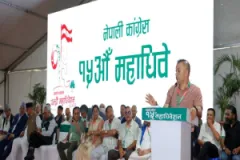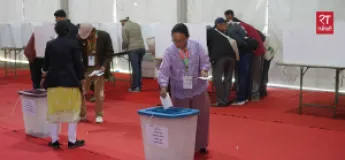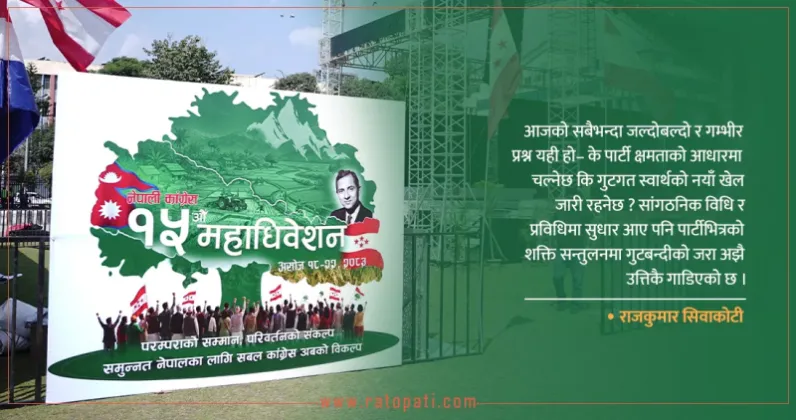
The Nepali Congress is holding its 15th General Convention, with the gathering being framed as more than a contest to elect party leaders. Opinion pieces published around the convention describe it as a significant test of the party's identity and an opportunity to consider generational change and internal transformation.
The debate comes as the party looks back on a political history spanning the end of Rana rule, the restoration of democracy and the establishment of Nepal's federal democratic republic. The commentaries argue that this legacy gives the convention broader significance, linking decisions about the party's future to its historic role in the country's political development.
A convention beyond leadership elections
The convention's significance, according to the opinion pieces, lies not only in who will lead the party but also in whether it can respond to calls for change within its ranks. The authors present the gathering as a moment for the Nepali Congress to examine its direction and consider how its leadership and internal structures can reflect the need for renewal.
One commentary focuses on transformation as a central issue for the 15th convention, while another considers the party's democratic and national responsibilities. Together, the pieces frame the event as a chance to connect the party's historical contribution with its responsibilities in the present.
Party identity and the path ahead
As Nepal's oldest and largest democratic party, the Nepali Congress faces questions about how it can preserve its political identity while adapting to changing expectations. The commentaries suggest that generational change and internal reform are part of that wider discussion, rather than issues separate from the leadership election.
The convention therefore carries significance beyond the selection of office-holders. Its outcome and deliberations will be viewed in the context of the party's long history and the calls for it to renew itself.
Read the commentaries on transformation at the 15th convention, the convention and the party's responsibilities, and democratic and national responsibilities.