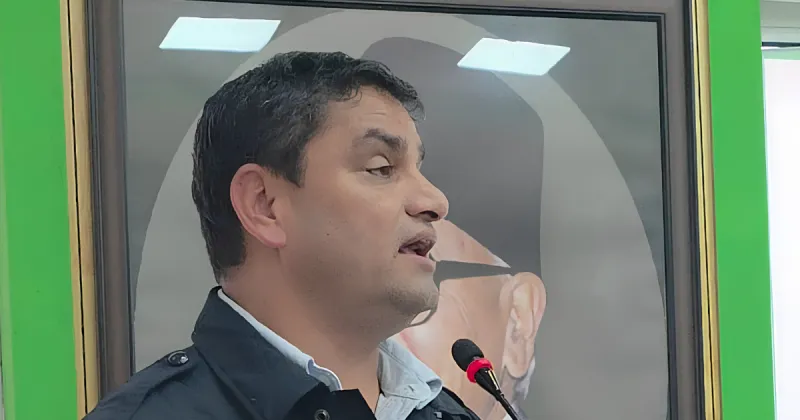
Nepali Congress General Secretary Pradeep Poudel has warned that democracy itself will be at risk if the party becomes fearful, urging the party to stand firmly against the undemocratic activities and irregularities of the current government. Poudel made the remarks while speaking on November 27, 2026, and his comments were reported by both Nagarik News and Setopati.
According to the reports, Poudel's message was direct: the country's largest democratic party cannot afford to remain silent or hesitant in the face of government misconduct. He argued that the Nepali Congress carries a historic responsibility as the guardian of democracy in Nepal, and that any hesitation on its part would embolden undemocratic forces.
A Call for Fearless Opposition
Addressing the gathering, General Secretary Poudel said the party must confront the current government's undemocratic activities and irregularities without fear. His statement comes at a time when the Nepali Congress, as a major opposition force, is being called upon to hold the government accountable.
- The party must act fearlessly against governmental irregularities
- Undemocratic activities by the current government require a firm response
- The Congress's courage is directly linked to the survival of democracy
Poudel stressed that the Nepali Congress's identity has always been tied to the struggle for democratic rights. In his view, if the party that historically led Nepal's democratic movements retreats out of fear, the broader democratic system would be left vulnerable.
Democracy Hinges on the Congress, Says Poudel
The most striking element of Poudel's remarks was his warning that if the Nepali Congress gets scared, democracy itself will be in danger. This framing positions the party not merely as a political competitor but as an essential pillar of the country's democratic order.
His comments, published on November 27, 2026, by Nagarik News under the headline "If Congress gets scared, democracy itself will be in danger: Pradeep Poudel," were also carried by Setopati, giving the statement wide coverage across Nepali media.
Party's Role Against Government Irregularities
Poudel's remarks reflect growing internal discussion within the Nepali Congress about how forcefully the party should oppose the current government's conduct. By explicitly naming undemocratic activities and irregularities, the General Secretary has signalled that the party's leadership cadre expects a more assertive stance against the administration.
As General Secretary, Poudel is one of the key office-bearers of the party responsible for its organisational direction and political messaging. His public warning underscores the pressure on the Nepali Congress to present itself as a vigilant opposition watchdog at a time when concerns about governance and accountability are being voiced.
No further details about the specific venue of Poudel's remarks or the full programme at which he spoke were included in the reports. However, the timing and tone of his statement are likely to fuel debate within the party over its strategy toward the government in the period ahead.
Context: Congress as Democracy's Guardian
The Nepali Congress has historically portrayed itself as the leading force behind Nepal's democratic movements, and leaders frequently invoke that legacy when calling for mobilisation against governments seen as deviating from democratic norms. Poudel's warning fits squarely within that tradition, framing the party's willingness to fight as inseparable from the health of the democratic system itself.
His statement that the party "must stand fearlessly" against the current government suggests he believes the Congress has not been assertive enough, and that timidity at the leadership level could have consequences beyond the party's own fortunes. By linking the party's courage to the survival of democracy, Poudel has effectively challenged his party to take a more confrontational posture in defence of democratic principles.
As the debate over the government's conduct continues, Poudel's remarks are expected to resonate within the Nepali Congress and among supporters who share his view that the party's vigilance is the country's first line of democratic defence.