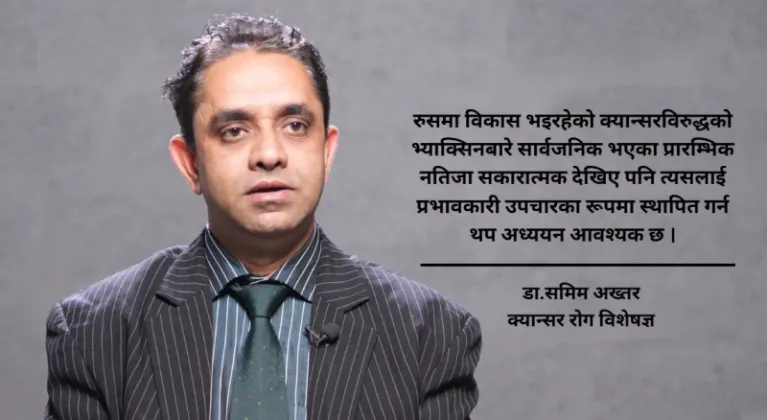
Nepali cancer specialists have said that the Russian cancer vaccine making headlines in international media is still in the research and clinical trial stage, and therefore no conclusion can yet be drawn about its effectiveness. Speaking from Kathmandu on November 24, 2026, the experts cautioned that media claims suggesting the vaccine will cure all types of cancer are misleading and could create false hope among patients.
What the Experts Said
According to the specialists, reports circulating in the media have exaggerated the current status of the Russian vaccine. They clarified that the product has not completed the necessary phases of clinical testing required to establish safety and efficacy, and that it has not yet been approved for general use.
The oncologists stressed that any medical product, especially one intended for a complex disease like cancer, must pass through rigorous trials involving large groups of patients before regulators can approve it. Until those trials are complete and their results are independently reviewed, they said, no claims of a cure should be accepted.
Warning Against Misleading Claims
The experts expressed particular concern over claims that the vaccine will cure all types of cancer. They described such statements as misleading, noting that cancer is not a single disease but a broad group of conditions that behave differently and require different treatments.
- Cancer research typically takes years of clinical trials before any therapy is approved.
- No single treatment currently cures every type of cancer.
- Early-stage results from trials do not guarantee success in later phases.
The specialists warned that exaggerated coverage of unproven treatments can have real consequences. Patients may abandon proven therapies, spend money on unverified options abroad, or delay treatment in ways that worsen their outcomes. They urged the public to rely on guidance from qualified oncologists and official regulatory announcements rather than headlines.
Context and Caution for the Public
News of a potential cancer vaccine in Russia has generated significant attention internationally, and reports have been picked up widely in Nepal as well. While the Nepali experts did not dismiss the research outright, they emphasized that being in the trial phase means the vaccine's real-world effectiveness remains unproven.
They called on the media to report on such developments responsibly, presenting preliminary findings as exactly that: preliminary. The experts also encouraged patients and their families to consult treating physicians before making any decisions based on news of experimental therapies, reiterating that hope should be anchored in evidence rather than unverified claims.