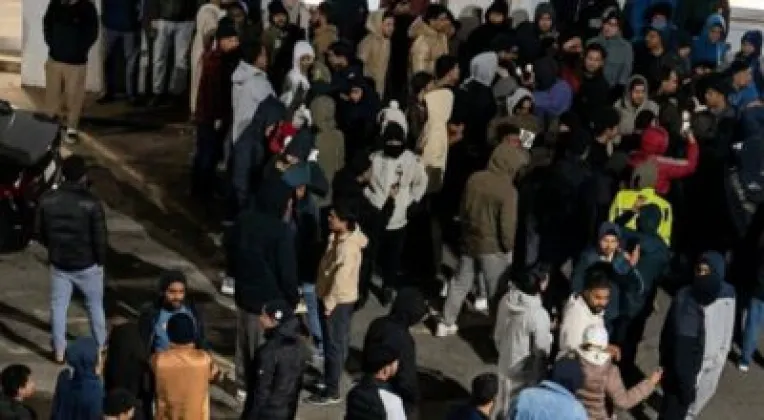
Nepal's Ministry of Youth, Labour and Employment has launched a coordinated effort to address the growing problems faced by Nepali migrant workers in Romania, working jointly with the Nepali Embassy in Berlin and the Department of Foreign Employment. The initiative comes as complaints from workers deployed to the European country have mounted, prompting the ministry to intervene to identify their grievances and protect their rights and interests.
The ministry confirmed that it has begun coordinating with the Nepali Embassy in Berlin, which is also accredited to Romania, and with the Department of Foreign Employment to resolve the issues raised by the workers. As part of the same drive, manpower agencies involved in sending workers to Romania are also under investigation, signalling that the government intends to look into both the conditions on the ground and the recruitment practices that led workers there in the first place.
Embassy Coordination at the Centre of the Response
Because Nepal does not maintain a resident embassy in Bucharest, the Nepali Embassy in Berlin handles matters relating to Romania. The ministry said it is working closely with the Berlin embassy to gather information on the difficulties faced by Nepali workers and to pursue their resolution. Through this channel, complaints lodged by the workers are being addressed as part of the initiative.
The involvement of the Department of Foreign Employment adds an institutional dimension to the response. The department, which regulates and monitors labour migration from Nepal, is expected to support the ministry in following up on the workers' complaints and in scrutinising the role of recruitment agencies.
Manpower Agencies Under Investigation
Alongside efforts to resolve the workers' day-to-day grievances, the government has turned its attention to the manpower agencies that recruited and sent workers to Romania. The ministry said the agencies are under investigation as part of the broader initiative, indicating concerns about how workers were recruited and whether they received the conditions promised to them before departure.
Recruitment agencies play a central role in Nepal's foreign employment system, matching aspiring migrants with overseas jobs and processing their documentation. When problems arise for workers abroad, including mismatches between promised and actual employment conditions, the agencies that facilitated their deployment often come under scrutiny. The current investigation into agencies sending workers to Romania reflects the ministry's attempt to hold such intermediaries accountable alongside diplomatic efforts abroad.
Why the Romania Case Matters
Romania has in recent years emerged as a destination for Nepali workers seeking employment in Europe, drawn by demand for labour in sectors that local workforces do not fully cover. For many Nepalis, European destinations such as Romania represent an alternative to the traditional Gulf and Malaysian labour markets that have long dominated Nepal's foreign employment landscape.
However, the appearance of complaints from workers in the country has highlighted the challenges that come with newer destinations. Where a destination country lacks a resident Nepali diplomatic presence, workers have fewer avenues for support when disputes with employers arise, and recourse often runs through embassies accredited to multiple countries, such as the Berlin mission handling Romania. The ministry's decision to work through that mission underscores the practical realities of protecting Nepali workers in countries without dedicated diplomatic representation.
What the Initiative Aims to Achieve
According to the ministry, the initiative has three main strands. First, it seeks to identify the specific problems and grievances of Nepali workers in Romania by coordinating with the embassy and the foreign employment department. Second, it aims to resolve those complaints and protect the rights and interests of the workers concerned. Third, it involves investigating the manpower agencies linked to the workers' deployment, with a view to addressing problems at the recruitment stage as well as abroad.
The ministry has framed the effort as an active, ongoing process rather than a one-off response, with complaints from the workers being taken up as they are received. Officials have indicated that the coordination between Kathmandu and the Berlin embassy is intended to ensure that workers' voices are heard and acted upon.
Broader Context of Protecting Migrant Workers
The plight of Nepali migrant workers has long been a sensitive issue for successive governments, given that labour migration is a pillar of the national economy and remittances from workers abroad sustain thousands of households. Problems faced by workers in destination countries, from contractual disputes to difficulties with employers, regularly prompt calls for stronger protection mechanisms.
The current initiative over Romania follows that pattern, with the ministry moving to combine diplomatic engagement, departmental oversight and scrutiny of recruitment agencies. For the workers in Romania, the immediate question is whether their individual complaints are resolved and their working conditions improved. For the foreign employment system more widely, the investigation into manpower agencies will be watched as a test of how far the government is willing to go in enforcing accountability within the recruitment industry.
The ministry has said it will continue working with the Nepali Embassy in Berlin and the Department of Foreign Employment as the effort to address the workers' problems proceeds, with the protection of Nepali workers' rights and interests in Romania remaining the stated priority.
For further details, see the original reports on Khabarhub and Nagarik News.