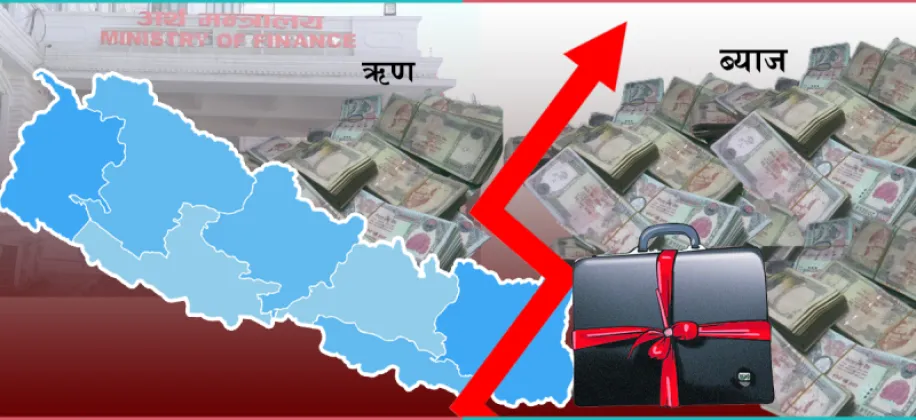
Nepal's public debt has climbed to Rs 2.975 trillion, or 29 kharba 75 arba rupees, as of the end of the Nepali month of Kartik, according to news reports published on November 25, 2026. The figures were reported independently by Thaha Khabar and Nepal Views, both of which highlighted the rising burden of the country's outstanding public liabilities.
The milestone figure underscores the continued expansion of Nepal's public debt, which has been a growing point of concern for policymakers, economists and the general public in recent years. Both outlets framed the number as a reflection of the government's mounting financial obligations, though neither provided a detailed breakdown of what lies behind the latest figure.
What the Reports Show
The reported debt stock of Rs 2.975 trillion represents the total outstanding public liabilities of the Government of Nepal as of mid-November on the Gregorian calendar, corresponding to the end of Kartik in the Nepali fiscal calendar. The amount was published in Nepali rupees, with the total expressed in the traditional Nepali counting system as 29 kharba 75 arba.
- The debt figure was reported by Thaha Khabar, which described the rise in the country's outstanding public liabilities.
- Nepal Views also carried the figure, reporting the debt as of mid-November at Rs 2.975 billion in the international numbering convention, equivalent to the 29 kharba 75 arba figure.
Both reports were published on the same day, November 25, 2026, suggesting that the data stems from an official government disclosure on the state of public debt at the end of the Kartik accounting period.
What Remains Unclear
While the headline number gives a snapshot of the total debt burden, the available reports did not provide further details on the composition of the debt. It remains unclear from the published summaries how much of the total is attributable to domestic borrowing, such as treasury bills and development bonds issued by the government, and how much comes from external sources, including loans from multilateral and bilateral development partners.
Likewise, the reports did not specify how the latest figure compares with the debt position at the end of the previous month. Without that month-on-month comparison, it is difficult to determine the pace at which the debt stock has grown during the current fiscal year, or whether the figure reflects seasonal factors that typically influence government borrowing within the fiscal calendar.
The reports also stopped short of relating the debt figure to macroeconomic yardsticks that are commonly used to assess debt sustainability, such as the ratio of public debt to gross domestic product, the government's annual revenue, or the portion of the budget earmarked for debt servicing.
The Broader Context of Nepal's Debt Burden
Public debt has become an increasingly prominent issue in Nepal's fiscal discourse. The country's outstanding liabilities have grown steadily over successive fiscal years as successive governments have relied on both domestic and foreign borrowing to finance development spending, recurrent expenditure and budget deficits. Rising debt levels have periodically prompted debate among economists and civil society about the sustainability of the trend and its implications for future generations.
Debt servicing obligations consume a growing share of the national budget each year, money that might otherwise be directed toward health, education or infrastructure. At the same time, Nepal's ability to take on external concessional financing has historically been supported by its low risk of debt distress, a position that analysts caution depends on prudent fiscal management and productive use of borrowed resources.
Against this backdrop, the disclosure that public debt has reached Rs 2.975 trillion is likely to renew scrutiny of the government's borrowing strategy and fiscal discipline. Commentators have repeatedly urged authorities to strengthen revenue mobilization, improve the quality of public spending and ensure that borrowed funds are channeled into projects that generate economic returns, rather than recurrent consumption.
The Road Ahead
The end-of-Kartik figure arrives at a point in the fiscal year when government expenditure typically accelerates, placing additional demands on the treasury. How the debt position evolves through the remainder of the fiscal year will depend on the pace of budget implementation, revenue performance and any new borrowing the government undertakes to cover shortfalls.
For now, the published reports provide a single, stark data point: the country's public liabilities have reached Rs 2.975 trillion. Further official details on the composition, growth rate and sustainability of the debt are expected to emerge as the government releases its fuller fiscal accounts. Until then, the figure stands as a marker of the scale of the fiscal challenge facing Nepal and a reminder of the importance of careful debt management in the period ahead.
As more information becomes available, updates on the trajectory of Nepal's public debt and its implications for the national economy will be closely watched by financial institutions, development partners and the public alike.