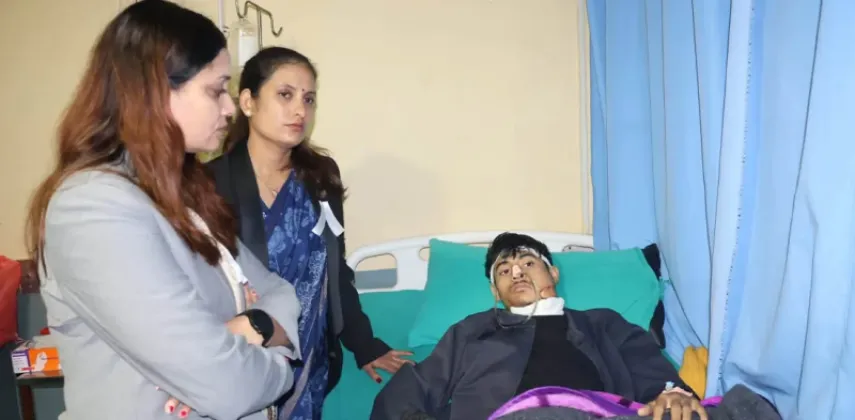
Two government ministers made a personal visit to Tribhuvan University Teaching Hospital in Maharajgunj on Wednesday to inquire about the health condition of Shantanu Dhakal, a young man who was seriously injured during the Gen Z movement. Health and Food Hygiene Minister Nisha Mehta and Minister for Women, Children, Gender and Sexual Minorities and Social Security Sita Badi traveled to the hospital together, where they met Dhakal directly at his bedside.
During the meeting, the ministers received updates on Dhakal's treatment progress and discussed the rehabilitation process that lies ahead for him as he recovers from his injuries. The visit was framed as an expression of the government's concern for those who suffered harm during the movement.
Direct Meeting with the Injured Youth
Rather than relying on reports from doctors or hospital administrators, the two ministers chose to meet Dhakal in person. This direct interaction allowed them to hear firsthand about his condition, the medical care he has been receiving, and the road to recovery that he now faces.
The ministers inquired specifically about both his treatment progress and his rehabilitation needs, signaling that the government's interest extends beyond immediate medical care to the longer-term support required for his recovery.
Government Commitment to Support Recovery
Following the visit, the government expressed its commitment to supporting Dhakal's recovery. The ministers' presence at the hospital was presented as a gesture of solidarity with a young citizen injured while taking part in the Gen Z movement.
The visit by the Health and Food Hygiene Minister carries particular significance, as her ministry oversees the healthcare system responsible for treating those wounded during the movement. Her personal engagement with Dhakal's case underscores the attention being given to injured individuals at the institutional level.
Context of the Gen Z Movement
The Gen Z movement has resulted in serious injuries to a number of young participants across the country, with many of the wounded receiving treatment at major hospitals in the Kathmandu Valley. Tribhuvan University Teaching Hospital in Maharajgunj, one of the country's largest and most prominent medical institutions, has been among the facilities caring for those injured.
Dhakal is among those who sustained serious injuries during the movement, making his recovery a matter of public concern. The ministers' visit reflects a broader effort by the government to demonstrate accountability and care toward the young people who were hurt while participating in the movement.
A Gesture of Official Concern
The joint visit by the two ministers, representing both the health portfolio and the social security portfolio, highlighted the dual dimensions of Dhakal's situation: the medical treatment he requires now and the social support he will need during rehabilitation.
Minister Badi's involvement, given her responsibility for social security matters, points to the rehabilitation and welfare aspects of supporting injured individuals, while Minister Mehta's presence reflects the health system's ongoing role in Dhakal's care.
The government's stated commitment to supporting his recovery is expected to translate into continued assistance as his treatment and rehabilitation proceed. No further details about his medical condition were disclosed following the visit.
The visit on Wednesday stands as the latest in a series of official engagements with those affected by the Gen Z movement, as the government seeks to address the needs of injured citizens and their families in the aftermath of the unrest.