The 669-megawatt Lower Arun Hydropower Project has set a target to begin electricity generation from December 4, 2030. The timeline was made public at a regular press conference organized by the Office of the Prime Minister and Council of Ministers on Friday, where officials outlined the progress made so far on one of the country's major hydropower undertakings.
The announcement provides a fixed timeline for a project that is expected to make a significant contribution to Nepal's electricity generation capacity once completed. The Lower Arun project, with its installed capacity of 669 MW, is among the larger hydropower schemes being developed in the country.
Contract Invitation Already Issued
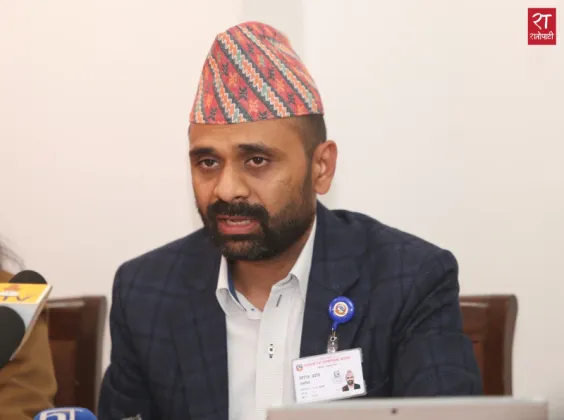
Addressing the press conference, spokesperson Aryal said that a contract worth approximately 11 billion 49 crore 21 lakh Indian rupees has already been called for the project. This signals that procurement work for the project is moving forward alongside the construction timeline.
The calling of such a large contract indicates that the project has advanced beyond the planning stage and that work on key components is being put out to tender. Officials presented the contract process as evidence of tangible progress toward the 2030 generation target.
A Major Addition to Nepal's Power Sector
With a capacity of 669 MW, the Lower Arun Hydropower Project is positioned to become one of the notable contributors to the national grid once it comes online. Nepal has in recent years pushed to expand its hydropower generation, both to meet domestic demand and to enable larger exports of electricity to neighboring countries, particularly India.
The use of Indian rupees in the contract value also reflects the cross-border dimension of the project's procurement arrangements, a common feature in Nepal's hydropower sector given the country's close economic and energy trade ties with India.
Steady Timeline Communicated by Government
The decision to announce the generation date at the Office of the Prime Minister and Council of Ministers' regular press conference underscores the government's effort to keep the public informed about the progress of major infrastructure projects. By fixing December 4, 2030 as the target date, the government and the project developers have established a benchmark against which future progress can be measured.
Details shared at the press conference indicate that work on the project is proceeding according to plan, with the contract process for works worth over 11 billion Indian rupees already underway. As the project moves toward the tendering and construction phases, attention will turn to whether the ambitious 2030 timeline can be maintained.
The Lower Arun project's progress will be closely watched, as timely completion would add substantial generation capacity and support Nepal's broader goal of achieving energy sufficiency and expanding power trade in the region.