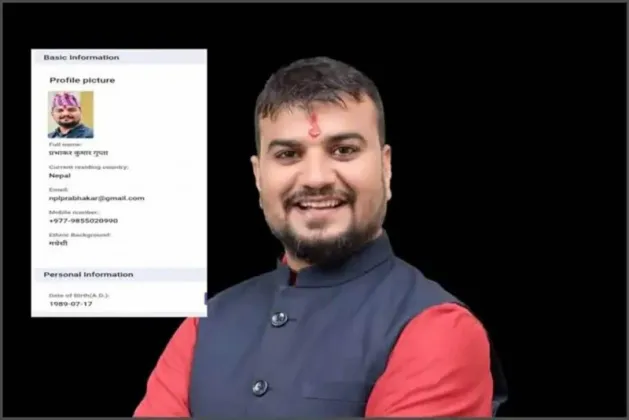
Leaders and cadres from at least two political parties have defected to the Rastriya Swatantra Party (RSP) in Parsa district, as political activity intensifies ahead of the local elections expected in the last week of Falgun or the first week of Chaitra. The most prominent entrant is Nejammudin, who served as co-general secretary of the Rastriya Mukti Party Nepal before switching allegiance to the RSP, according to reports published by Nepal Press and Global Aawaj. Leaders and workers of the Nepali Communist Party have also crossed over to the RSP in the district.
A senior leader leads a wave of entrants
The arrival of Nejammudin stands out because of the position he held in his former party. As co-general secretary, he sat within the central leadership structure of the Rastriya Mukti Party Nepal, and his decision to leave that role for the RSP underlines how fluid party loyalties have become in Parsa as the election window approaches.
Nejammudin is not alone. The reports say leaders and cadres from various parties have been joining the RSP in the district, among them figures from the Nepali Communist Party as well as from the Rastriya Mukti Party Nepal. The steady flow of entrants mirrors the growing election activity now visible across Parsa, where parties are scrambling to ready their organisations for the local polls.
The key facts reported so far are as follows:
- Party receiving the entrants: Rastriya Swatantra Party (RSP)
- Location: Parsa district
- Parties losing members: Nepali Communist Party and Rastriya Mukti Party Nepal
- Most prominent entrant: Nejammudin, co-general secretary of the Rastriya Mukti Party Nepal
- Election window: Last week of Falgun or the first week of Chaitra
- Stated motive: Aspirations to secure candidacies in the upcoming local elections
Why a central office-bearer's switch matters
A defection by a leader from a party's central secretariat tends to draw particular attention inside a district. Such leaders carry organisational experience, personal networks among cadres and familiarity with the mechanics of fighting local polls, all of which can be transferred to a new party. For the RSP, entrants of this kind add weight and practical capacity to its preparations on the ground as it works to convert growing national name recognition into an organised presence in Parsa.
Candidacy hopes at the centre of the moves
The reports point to a clear motive behind the defections: the desire of local leaders to secure candidacies in the upcoming local elections. Nepal's local polls elect mayors, deputy mayors, ward chairpersons and ward members, and the competition for these tickets typically sharpens in the weeks before nominations, when each party must decide who will carry its symbol in each municipality and ward.
That arithmetic explains why leaders with standing in their own parties are willing to switch. A politician who judges that his prospects of a ticket are limited under his current banner may find a more welcoming entry point in a party that is still building its local roster. The pattern of switching parties in the run-up to an election is a familiar feature of Nepali politics, and the movement now under way in Parsa fits squarely within it.
For the parties losing members, the departures create gaps that must be filled quickly. Losing a central office-bearer such as the co-general secretary of the Rastriya Mukti Party Nepal, along with leaders of the Nepali Communist Party, means losing organisational hands at precisely the moment when candidate lists and local committees are being finalised.
The election window and the road ahead
The local elections are expected in the last week of Falgun or the first week of Chaitra. In the Nepali calendar, Falgun is the eleventh month, falling roughly from mid-February to mid-March, while Chaitra is the twelfth and final month, running from roughly mid-March to mid-April. The vote will be the first since the local elections held in 2022, and it will decide who governs municipalities and rural municipalities across the country for the next term.
In Parsa, a district in the southern plains of Madhesh Province, the build-up to the polls is already evident in the form of growing election activity and the stream of new entrants into the RSP. The party, which made its national mark in the 2022 federal elections campaigning on good governance, now has a crop of experienced defectors to integrate into its district structure.
For the RSP, the immediate task will be to convert these arrivals into functioning election units, from municipal committees down to the ward level. For the Nepali Communist Party and the Rastriya Mukti Party Nepal, the challenge is the reverse: repairing their local organisations and holding on to remaining cadres in a district where, with the election window drawing closer, party loyalties are clearly in motion.