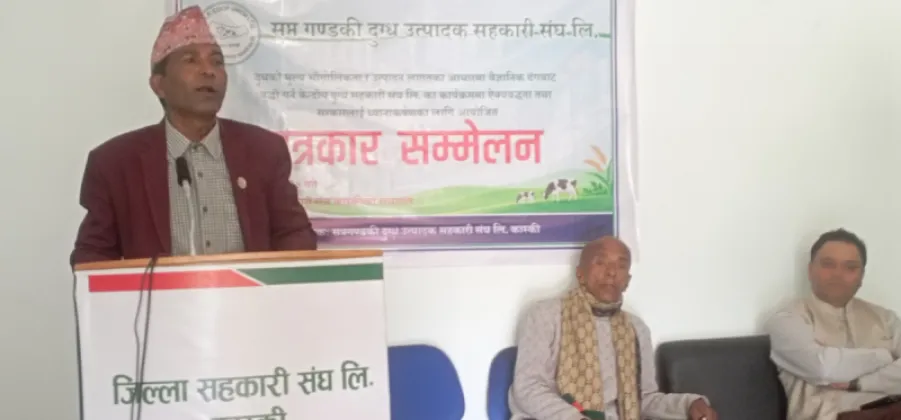
Dairy farmers in Kaski district have demanded that the price of milk be raised from the current Rs 65 to Rs 80 per litre, warning that they will launch a protest if the demand is not addressed. The demand was formally put forward by the Saptagandaki Dugdha Utpadak Sahakari Sangh Ltd at a press conference held in Pokhara on Wednesday.
The farmers said that although their production costs have been rising continuously, the price they receive for their milk has remained unchanged for the past three years, even as market prices of milk and dairy products have gone up. They argued that the current rate no longer covers the cost of feeding and caring for their cattle, pushing farming households toward losses.
Rising Costs, Frozen Prices
At the press conference, representatives of the cooperative highlighted the widening gap between what it costs to produce a litre of milk and what farmers are paid for it. The price paid to farmers has not been revised in three years, while the prices of cattle feed, medicine and other inputs have continued to climb. Meanwhile, consumers have been paying higher prices in the market, meaning the benefit of price increases has not reached the producers.
The Saptagandaki Dugdha Utpadak Sahakari Sangh Ltd, the cooperative representing milk producers in the district, said the Rs 80 per litre rate reflects the actual cost of production and is necessary to keep farmers in the business. The organisation made its case publicly in Pokhara, seeking to draw the attention of authorities and dairy processors to the plight of its members.
Threat of Protest With Cow Dung
The farmers did not stop at making a demand; they also issued a clear warning. If the price of milk is not raised as requested, they said they would launch a protest programme. Among the forms of protest they mentioned was bringing cow dung, a symbolic and attention-grabbing move intended to highlight their frustration and the pressure they are under.
The warning signals an escalation in the ongoing dispute between milk producers and those who set procurement prices. Farmers in the district say they have been patient as costs mounted, but three years without a price revision has exhausted their tolerance. The cooperative's press conference was framed as a final appeal before stronger action begins.
Context of the Dispute
Kaski, with Pokhara as its headquarters, is one of the districts where dairy farming is a significant source of income for rural households. Cooperatives such as the Saptagandaki Dugdha Utpadak Sahakari Sangh Ltd collect milk from member farmers and play a key role in negotiating prices and connecting producers with buyers.
The farmers' grievance follows a familiar pattern in Nepal's dairy sector, where the price paid at the farm gate often lags behind the retail price of milk. Producers argue that middlemen and processors capture the margin while the farmers who bear the rising cost of feed, labour and veterinary care see their incomes shrink. The three-year freeze on the procurement price, despite inflation across the economy, has made the situation particularly acute in Kaski.
By taking their demand to the media, the farmers hope to build public support and pressure decision-makers to revise the milk price upward. The demand for Rs 80 per litre, up from Rs 65, represents an increase of Rs 15, or roughly 23 percent.
What Happens Next
Attention will now turn to how authorities and dairy buyers respond to the cooperative's demand. If negotiations fail and the price is not raised, the promised protest, including the dumping of cow dung, could follow, potentially disrupting milk collection and supply in the district.
For now, the message from Kaski's dairy farmers is unambiguous: they want the price of milk fixed at Rs 80 per litre, and they are prepared to take to the streets if that demand is ignored. The press conference in Pokhara on Wednesday marks the beginning of what could become a protracted standoff between farmers and the dairy trade unless a settlement is reached soon.