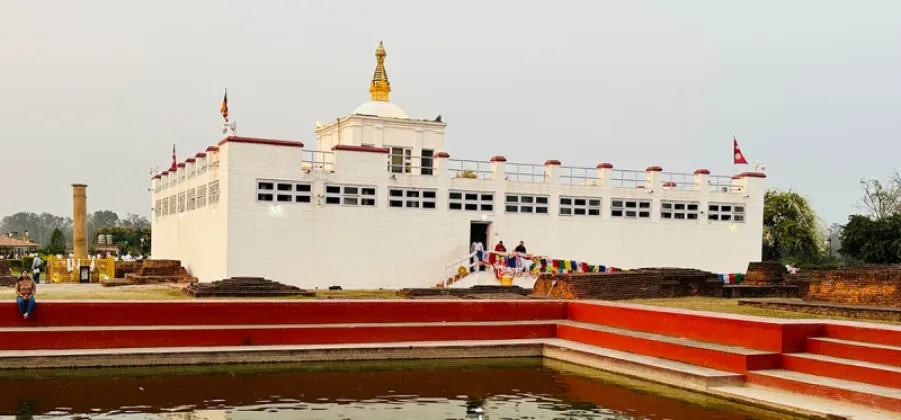
The Lumbini Development Trust has ordered that all shops operating without its approval within restricted areas of the Lumbini master plan zone be removed within 24 hours. The directive, announced through a public notice on Friday, takes effect immediately and covers key sites associated with Gautam Buddha's birthplace, including the sacred garden area, the Peace Pagoda (Shanti Deep) area and the international monastery zone.
The notice makes clear that the measure targets businesses that have been running in the restricted zone without the Trust's authorisation. The sacred garden, which lies at the heart of the Lumbini master plan and is revered as the exact spot where Lord Buddha was born, is among the most sensitive areas covered by the order. The Peace Pagoda area and the international monastery zone, where monasteries built by various countries stand, are similarly restricted spaces under the master plan.
Enforcement of the Master Plan
The Lumbini master plan, designed to protect and organise the area surrounding the birthplace of Gautam Buddha, divides the zone into sections with specific permitted uses. Restricted areas within the plan are meant to preserve the sanctity and orderly appearance of the holy site, and commercial activity there requires the Trust's approval. Shops that have set up operations without such authorisation are considered to be in violation of the plan's provisions.
By giving only 24 hours for compliance, the Trust has signalled a strict approach to enforcement. The public notice directs that the unauthorised shops be removed within the deadline, with the order taking effect from the moment of its announcement on Friday. The Trust, which is the government body responsible for the management and development of Lumbini, has framed the action as necessary to maintain the integrity of the restricted zones.
Areas Covered by the Directive
The order specifically names several restricted sites within the master plan zone:
- The sacred garden area, the most sacred part of the site marking Gautam Buddha's birthplace
- The Peace Pagoda (Shanti Deep) area
- The international monastery zone, home to monasteries constructed by different countries
- Other restricted sites within the master plan area
The inclusion of these prominent locations suggests the Trust intends a comprehensive clearance rather than a targeted action against individual businesses. The sacred garden and the monastery zone are focal points for the pilgrims and tourists who visit Lumbini, a UNESCO World Heritage Site and one of Nepal's most significant religious destinations.
Significance for Lumbini
Lumbini holds global religious importance as the birthplace of Gautam Buddha and draws pilgrims, monks and tourists from around the world. The Lumbini Development Trust is tasked with balancing the needs of visitors and local livelihoods against the preservation of the site's religious character. Unregulated commercial activity in restricted areas has long been a point of tension in managing the site, as such shops can interfere with the peaceful environment the master plan was designed to protect.
The 24-hour ultimatum is one of the more abrupt enforcement measures announced for the area, giving shop operators minimal time to comply. The Trust's decision to act through a public notice indicates that it wants the removal completed quickly and openly, with the expectation that operators will vacate the restricted zones without further intervention.
The directive follows a public notice issued by the Trust, which is headquartered in the Lumbini area of Rupandehi district. As of the announcement, the Trust has stated that the order takes effect immediately, meaning the deadline for removal falls within a day of the notice's publication on Friday. No further details about follow-up enforcement or consequences for non-compliance were included in the notice.