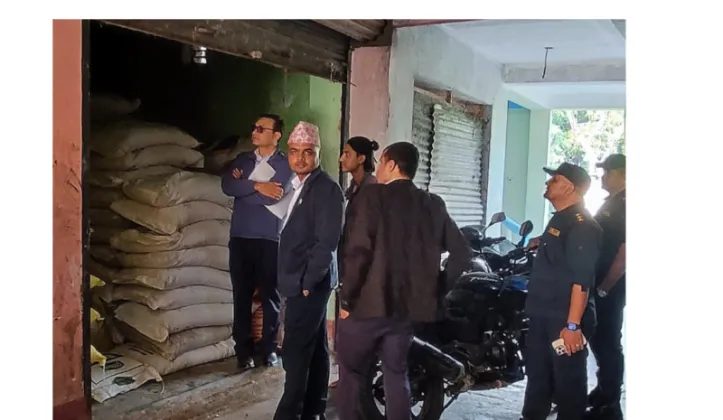
The District Administration Office (DAO) in Jhapa has fined Sanjivani Krishi Bhandar, a fertiliser store located in Buddhashanti Rural Municipality-3, Rs 200,000 after the store failed to produce sales and stock records for 159 sacks of subsidised chemical fertiliser. The penalty was imposed following a surprise monitoring visit during which irregularities were detected in the store's stock and sales details.
How the irregularities came to light
The monitoring was carried out after the District Administration Office received a confidential tip-off alleging that subsidised fertiliser was being sold and distributed in an unauthorised manner. Acting on the information, the office conducted an unannounced inspection of the store, which is an agriculture input retailer operating in Buddhashanti Rural Municipality-3 of Jhapa district.
During the monitoring visit, the inspection team examined the store's stock and sales records. The team found that the store could not produce records for 159 sacks of subsidised chemical fertiliser, raising questions about how the stock had been handled. Following this finding, the District Administration Office proceeded to take administrative action against the store, culminating in the Rs 200,000 fine.
Subsidised fertiliser and accountability
Subsidised chemical fertiliser in Nepal is supplied to registered agriculture stores at government-supported rates, with the expectation that it reaches farmers at the designated price and that proper records of its sale and distribution are maintained. Stores dealing in such fertiliser are required to keep transparent documentation of purchases, sales and stock so that monitoring authorities can verify that the subsidised supply is being distributed as intended.
The failure of Sanjivani Krishi Bhandar to produce sales and stock records for a substantial quantity of fertiliser was treated as a violation of these requirements. The Rs 200,000 fine imposed by the District Administration Office reflects the seriousness with which irregularities in the subsidised fertiliser supply chain are viewed, particularly when they are brought to the authorities' attention through public complaints or tip-offs.
Enforcement through surprise monitoring
The action against the Jhapa store underscores the role of surprise monitoring in enforcing discipline in the distribution of subsidised agricultural inputs. According to the information available, the confidential tip about unauthorised sale and distribution of subsidised fertiliser directly triggered the inspection that ultimately exposed the discrepancies in the store's records.
The case in Buddhashanti Rural Municipality-3 illustrates how such monitoring visits, when carried out based on specific information, can lead to concrete administrative action. In this instance, the discrepancy involving 159 sacks of fertiliser was significant enough for the District Administration Office to move beyond a warning and impose a monetary penalty on the store.
Wider context
Fertiliser distribution is a sensitive issue for farming communities across Nepal, including in Jhapa, where agriculture remains a major source of livelihood. Subsidised fertiliser is intended to ease the cost burden on farmers, and any irregularity in its sale or distribution is seen as undermining that support. The fine on Sanjivani Krishi Bhandar is expected to serve as a message to other agriculture stores handling subsidised inputs that maintaining accurate stock and sales records is a non-negotiable obligation.
The District Administration Office in Jhapa has not indicated in the available reports whether further action against the store is planned beyond the fine, nor whether the 159 sacks in question will be recovered or compensated. What has been confirmed is that the store was fined Rs 200,000 for failing to account for the fertiliser during the monitoring visit prompted by the confidential complaint.