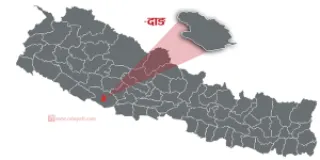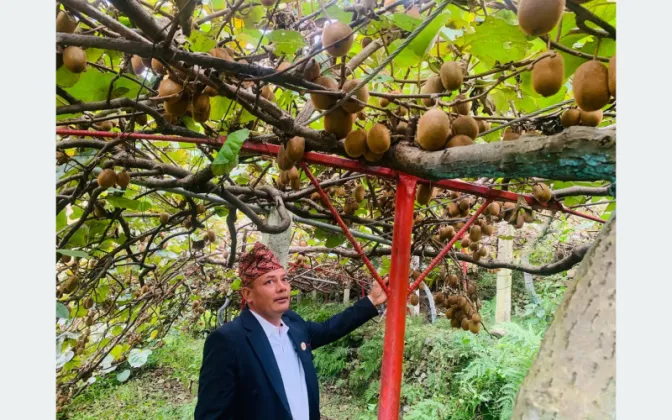
Lila Bahadur Gharti of Thapagaun, Nisikhola Rural Municipality-4 in Baglung district, has swapped life as a migrant worker in Japan for a career as an agricultural entrepreneur in his home village. Gharti, who had gone to Japan for foreign employment, returned after just one year abroad and decided to invest his energy in farming rather than seeking opportunities elsewhere. Today, he is engaged in fruit and vegetable farming as well as livestock rearing, with kiwi cultivation emerging as a particular focus of his agricultural venture.
From foreign employment to farming at home
Gharti's journey reflects a path increasingly taken by Nepali migrant workers who, after experiencing life and work abroad, choose to return and apply what they have seen and learned in their own communities. He had travelled to Japan with the intention of foreign employment, but the pull of his own village and its farming potential proved stronger than the prospects overseas. After a single year in Japan, he made the decision to come back to Thapagaun and build his livelihood on the land.
Rather than returning empty-handed, Gharti channeled his experience into agriculture. He now runs a diversified farm that combines multiple income streams: fruit orchards, vegetable plots and livestock. Among these, kiwi cultivation has become the centrepiece of his work, giving him a distinctive identity in his local area as a kiwi farmer.
Kiwi takes root in Nisikhola
Kiwi is a fruit that suits the cool climate and hilly terrain of mid-hill Nepal, and Baglung's highland villages like Thapagaun offer conditions well matched to the crop. Gharti's decision to focus on kiwi demonstrates how returnee migrants and local farmers are identifying cash crops that can thrive in areas where traditional farming alone has often struggled to provide adequate income.
His farming operation is not limited to a single crop. Alongside the kiwi vines, Gharti grows a range of fruits and vegetables and keeps livestock, creating a mixed-farming model. Such diversification is widely regarded as a practical approach for hill farmers, spreading risk across several products while making fuller use of family labour throughout the year.
A growing trend among returnees
Gharti's story is part of a broader pattern in which Nepalis who have worked abroad, particularly in countries with advanced agricultural sectors like Japan and South Korea, return home with new ideas and put them into practice. Foreign employment remains a major pillar of Nepal's economy, with hundreds of thousands of Nepalis leaving for work each year, but stories like Gharti's highlight the alternative: using savings, skills and exposure gained abroad to create enterprise at home.
For villages in districts like Baglung, where outmigration has hollowed out many communities and left farmland underused, the example of a young returnee succeeding in commercial farming carries significance beyond one individual's income. It points to the possibility of revitalising hill agriculture with crops such as kiwi, which fetch good prices in Nepali markets and reduce dependence on imports.
Looking ahead from Thapagaun
For now, Gharti is settled in Thapagaun, enjoying the work of kiwi farming and the life he has built after cutting short his stint in Japan. His case adds to the accounts of successful returnee farmers emerging from Nepal's rural municipalities, where local governments have in recent years promoted agriculture as a means of retaining residents and creating local employment.
Whether Gharti's venture expands further, his current path already marks a clear departure from the cycle of foreign employment that many of his peers follow. By choosing his own village over continued work abroad, he has turned a one-year experience in Japan into the foundation of a farming career rooted in Baglung's hills, showing that for some returnees, the future lies not overseas but in the soil at home.