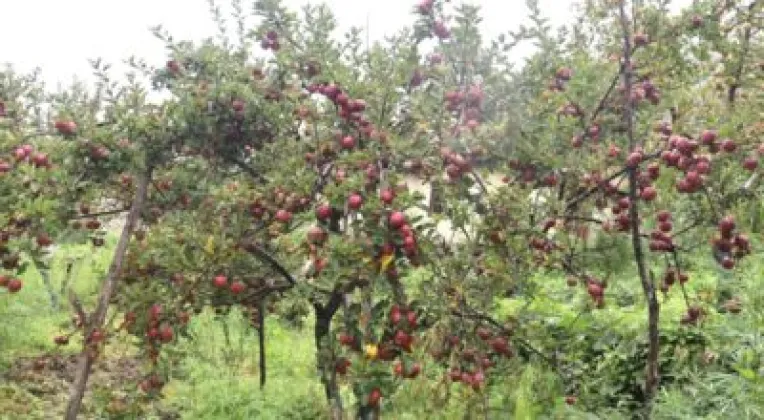
Farmers across all seven rural municipalities of Humla district have earned Rs 82.656 million from apple sales this year, more than doubling the income recorded in the previous year. The figures released by the Agricultural Development Office show that apple farming has become an increasingly important source of cash income for households in one of Nepal's most remote highland districts.
According to the office, the district produced about 5,005 metric tons of apples this year from orchards spread across 690 hectares of land. Office chief Chudamani Pant said that of the total output, 1,377.6 metric tons of apples were supplied outside the district for sale, while the remainder was consumed within Humla.
Production figures and income growth
The Rs 82.656 million earned by farmers marks a sharp rise compared to last year, when apple sales brought in less than half of this year's amount. The more than twofold increase reflects both the expansion of apple orchards in the district and the growing volume of fruit being marketed rather than consumed solely at the household level.
The production of roughly 5,005 metric tons from 690 hectares indicates that apple cultivation has spread across the district's seven rural municipalities, making it a district-wide enterprise rather than a livelihood concentrated in a few villages. Humla's high-altitude climate is considered suitable for apple farming, and the fruit has emerged as one of the district's principal agricultural commodities.
Sales outside the district
A significant share of the harvest was sent beyond Humla's borders. Chudamani Pant, chief of the Agricultural Development Office, confirmed that 1,377.6 metric tons of apples were supplied outside the district for sale, generating the bulk of the cash earnings for local farmers.
The ability to move more than 1,300 metric tons of fruit out of a district with limited transport infrastructure underscores the growing commercial orientation of Humla's apple sector. Farmers who once depended largely on subsistence agriculture are increasingly treating apple orchards as a cash crop, linking their incomes to markets outside the Karnali region.
What the figures mean for Humla
The doubling of apple income in a single year is a notable development for a district that has historically ranked among Nepal's most economically disadvantaged. With all seven rural municipalities participating in apple sales, the benefits of this season's harvest appear to have been distributed across the district rather than confined to a single area.
The Agricultural Development Office's data provides a snapshot of the sector's current scale: 690 hectares under cultivation, around 5,005 metric tons harvested, and over Rs 82.6 million flowing to farming households. Chudamani Pant's office has been tracking these figures as apple cultivation continues to expand in the highland terrain.
For local farmers, the season's earnings represent a meaningful improvement in agricultural income at a time when alternative livelihood opportunities in the remote district remain limited. The steady growth in both production and sales suggests that apples have secured a place as Humla's flagship cash crop, with this year's Rs 82.656 million serving as the strongest indication yet of the sector's economic potential.
As orchards planted in previous years continue to mature and farmers gain access to outside markets, stakeholders in the district's agriculture sector will be watching whether next season builds on this year's momentum.