The historic Mahendra Chautari at Milichaur on the shore of Rara Lake in Karnali Province has been rebuilt after standing in a state of neglect for 63 years. The reconstruction was carried out on the initiative of the Nepali Army's Hanuman Dhwaj Gulma, which is based at Hutu within Rara National Park, and was completed with cooperation from various government bodies, local organisations and businesses.
The structure, one of the historical landmarks associated with the country's former royal era, had fallen into disrepair over the decades due to a long-standing lack of conservation and maintenance. Its restoration marks a significant step toward preserving the cultural and historical heritage surrounding Nepal's largest lake.
A Landmark Restored at Milichaur
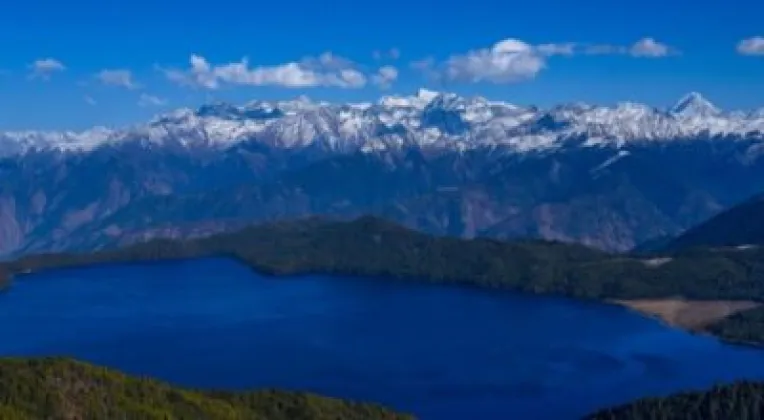
The Mahendra Chautari sits at Milichaur, on the shores of Rara Lake, the crowning attraction of Rara National Park in Karnali Province. Named after the late King Mahendra, such chautaris were traditionally built as resting places for travellers and as markers of royal visits, making them an important part of the landscape's historical memory.
For more than six decades, however, the structure received no meaningful upkeep. Exposure to the elements and the absence of any conservation programme gradually wore it down until it was no longer recognisable as the landmark it once was. Locals and visitors to the lake passed by a relic in decline rather than a preserved piece of history.
Led by the Nepali Army
The turnaround came through the Hanuman Dhwaj Gulma of the Nepali Army, the unit stationed at Hutu inside Rara National Park. Taking the initiative to rebuild the chautari, the army unit mobilised resources and coordinated the reconstruction work at the site.
The project was not carried out by the army alone. According to reports, a range of government bodies, local organisations and businesses extended cooperation, providing the support needed to complete the reconstruction. This collaborative effort reflects a broader recognition that heritage sites in remote areas often require combined local and institutional backing to be saved.
Why the Reconstruction Matters
Rara Lake is one of Nepal's premier natural and tourist destinations, drawing visitors from across the country and abroad to Mugu district in Karnali Province. The Mahendra Chautari forms part of the historical identity of the site, and its decay for 63 years had been seen as a loss of heritage alongside the lake's celebrated natural beauty.
The rebuilding after such a long gap is expected to restore an important cultural reference point at Milichaur for both residents and tourists. It also signals renewed attention to conservation in the Rara area, where historical structures have historically received far less attention than the natural environment around them.
Heritage Preservation in Karnali
Karnali Province is home to numerous historical and cultural sites, many of which suffer from limited resources for maintenance and conservation. The reconstruction of the Mahendra Chautari stands as an example of how an institution taking initiative, in this case an army unit stationed nearby, can succeed in reviving a neglected landmark by drawing in partners from government, civil society and the private sector.
For the communities around Rara Lake, the restored chautari is more than a rebuilt structure. It reconnects the present generation with a site that carries the memory of the past, and it adds a historical dimension to the experience of those visiting one of Nepal's most famous lakes. The collaboration behind the project suggests a model that could be applied to other heritage structures across the province that remain in similar states of neglect.
The successful reconstruction after 63 years demonstrates that even long-neglected heritage can be recovered when local institutions take ownership of preservation, ensuring that landmarks like the Mahendra Chautari continue to tell their stories for generations to come.
Source: Khabarhub, Gorkhapatra Online, Nagarik News