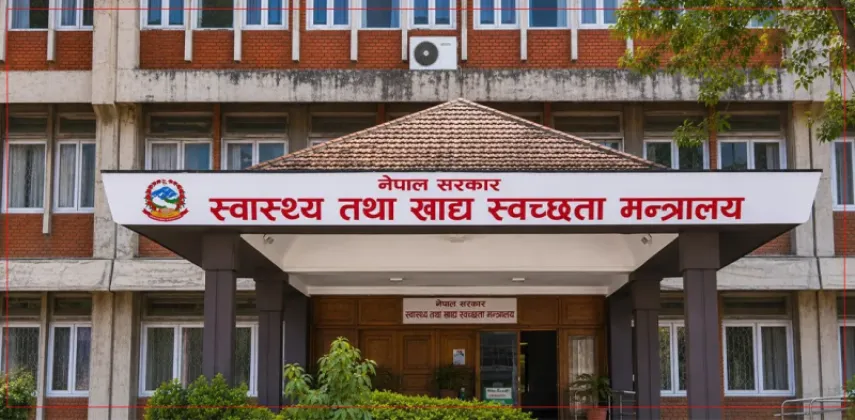
The Ministry of Health and Food Sanitation has deployed 838 specialist doctors across all seven provinces of Nepal, a move the government hopes will significantly widen access to specialised medical care outside the capital. According to the ministry, all of the doctors included in this deployment have completed their MD, MS and MDS studies, covering major fields of medical, surgical and dental specialisation.
The announcement marks one of the larger single rounds of specialist deployment undertaken by the ministry and is intended to address the long-standing concentration of skilled medical professionals in Kathmandu and a handful of large cities. With specialists now positioned in the provinces, the ministry expects that citizens will no longer be forced to travel to the capital for specialist treatment, a burden that has weighed heavily on patients from remote districts for years.
Addressing the concentration of care in Kathmandu
For decades, the bulk of Nepal's specialist medical services have been clustered in Kathmandu, where the country's leading hospitals and teaching institutions are located. Patients suffering from conditions requiring specialist attention, from complicated surgeries to advanced dental care, have often had no realistic option but to make long and expensive journeys to the capital or other major urban centres.
That travel requirement has carried costs beyond transport itself. Families accompanying patients to Kathmandu face expenses for accommodation and food, often over extended treatment periods, while delays in reaching care have at times worsened health outcomes. The ministry's latest deployment of 838 specialists is framed as a direct response to this imbalance, bringing the skills of doctors trained in MD, MS and MDS programmes closer to the communities where patients actually live.
By distributing the newly available specialists across all seven provinces, rather than concentrating them in a single region, the ministry has signalled an intent to make provincial-level facilities genuinely capable of providing specialist services. The expectation, as stated by the ministry, is that the provincial deployment will mean citizens no longer need to journey to Kathmandu and large cities for specialist treatment.
What the deployment involves
The doctors deployed in this round have all completed advanced postgraduate medical education, according to the ministry. - MD (Doctor of Medicine) specialists cover non-surgical fields of medical practice, including internal medicine disciplines. - MS (Master of Surgery) specialists bring surgical expertise to provincial hospitals. - MDS (Master of Dental Surgery) specialists strengthen dental and oral health services, which have been particularly scarce outside urban centres.
The coverage of all three major postgraduate streams in a single deployment suggests that the ministry is aiming for a broad strengthening of provincial hospital capacity rather than filling gaps in one or two departments. Details of the exact distribution among provinces and individual institutions were not specified in the ministry's announcement, though the confirmation that all seven provinces are covered underlines the nationwide scope of the exercise.
Why it matters for provincial health services
Nepal's federal restructuring transferred significant health service delivery responsibilities to provincial and local governments, but the shortage of specialist doctors has remained a persistent obstacle to making provincial hospitals fully functional. Provincial hospitals that lack surgeons, physicians and dental specialists frequently refer patients onwards, effectively reproducing the old centralised system even under the new federal structure.
The arrival of 838 specialists in the provinces could therefore ease referral pressure on the capital's hospitals as well, reducing patient loads at central facilities while allowing provincial institutions to handle a wider range of cases themselves. For rural patients in particular, the difference between accessing a specialist in their own province and travelling to Kathmandu can determine whether treatment is sought at all.
The road ahead
While the ministry has presented the deployment as a milestone, its practical impact will depend on how effectively the specialists are utilised within provincial health institutions, including the availability of equipment, operating facilities and supporting staff. The ministry's stated expectation is clear: with specialists now in place across all seven provinces, ordinary citizens should be able to receive specialised care without the historic requirement of travelling to Kathmandu and other large cities.
The deployment of 838 MD, MS and MDS graduates is the ministry's concrete step toward that goal, and its effects on referral patterns, patient travel and provincial hospital performance will be closely watched in the period ahead.
This report is based on coverage from Ratopati and Gorkhapatra Online.